

Latest Version
November 27, 2026
Not Found Games
Adventure
0
com.reeltoreal.survivor_adventure
Report a Problem
More About :game
Specific Game Information
Game Title: Survival Island: Craft & Build
Alternative Titles: Survivor Adventure: Survival Island; RUSTY: Island Survival Games
Developer: Not Found Games
Category: Adventure
Genre: Survival, Crafting, Building, Exploration, Hunting
Platform: Android
Package Name: com.reeltoreal.survivor_adventure
Game Perspective: 3D survival adventure
Game Mode: Single-player survival, with multiplayer features advertised by the developer
Main Setting: Tropical islands, forests, caves, and ocean environments.
Main Objective: Survive on an isolated island by collecting resources, crafting equipment, constructing shelters, exploring new territories, and fighting dangerous creatures.
Main Features:
Open-world island exploration.
Resource gathering and mining.
Crafting tools, weapons, and equipment.
Shelter and house construction.
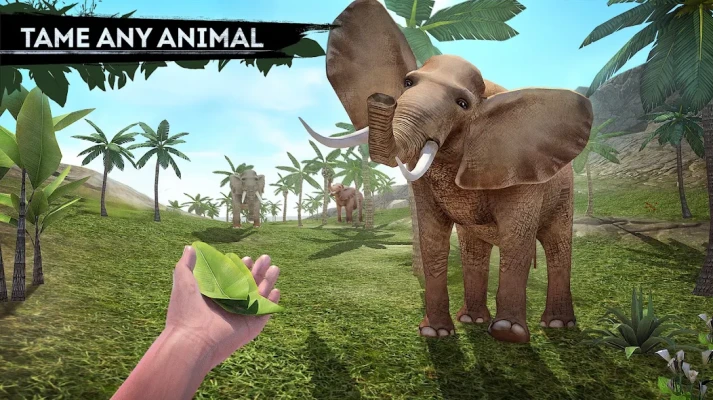
Hunting and animal taming.
Farming and cooking.
Cave exploration.
Raft, boat, and ship construction.
Ocean exploration and island travel.
Day-and-night cycle.
Monsters and dangerous wildlife.
Offline survival gameplay.
Multiplayer features advertised by the developer.
Developer: Not Found Games
Monetization: Free to play with advertisements and optional in-app purchases.
Content Rating: Teen / 12+ depending on the regional store classification.
The game has also received updates under the Survival Island: Craft & Build identity, with its version 1.4.4 update listed on May 5, 2026.
All About Survival Island: Craft & Build
Stranded on a Mysterious Island
Survival Island: Craft & Build begins with an unusual situation. You find yourself stranded on an isolated island without the comforts of civilization. The circumstances surrounding your arrival are unclear, and the surrounding wilderness presents an immediate challenge.
There are no established towns, convenient supply stores, or reliable shelters waiting for you. Everything necessary for survival must be collected, crafted, or constructed using the resources available in the environment.
The island may initially appear peaceful, but dangerous animals and mysterious monsters make exploration unpredictable.
Your main objective is to establish a sustainable survival routine. You must find materials, create tools, prepare food, build a home, and gradually discover more of the surrounding world.
Explore a Large Tropical Wilderness
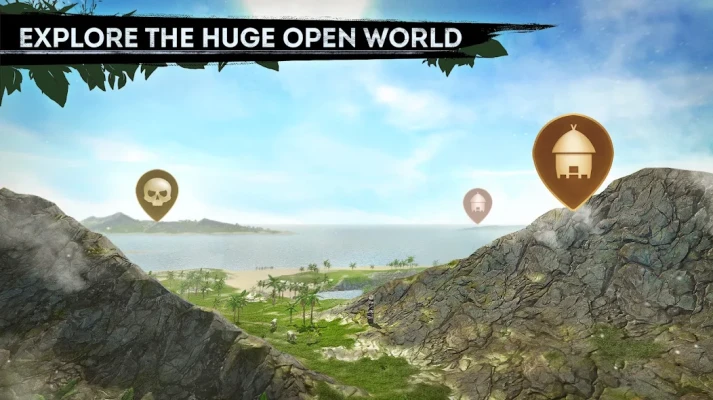
Exploration is one of the central activities in Survival Island: Craft & Build.
The environment includes forests, beaches, caves, and other natural locations containing resources and potential dangers.
Forests are particularly important during the early stages because they provide access to materials needed for crafting and construction.
As you become better equipped, you can explore more distant locations and discover additional opportunities.
The island is designed to encourage curiosity. Searching unfamiliar areas can reveal useful materials, hidden places, and new challenges.
However, exploration should always be approached carefully. Traveling too far without sufficient supplies can make returning to safety difficult.
Collect Resources and Mine Valuable Materials
Resource gathering provides the foundation for nearly every survival activity.
Players must collect natural materials to create tools, construct shelters, and develop better equipment.
Wood is important for basic construction, while stone and other minerals support crafting and equipment production.
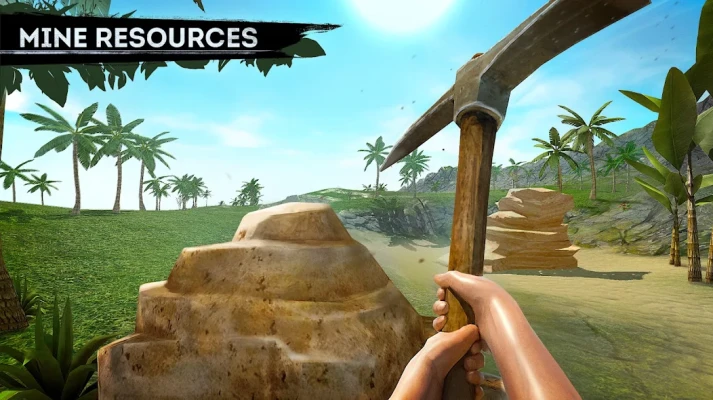
Mining allows you to obtain useful materials from the environment.
The more efficiently you collect and organize resources, the easier it becomes to progress.
Instead of gathering everything randomly, concentrate on materials that support your immediate objectives.
Craft Tools, Weapons, and Equipment
Crafting is one of the most important gameplay systems.
Collected materials can be transformed into practical items that help you survive and explore.
The game advertises a variety of craftable equipment, including:
Axes for gathering wood.
Pickaxes for mining.
Spears for hunting and combat.
Bows and arrows for ranged encounters.
Other useful survival tools and equipment.
Each item has a practical purpose.
Basic tools make resource collection easier, while weapons provide protection against dangerous creatures.
Crafting also creates a progression system because better equipment allows you to explore more challenging areas.
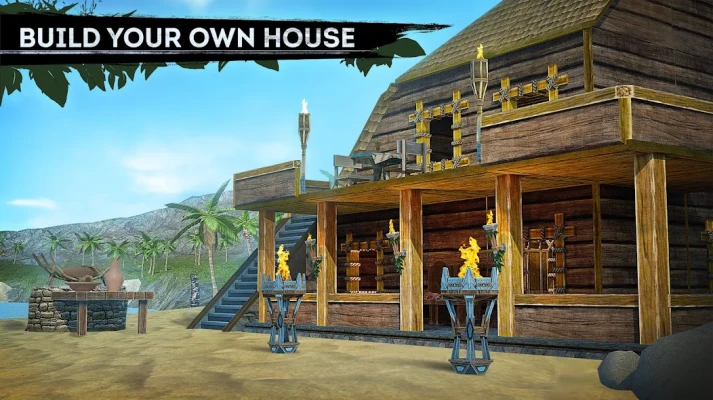
Build Your Own House and Shelter
Constructing a home is an essential part of the experience.
A shelter provides a dependable place to organize your materials, prepare equipment, and establish a more stable survival environment.
Players can gather construction resources and use them to build their own structures.
The best approach is to begin with a simple and practical shelter.
As your resource collection grows, you can expand your construction projects and improve your base.
Building is not just a decorative activity. It is an important part of creating a sustainable life on the island.
Hunt Animals and Defend Yourself Against Monsters
The island is inhabited by different creatures, and not all of them are friendly.
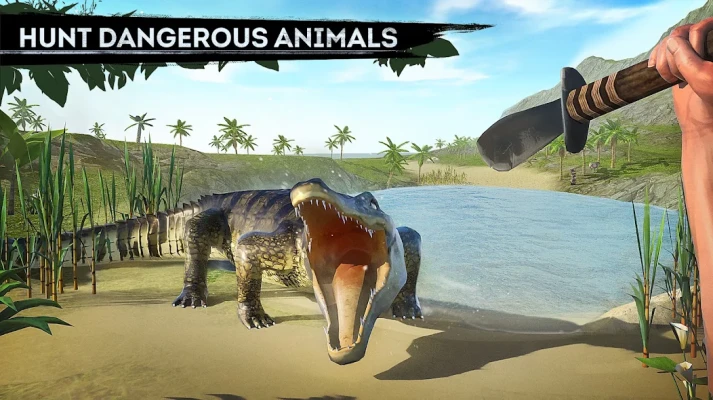
Hunting provides opportunities to obtain food and other useful resources.
However, dangerous animals and mysterious monsters can make encounters challenging.
You must learn when to fight and when to avoid confrontation.
Weapons such as spears and bows provide different approaches to hunting and defending yourself.
Before entering dangerous areas, make sure you have appropriate equipment and sufficient supplies.
Farming and Cooking
Food management is essential for long-term survival.
Instead of depending entirely on hunting and collecting food, players can develop farming activities.
Growing food provides a more sustainable way to maintain supplies.
Cooking is another important mechanic. Collecting food is not always enough; preparing it properly is part of the survival experience.
Establishing a routine that combines farming, gathering, hunting, and cooking helps reduce the pressure of constantly searching for food.
Discover Mysterious Caves
Caves add another layer of exploration to the game.
These locations contain mysteries and potential resources, but they can also be dangerous.
Entering a cave without suitable equipment is a risky decision.
Prepare your weapons and supplies before exploring underground areas.
Move carefully, observe your surroundings, and make sure you have enough resources for the journey.
Cave exploration rewards players who are patient and properly prepared.
Build Rafts, Boats, and Ships
One of the most interesting aspects of Survival Island: Craft & Build is ocean exploration.
The game allows players to construct different types of watercraft, including rafts, boats, and ships.
These vehicles provide opportunities to travel beyond the starting island and discover additional locations.
Ocean travel expands the adventure and creates new exploration possibilities.
However, sailing too far without preparation can be dangerous.
Make sure your equipment and supplies are ready before leaving your home island.
Experience the Day-and-Night Cycle
The day-and-night cycle adds another survival challenge.
Daytime is useful for gathering resources, exploring the environment, and completing construction projects.
Nighttime can be more dangerous because hostile creatures may become more aggressive.
Building a primitive fire is particularly important when preparing for darkness.
A good survival routine involves completing important outdoor activities during daylight and returning to a secure location before nightfall.
Offline and Multiplayer Gameplay
Survival Island: Craft & Build is promoted as an offline survival experience, allowing players to enjoy core island activities without depending on a continuous internet connection.
The developer has also advertised multiplayer features, including online survival and social interaction, although availability can depend on the current game version and implementation.
This combination makes the game appealing to players who enjoy both independent exploration and the possibility of shared survival experiences.
Full Strategy Guide for Survival Island: Craft & Build
How to Start Your Survival Adventure
The first stage of the game is about establishing a reliable foundation.
When you begin, avoid traveling too far from your starting area. Spend your first moments exploring nearby surroundings and collecting basic materials.
Your initial priorities should include:
Collecting wood and stone.
Crafting basic tools.
Finding available food sources.
Preparing weapons for protection.
Building a simple shelter.
Learning how the crafting and inventory systems work.
Do not spend all your resources immediately. Keep enough materials available for essential tools and construction.
Once your basic survival needs are covered, you can gradually explore more dangerous areas.
Prioritize the Right Resources
Resource management is essential because almost every important activity requires materials.
Wood should be one of your first priorities because it supports basic construction and crafting.
Stone is equally useful for producing tools and other equipment.
Other materials become important as you unlock more crafting possibilities.
A good strategy is to organize your collection around specific goals.
If you want to construct a shelter, collect building materials. If you need better weapons, concentrate on the resources required for equipment production.
Avoid filling your inventory with items that you do not currently need.
Craft Essential Tools First
Tools should be among your earliest crafting investments.
An axe helps with wood collection, while a pickaxe supports mining activities.
These tools make gathering resources more efficient and reduce the time required to prepare for construction.
After creating basic tools, work toward crafting weapons.
A spear is a practical early option for hunting and defending yourself.
As you progress, experiment with other available equipment, including bows and arrows.
Do not waste valuable materials crafting multiple items that serve the same purpose unless you have a specific reason.
Build a Safe Shelter
Your shelter should become the center of your survival activities.
Choose a suitable location and begin with a simple structure.
Focus on creating a practical home rather than spending all your resources on large construction projects.
Keep your important materials organized and maintain enough space for future expansion.
A good base should support resource storage, crafting, food preparation, and other essential activities.
As your collection of materials grows, improve your shelter gradually.
Prepare for Nighttime
Nighttime introduces additional dangers.
Do not wait until darkness arrives before preparing your shelter.
During the day, complete important outdoor activities such as gathering wood, mining, and exploring nearby locations.
Before nightfall, return to a safe area and prepare a primitive fire.
Make sure your weapons and essential supplies are ready.
A consistent day-and-night routine helps reduce unnecessary risks and makes survival easier.
Master Hunting and Combat
Hunting is important because it provides access to food and other useful resources.
However, attacking dangerous creatures without preparation can be costly.
Start by learning how your weapons work.
Spears are useful for close-range encounters, while bows provide another approach to attacking from a distance.
Before confronting an animal or monster, consider its behavior and the equipment you have available.
Avoid fighting powerful enemies when your weapons are weak or your survival supplies are running low.
Sometimes avoiding an encounter is the smartest decision.
Learn to Use the Bow and Arrow
Ranged weapons provide a different approach to hunting and combat.
The bow allows players to attack targets without relying entirely on close-range encounters.
Practice aiming before attempting to hunt dangerous animals.
Pay attention to distance and positioning.
Try to maintain enough space between yourself and the target so that you have time to react if the encounter becomes dangerous.
Remember to prepare the necessary ammunition before leaving your shelter.
Establish a Farming Routine
Farming is one of the most useful ways to improve long-term survival.
Instead of depending entirely on hunting and gathering, establish a food production routine.
Collect the necessary materials and develop your farming area when the required structures and resources become available.
Check your crops regularly and make sure you have enough supplies for cooking.
Farming becomes particularly valuable when you begin exploring distant locations because it reduces your dependence on finding food during every expedition.
Cook Your Food
Food preparation is another important survival mechanic.
Do not overlook cooking while concentrating on exploration and construction.
Collect available food resources and use the appropriate cooking facilities when available.
Keeping prepared food in your inventory helps you maintain a more reliable supply during long journeys.
A balanced routine involving farming, hunting, and cooking is more effective than relying on one food source.
Explore Caves Carefully
Caves should be approached with caution.
Before entering, make sure you have appropriate weapons and sufficient supplies.
Do not carry an unnecessarily full inventory because you may discover valuable resources during exploration.
Move carefully and pay attention to potential threats.
If an area becomes too dangerous, prioritize survival rather than trying to collect every available item.
Return to your shelter when necessary and prepare better equipment before attempting another expedition.
Build a Raft and Explore the Ocean
Ocean exploration expands the playable world and provides access to additional islands.
Start by collecting the materials required to construct a raft.
Once you have a suitable watercraft, begin with shorter journeys rather than immediately traveling far from your home island.
Explore nearby locations and identify useful resources.
As your equipment and construction capabilities improve, work toward better boats or ships.
A larger vessel can support more ambitious exploration plans.
Manage Your Inventory Efficiently
Inventory organization becomes increasingly important as you collect more materials.
Before leaving your shelter, check your available space.
Carry essential tools, weapons, food, and other supplies required for your destination.
Leave unnecessary materials behind.
When returning home, organize your collected resources so that important crafting materials are easy to locate.
Good inventory management prevents wasted journeys and makes crafting more efficient.
Progress Through Exploration
Exploration should be connected to your long-term objectives.
Instead of wandering randomly, identify what you want to achieve during each journey.
For example, one expedition can focus on collecting construction materials, while another can concentrate on cave exploration or discovering additional islands.
This approach creates more consistent progress.
It also reduces the number of dangerous journeys required to obtain essential resources.
Advanced Survival Tips and Tricks
Develop a Daily Survival Schedule
A regular routine makes the game easier to manage.
Begin the day by checking your food and equipment.
Spend daylight hours gathering resources, mining, hunting, and exploring.
Return to your shelter before nighttime becomes dangerous.
Use your time at home to craft equipment, prepare food, organize materials, and improve your construction projects.
Following this routine creates a dependable survival cycle.
Build Before Exploring Far Away
Do not rush into distant locations while your starting shelter is still poorly developed.
Establish basic construction and storage first.
Having a dependable home makes it easier to prepare equipment and recover after difficult expeditions.
Keep Spare Tools Available
Tools are essential for gathering resources.
Make sure you have suitable equipment before starting a long collection expedition.
Where possible, prepare replacement tools or the necessary materials to create them.
This prevents an unexpected equipment shortage from interrupting your progress.
Avoid Unnecessary Combat
Fighting every creature can waste valuable resources.
Before attacking, consider whether the encounter is necessary.
If your objective is simply to collect materials, avoiding dangerous creatures may be more efficient.
Save your best equipment for encounters that offer meaningful rewards or are necessary for progression.
Explore New Islands Gradually
Traveling across the ocean is exciting, but distant islands may introduce additional challenges.
Begin with nearby locations and become familiar with watercraft controls.
Carry sufficient supplies and avoid sailing farther than your preparation allows.
Gradual exploration helps you expand your knowledge of the world without taking unnecessary risks.
Make Farming and Crafting Work Together
Farming provides food, while crafting produces tools and equipment.
These systems support each other.
Use your time at the shelter to maintain food production and create essential equipment.
This reduces the amount of time you need to spend collecting basic supplies during dangerous expeditions.
Prepare for Every Cave Expedition
Caves are not ordinary resource-gathering locations.
They require more careful preparation.
Check your equipment, available supplies, and inventory space before entering.
Have a clear objective and avoid remaining underground longer than necessary.
Preparation is particularly important when exploring unfamiliar areas.
Common Beginner Mistakes to Avoid
Exploring too far too early: Stay close to your starting area until you have suitable equipment and supplies.
Ignoring basic tools: Axes and pickaxes are important for efficient resource collection.
Building without a plan: Prioritize practical shelter construction before expanding unnecessarily.
Forgetting about nighttime: Prepare a fire and return to safety before darkness arrives.
Fighting dangerous creatures without equipment: Improve your weapons before attempting difficult encounters.
Ignoring farming: Establishing a food supply reduces dependence on hunting.
Forgetting to cook: Food preparation is an important part of the survival system.
Sailing without preparation: Always carry sufficient supplies before exploring other islands.
Entering caves carelessly: Prepare suitable equipment and maintain enough inventory space.
Collecting unnecessary items: Focus on resources that support your current objectives.
Graphics, Sound, and Gameplay Experience
Open-World Island Environment
The game features a tropical survival setting with forests, beaches, caves, and ocean environments.
These locations create opportunities for exploration and resource gathering.
The island environment is designed around the idea of surviving in an unfamiliar wilderness rather than progressing through a series of ordinary action stages.
Crafting and Construction Mechanics
Crafting and building provide the main progression systems.
Players gradually transform natural resources into useful tools, weapons, and structures.
This creates a satisfying development cycle in which each successful expedition can contribute to improving the player's living environment.
Hunting and Survival Challenges
Wildlife and monsters add danger to exploration.
Players must think about equipment, positioning, and resource availability before entering difficult encounters.
Hunting also connects directly to food management and the broader survival experience.
Ocean Exploration
The ability to construct watercraft adds another dimension to the world.
Rafts, boats, and ships allow players to travel beyond the starting island and discover new locations.
This feature makes exploration an important part of long-term progression.
Is Survival Island: Craft & Build Worth Playing?
Survival Island: Craft & Build is a compelling choice for players who enjoy open-world survival adventures with crafting, construction, and exploration.
Its main attraction is the combination of different survival systems.
Players can gather resources, mine materials, create weapons, construct shelters, hunt wildlife, develop farms, cook food, and explore mysterious caves.
Ocean travel adds further variety by allowing players to construct watercraft and discover additional islands.
The day-and-night cycle also makes preparation important, encouraging players to manage their time and resources carefully.
The game is especially suitable for fans of survival simulators who enjoy building their own homes and gradually developing a world from limited resources.
Its advertised offline gameplay is another advantage for players who prefer independent adventures.
Overall, the game offers a mixture of exploration, crafting, hunting, and survival management that can keep players engaged as they develop their island home.
Frequently Asked Questions
What is Survival Island: Craft & Build?
Survival Island: Craft & Build is an Android survival adventure developed by Not Found Games. Players are stranded on an island and must gather resources, craft tools, construct shelters, hunt animals, and explore new locations.
Who developed Survival Island: Craft & Build?
The game was developed by Not Found Games.
What is the main objective?
The main objective is to survive on a mysterious island by collecting materials, creating equipment, building a shelter, maintaining food supplies, and exploring the surrounding wilderness.
Can you build your own house?
Yes. Players can collect resources and use the construction system to build their own shelters and develop a personal base.
Can you craft weapons?
Yes. The game features craftable weapons and tools, including spears, bows, and other survival equipment.
Does the game include farming?
Yes. Farming is part of the survival experience and provides a way to grow food.
Can you cook food?
Yes. Cooking is an important survival activity. Players can prepare collected food using available cooking facilities.
Are there monsters on the island?
Yes. The game features dangerous monsters and wildlife that can threaten your survival.
Can you explore caves?
Yes. Mysterious caves are among the locations players can explore. They contain secrets and potential resources but can also be dangerous.
Can you travel to other islands?
Yes. Players can construct rafts, boats, and ships to travel across the ocean and discover additional islands.
Does the game have a day-and-night cycle?
Yes. The day-and-night cycle affects the survival experience, making nighttime preparation particularly important.
Can you play Survival Island: Craft & Build offline?
Yes. The game is advertised as supporting offline survival gameplay.
Does the game have multiplayer?
The developer has advertised online multiplayer survival features. However, availability and functionality should be checked in the current game version.
Is Survival Island: Craft & Build free?
The game is listed as free to download on Google Play and includes advertisements and optional in-app purchases.
What should beginners do first?
Beginners should collect wood and stone, craft basic tools, prepare weapons, establish a shelter, and maintain a reliable food supply before exploring dangerous locations.
Final Verdict
Survival Island: Craft & Build combines the freedom of open-world exploration with the challenges of crafting, hunting, construction, and resource management.
From collecting basic materials and building your first shelter to exploring mysterious caves and sailing toward distant islands, the game offers a wide range of survival activities.
Its farming and cooking systems add depth to everyday survival, while dangerous creatures and nighttime encounters keep exploration challenging.
The ability to build rafts, boats, and ships also makes the ocean an important part of the adventure rather than simply a boundary around the island.
For players who enjoy crafting simulators, island adventures, and survival games, Survival Island: Craft & Build offers an engaging experience centered on creativity, preparation, and exploration.
The key to survival is to build a strong home, manage your resources wisely, prepare before every expedition, and gradually discover everything the island has to offer.
Rate the Game
User Reviews














Popular Games



















 Android
 iOS
 Windows
 Xbox