





Latest Version
August 16, 2026
Playdigious
Action
iOS
0
Report a Problem
More About :game
Skul: The Hero Slayer turns the traditional hero story upside down.
Instead of controlling the legendary warrior who saves the kingdom, you play as Skul, a small skeleton who is trying to save the Demon King from the humans.
The Demon King's Castle has been destroyed after the human Adventurers join forces with the Imperial Army and the Hero of Caerleon. Almost every demon has been captured, leaving Skul as one of the last remaining hopes for the demon race.
From there, Skul begins an increasingly dangerous journey through a world filled with powerful heroes, monsters, traps and bosses.
The game's biggest twist is that Skul can replace his own head with different skulls, allowing him to take on completely different abilities and combat styles.
The Story of Skul: The Hero Slayer
The humans have attacked the Demon King's Castle once again.
This time, however, their forces are stronger than ever.
The Adventurers have joined the Imperial Army, with the Hero of Caerleon leading the assault. Their attack succeeds, the Demon King's Castle falls, and the demons are captured.
Only one small skeleton escapes.
His name is Skul.
What appears to be an insignificant skeleton becomes the last hope of the demon race.
Skul must fight his way through hostile territories, defeat powerful heroes and uncover what has happened to the Demon King.
The unusual perspective creates a fun reversal of the traditional fantasy RPG story: the "heroes" are now your enemies.
Skull-Swapping Gameplay
The defining mechanic in Skul: The Hero Slayer is the ability to change Skul's skull.
Each skull can dramatically alter the way you play.
A new skull can provide:
- Different attacks
- New abilities
- Different movement styles
- Unique combat mechanics
- Alternative strategies
- New combinations with items
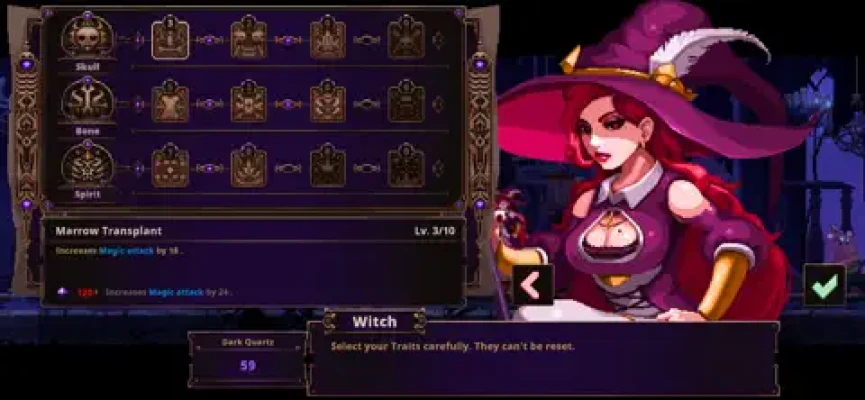
The App Store describes the game as featuring 100 playable characters, each with unique abilities.
This makes experimentation one of the most important parts of the game.
You aren't simply upgrading one fixed character.
You are constantly discovering new ways to build Skul.
100 Playable Characters
One of the game's biggest attractions is its huge selection of playable skull-based characters.
The available transformations include warriors, legendary figures, magical characters and other unusual designs.
Some emphasize:
- Melee damage
- Ranged attacks
- Speed
- Critical hits
- Area damage
- Magic
- Defense
- Special abilities
- Status effects
The variety encourages players to experiment rather than following a single permanent build.
Item Synergies
Skulls are only half of the build system.
Items can be combined to create powerful synergies that dramatically change how a run develops.
You may find combinations that increase:
- Attack power
- Critical damage
- Skill damage
- Speed
- Defense
- Special effects
- Status damage
The most enjoyable runs often happen when several items unexpectedly complement the skull you're using.
This creates a strong build experimentation element similar to other popular roguelite games.
Roguelite Progression
Skul: The Hero Slayer uses a roguelite structure.
Every run is different, and losing a run means starting another attempt.
However, failure isn't completely meaningless.
You gradually become more familiar with:
- Enemy patterns
- Boss attacks
- Skull abilities
- Item combinations
- Level layouts
- Combat strategies
- Upgrade systems
The more you play, the better you understand the game's systems.
Fast-Paced Hack-and-Slash Combat
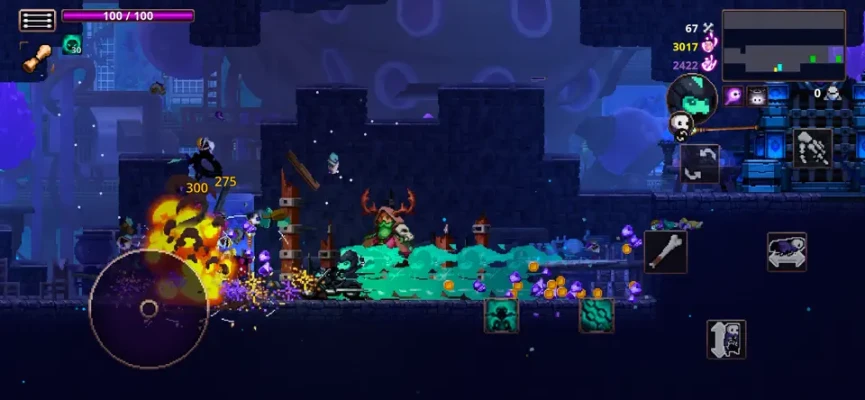
Combat is quick, aggressive and highly responsive.
Skul can move around enemies, attack from different positions and switch between abilities depending on the skull being used.
Successful combat requires:
- Timing
- Positioning
- Movement
- Attack selection
- Enemy awareness
- Build optimization
The game can become especially hectic during boss encounters and later stages.
Dark Mirror Mode
After completing the main story, players can test themselves in Dark Mirror Mode.
This is a more challenging experience designed for players who have already mastered the main campaign.
Dark Mirror provides an additional reason to continue playing after finishing the main journey.
For experienced players, it offers a harder environment where optimized builds and precise combat become even more important.
Enemies and Heroes
Skul's enemies aren't limited to ordinary monsters.
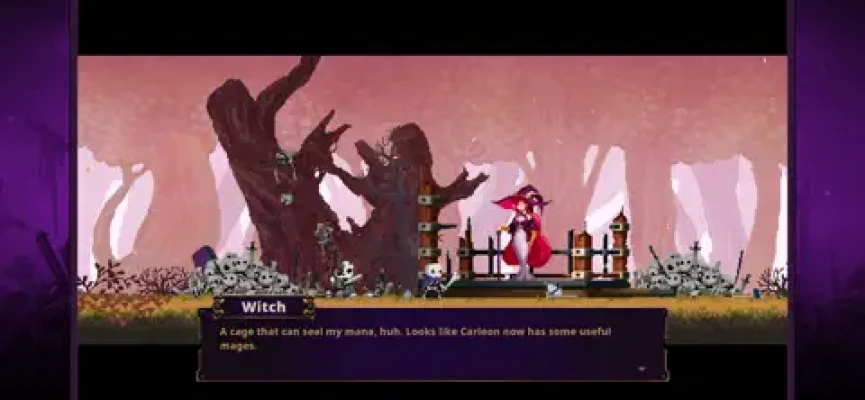
You will encounter powerful human heroes, soldiers, monsters and bosses.
The game's unusual story means that familiar fantasy archetypes are often presented from a completely different perspective.
Instead of cheering for the kingdom's heroes, you're trying to defeat them.
Boss Battles
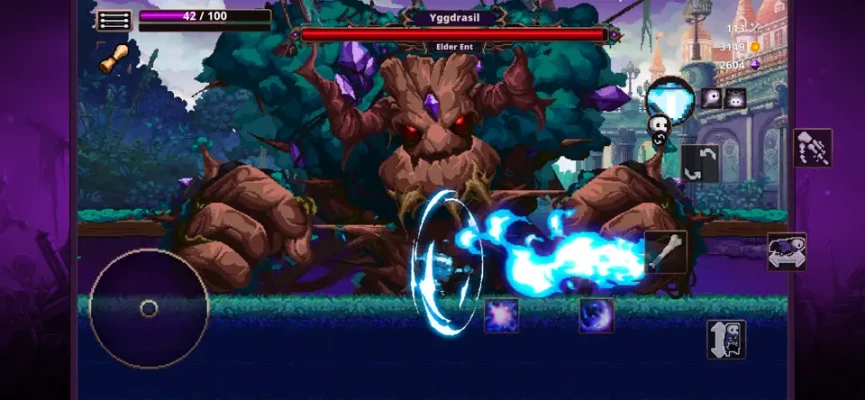
Boss fights are some of the most demanding encounters in the game.
They require you to recognize:
- Attack patterns
- Movement patterns
- Timing windows
- Vulnerable moments
- Area attacks
- Special abilities
A strong build can help, but understanding the boss is equally important.
Repeated attempts allow you to gradually learn each encounter.
Pixel Art Visual Style
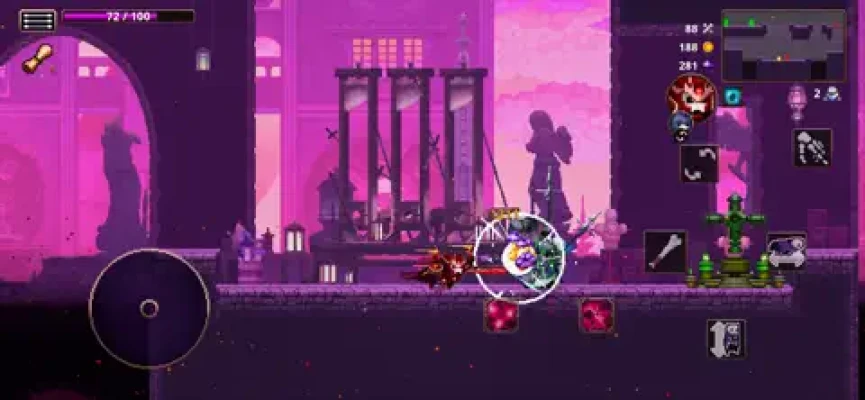
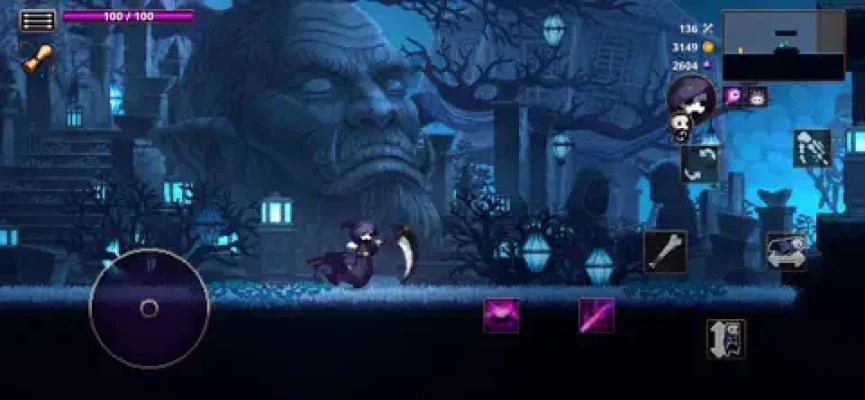
Skul: The Hero Slayer uses colorful 2D pixel-art animation with a distinctive cartoon-inspired style.
The visual presentation combines:
- Detailed pixel characters
- Bright effects
- Expressive animations
- Fantasy environments
- Comedic character designs
- Dramatic combat effects
The result gives the game a playful appearance while maintaining challenging combat.
The App Store specifically highlights its vibrant cartoon-style 2D pixel-art animations.
Dead Cells Crossover
One of the game's fun surprises is its connection with Dead Cells.
The App Store listing specifically mentions an official Dead Cells crossover and encourages players to discover the related Easter eggs.
This is a nice bonus for fans of both roguelite games.
Egyptian and Greek References
Skul also contains references inspired by different mythological and cultural ideas.
The App Store highlights examples including:
- Egyptian mummies
- Greek Minotaurs
- Fantasy heroes
- Demonic creatures
- Dead Cells crossover content
These references contribute to the game's playful personality.
Mobile Controls
The iOS edition has been specifically redesigned for mobile.
It includes:
- Dedicated mobile interface
- Complete touch controls
- Redesigned UI
- MFi controller support
- Game Center achievements
- Cloud Save
- iPhone 15 optimization
This makes the game suitable for both touchscreen players and those who prefer physical controls.
Controller Support
Skul: The Hero Slayer supports compatible MFi controllers.
A controller can be particularly useful during hectic boss fights where precise movement and attack timing are important.
The App Store's update history also shows that previous mobile patches addressed controller-related issues, including a title-screen problem and a minor controller UI bug.
Cloud Save
The iOS version supports Cloud Save, allowing players to share their progress between compatible Apple devices.
This is useful if you switch between an iPhone and iPad.
Game Center Achievements
Game Center achievements are also supported.
Completion-focused players can therefore pursue additional objectives while progressing through the game.
How to Play Skul: The Hero Slayer
1. Learn Your Current Skull
Every skull changes Skul's abilities, so spend time understanding its strengths.
2. Watch Enemy Patterns
Don't rush blindly into combat.
Learn when enemies attack and when they become vulnerable.
3. Experiment With Items
Don't automatically choose the item with the biggest number.
Look for combinations that complement your skull.
4. Don't Be Afraid to Change Skulls
A skull that worked perfectly during one part of a run may be less effective later.
5. Learn From Every Failed Run
Roguelite games reward experience.
Each defeat should teach you something about enemies, builds or positioning.
Beginner Tips
Prioritize Survival
A slightly weaker build that keeps you alive can be more useful than a powerful build that leaves you vulnerable.
Test Different Skulls
You won't know which skull fits your playstyle until you experiment.
Look for Synergies
Items become much stronger when their effects complement one another.
Don't Rush Bosses
Learning an attack pattern is often more valuable than dealing damage quickly.
Keep Moving
Standing still for too long can make Skul an easy target.
Explore Your Options
Don't commit to one build just because it worked in your previous run.
Advanced Strategies
Build Around Your Skull
Once you identify your strongest skull, select items that amplify its specific strengths.
Combine Damage Types
A balanced build can provide more consistent results than focusing entirely on one effect.
Use Movement as Defense
Dodging and repositioning are often more reliable than trying to absorb attacks.
Save Powerful Abilities
Use major attacks when they can make the biggest difference, particularly against elite enemies and bosses.
Learn Boss Phases
Many difficult encounters become much easier once you understand what happens after each major attack pattern.
Master Skull Switching
Advanced players can change their approach by using different skulls strategically rather than treating skulls as simple cosmetic changes.
Game Progression
Progression in Skul comes from a combination of:
- Completing runs
- Discovering skulls
- Building stronger item combinations
- Learning enemy patterns
- Improving combat skills
- Advancing through the story
- Unlocking additional challenges
- Completing Dark Mirror content
The player's knowledge is just as important as their character's power.
Game Difficulty
Difficulty: Challenging
Skul: The Hero Slayer is designed to test players.
The beginning can feel manageable, but later areas and bosses demand much stronger awareness and build planning.
The difficulty comes from:
- Fast enemy attacks
- Traps
- Boss patterns
- Limited room for mistakes
- Randomized runs
- Build management
- Increasing enemy strength
The App Store itself describes the battles as challenging and highlights Dark Mirror as an additional test of player skill.
Game Modes
Main Story
Fight through the human forces and attempt to rescue the Demon King.
Roguelite Runs
Explore changing encounters, collect items and develop different builds.
Dark Mirror
Challenge the enhanced difficulty after completing the main story.
Latest Mobile Version and Updates
The current U.S. App Store listing shows version 1.0.11, released October 23, 2025. The update included performance improvements and a security fix.
Earlier mobile updates fixed issues involving lost skulls and inventory during runs, controller access at the title screen and minor controller UI problems.
The game's current App Store listing reports 2.1 GB, requires iOS 15.0 or later and an A12 Bionic chip or later, and supports iPhone and iPad.
Player Ratings and Reception
The U.S. App Store currently shows 4.7 out of 5 stars from 525 ratings. Apple also labels Skul: The Hero Slayer as an Editor's Choice title.
Player feedback frequently praises the game's combat, skull variety, build possibilities and mobile adaptation.
Some reviews have also reported occasional crashes or controller/interface issues, although subsequent updates have addressed several technical problems.
Technical Details
| Feature | Details |
|---|---|
| Game | Skul: The Hero Slayer |
| Genre | Action / Roguelite / Platformer |
| Developer | SouthPAW Games |
| Mobile Publisher | Playdigious |
| Platform | iPhone, iPad |
| Size | 2.1 GB |
| Price | $7.99 |
| Age Rating | 13+ |
| Playable Characters | 100 |
| Game Mode | Single-player |
| Dark Mirror | Yes |
| Game Center | Yes |
| Cloud Save | Yes |
| Controller Support | MFi |
| Required iOS | iOS 15.0+ |
| Required Chip | A12 Bionic or later |
| Languages | English + 8 more |
The current U.S. App Store listing identifies Playdigious as the seller and lists English, French, German, Korean, Polish, Portuguese, Russian, Spanish and Traditional Chinese among the supported languages.
Pros and Cons
Pros
- Fast-paced roguelite combat
- 100 playable characters/skulls
- Excellent build variety
- Large number of item combinations
- Challenging boss battles
- Dark Mirror mode
- Creative skull-swapping mechanic
- Beautiful pixel-art animation
- Humorous fantasy setting
- Dead Cells crossover
- Touch-optimized interface
- Controller support
- Cloud Save
- Game Center achievements
- Strong replay value
Cons
- Can be difficult for newcomers
- Randomized runs may not appeal to everyone
- Some encounters can become hectic
- Large 2.1 GB installation
- Occasional technical issues have been reported by players
Skul: The Hero Slayer vs Similar Games
Skul vs Dead Cells
Both are fast-paced roguelite action games with pixel-art visuals and challenging combat. Skul stands apart with its skull-swapping system and large roster of transformations.
Skul vs Hades
Hades places greater emphasis on narrative relationships and Greek mythology, while Skul focuses heavily on build experimentation and rapidly changing combat styles.
Skul vs Rogue Legacy 2
Rogue Legacy 2 emphasizes hereditary character progression, while Skul revolves around changing skulls and creating item synergies during runs.
Skul vs Hollow Knight
Hollow Knight offers a more exploration-focused Metroidvania experience, whereas Skul is more directly centered on roguelite combat and repeated dungeon runs.
Who Should Play Skul: The Hero Slayer?
Skul is an excellent choice for players searching for:
- Roguelite games for iPhone
- Roguelike games for iOS
- Action games for iPhone
- Pixel-art RPGs
- Hack-and-slash games
- Platformer RPGs
- Dungeon crawler games
- Challenging mobile games
- Indie games for iPhone
- Games like Dead Cells
- Games like Hades
- Games like Rogue Legacy
- Skull-based RPG games
- Character-building games
- Action platformers for iPad
Expert Rating
| Category | Rating |
|---|---|
| Combat | 9.5/10 |
| Skull Variety | 9.8/10 |
| Build System | 9.6/10 |
| Boss Battles | 9.2/10 |
| Pixel Art | 9.5/10 |
| Replay Value | 9.7/10 |
| Mobile Controls | 9.0/10 |
| Difficulty | 9.1/10 |
| Overall | 9.5/10 |
Final Verdict
Skul: The Hero Slayer is a highly replayable roguelite action game with a clever central mechanic: instead of collecting ordinary weapons, you can literally change your head to transform your fighting style.
The combination of 100 playable skull-based characters, extensive item synergies, fast combat, randomized runs and Dark Mirror mode gives every playthrough plenty of room for experimentation.
The mobile version is also thoughtfully adapted, with a redesigned interface, full touch controls, Cloud Save, Game Center achievements and MFi controller support.
With a current U.S. App Store rating of 4.7/5 from 525 ratings and Apple's Editor's Choice recognition, it is a strong option for fans of challenging action roguelites.
If you enjoy Dead Cells-style combat, roguelite progression and experimenting with unusual character builds, Skul: The Hero Slayer is an excellent game to add to your iPhone or iPad library.
Frequently Asked Questions
What is Skul: The Hero Slayer?
Skul: The Hero Slayer is a roguelite hack-and-slash platformer where you play as a small skeleton who changes skulls to gain different powers and fight powerful human heroes.
Is Skul: The Hero Slayer available on iPhone?
Yes. The game is available for iPhone and iPad through the App Store.
How many playable characters are in Skul?
The App Store describes the game as featuring 100 playable characters, each with unique abilities.
What is the skull system?
Skul can swap his skull to gain the abilities and combat style associated with another character.
Is Skul: The Hero Slayer a roguelike?
It is officially described as a fast-paced action rogue-lite, combining repeated runs with progression and build experimentation.
Does Skul have Dark Mirror mode?
Yes. Dark Mirror is a challenging mode available after completing the main story.
Does Skul have controller support?
Yes. The mobile edition supports compatible MFi controllers.
Does Skul support Cloud Save?
Yes. Cloud Save allows progress to be shared between compatible iOS devices.
Does Skul have Game Center achievements?
Yes. Game Center achievements are supported.
Is Skul difficult?
Yes. The game is designed to be challenging, particularly during later areas, boss fights and Dark Mirror runs.
Is Skul similar to Dead Cells?
Yes. Both are challenging pixel-art roguelite action games. Skul differentiates itself through its skull-swapping system and large collection of character transformations.
Is Skul: The Hero Slayer offline?
The mobile game is primarily designed as a single-player experience, and the gameplay itself does not require online multiplayer.
How much storage does Skul require?
The current U.S. App Store listing reports approximately 2.1 GB.
What iOS version does Skul require?
The current listing requires iOS 15.0 or later and an A12 Bionic chip or later.
What is the age rating?
The U.S. App Store currently rates the game 13+ because of cartoon or fantasy violence and occasional horror/fear themes.
Rate the Game
User Reviews








Popular Games



















 Android
 iOS
iOS Windows
 Xbox
Xbox