








Latest Version
October 18, 2026
Chilly Room
Action
iOS
0
Report a Problem
More About :game
Players can choose from more than a dozen unique Platyguards, each with a distinct combat style. Master precise parries, dodge incoming attacks, unleash powerful counters, and chain combos to defeat enemy swarms. With hundreds of skills and items to discover, every run offers opportunities to experiment with new builds and combat strategies.
The adventure spans dangerous environments filled with more than 50 enemy types, elite monsters, and powerful bosses. As you explore the ruins and uncover the truth behind the Hive Scourge, you will need quick reactions, smart upgrade choices, and a reliable combat strategy to survive.
What Is PlatyGuard: Swarm Slayer?
PlatyGuard: Swarm Slayer is a side-scrolling action RPG that combines platforming, hack-and-slash combat, and roguelike build customization. Developed by ChillyRoom, it places players in a devastated world where humanity's survival is threatened by mutant creatures and a mysterious biological catastrophe.
Unlike games that rely entirely on rapid attacks, PlatyGuard emphasizes timing and precision. Parrying enemy strikes, dodging dangerous attacks, breaking defenses, and chaining combos are central to its combat system.
Each playable Platyguard offers a different approach to battle. Some favor sword fighting and close-range combos, while others rely on charged attacks, mobility, or ranged weapons. Finding a character that matches your preferred style is an important part of the experience.
Between encounters, you can collect items, unlock abilities, and develop builds that change how your character fights. The result is a game that rewards both mechanical skill and experimentation.
Main Features of PlatyGuard: Swarm Slayer
1. More Than a Dozen Playable Platyguards
Choose from a roster of unique fighters with distinct combat mechanics. Whether you prefer fast sword attacks, powerful combos, charged strikes, or ranged combat, different characters offer different ways to approach the battlefield.
2. Precision-Based Combat
Parrying, dodging, counterattacking, and breaking enemy defenses are essential skills. Correct timing can create openings that let you punish enemies instead of trading damage with them.
3. Hundreds of Skills and Items
Experiment with a broad selection of skills, items, and combat synergies. You can build around direct attacks, summoned allies, magic effects, lightning damage, and other available mechanics.
4. Roguelike Progression
Each run gives you opportunities to develop your character through different upgrades and combinations. Adapting your build to the available rewards is often more effective than following the same plan every time.
5. Six Original Stages and Expanding Content
The original game description highlights six major stages and more than 50 enemy types, alongside elite monsters and bosses. Later updates have added further content, including the Origin Grounds stage and the Godshell Worm boss.
6. A Dark Biopunk Science-Fiction World
Explore ruined shelters, infected zones, and mysterious locations shaped by the Hive Scourge. The combination of post-apocalyptic environments, mutant insects, and corporate conspiracies gives the game a distinctive atmosphere.
7. Additional Challenges and Customization
Later updates have introduced content such as Abyssal Plane, Prestige challenges, additional characters, outfits, talent options, and score features. These systems give players more opportunities to refine their builds and test their combat skills.
Complete Strategy Guide for PlatyGuard: Swarm Slayer
1. Beginner's Guide: How to Start Strong
Your first priority should be learning the combat system rather than trying to defeat every enemy as quickly as possible. Good timing and smart positioning can make a noticeable difference, especially when you encounter stronger opponents.
Step 1: Learn your character's moves.
Test your normal attacks, special abilities, charged attacks, and defensive options. Understanding your character's strengths will help you make better decisions during difficult fights.
Step 2: Practice parrying and dodging.
Watch enemy attack animations and learn when to defend or move away. A successful parry can create an opportunity for a counterattack, while dodging helps you escape dangerous situations.
Step 3: Collect upgrades carefully.
Choose skills and items that support your character's strengths. Avoid picking upgrades simply because they sound powerful; their value depends on how they interact with your existing build.
Step 4: Explore each stage.
Look for available rewards, useful items, and opportunities to improve your character. Exploring carefully can help you prepare for later encounters.
Step 5: Learn from every defeat.
If a boss or enemy group defeats you, identify what went wrong. You might need better timing, a different combination of skills, stronger damage, or a more defensive approach.
2. How to Master Parrying and Counterattacks
Parrying is one of the defining mechanics of PlatyGuard: Swarm Slayer. Learning to recognize enemy attacks and respond at the right moment is essential for improving your combat performance.
Watch for attack cues
Pay attention to enemy animations before they strike. Different attacks may require different responses, so avoid pressing defensive actions without considering the timing.
Practice against individual enemies
Start by learning the behavior of a single opponent before dealing with a large swarm. This makes it easier to recognize attack patterns and understand when you have an opportunity to counter.
Follow successful parries with attacks
A successful defensive action is most useful when you capitalize on the opening it creates. Learn which attacks can safely follow your parries and how to extend those opportunities into combos.
Do not parry everything
Some attacks may be easier or safer to avoid through movement. If you are unfamiliar with an enemy's timing, dodging and repositioning can be a sensible alternative.
Avoid button mashing
Repeatedly pressing attacks and defensive controls can make it harder to respond to enemy patterns. Deliberate actions are generally more effective than uncontrolled aggression.
3. Best Character Selection Strategy
There is no single best Platyguard for every situation. Your ideal character depends on your reaction speed, preferred attack range, and the types of abilities you enjoy using.
Consider these broad playstyles when selecting a hero.
Sword-focused fighters
Best suited to players who enjoy close-range combat, timed attacks, and counterattack opportunities. Focus on learning attack reach and maintaining safe positioning.
Fast and mobile fighters
Favor players who enjoy quick movement, evasive play, and rapid attacks. Prioritize learning how to reposition without losing opportunities to deal damage.
Ranged and charged-attack fighters
Appeal to players who prefer controlling distance or timing powerful attacks. Learn when to create space and when an enemy is vulnerable enough to attack safely.
These are general combat categories, not a definitive ranking of individual characters. The effectiveness of each hero depends on its actual abilities, available upgrades, and your skill with its mechanics.
4. How to Build a Powerful Skill Combination
The large selection of skills and items gives PlatyGuard considerable room for experimentation. However, a successful build should have a clear direction.
Choose a primary damage strategy
Decide whether you want to focus on close-range attacks, charged strikes, ranged damage, summoned units, magic, or another supported mechanic.
Look for complementary effects
An upgrade becomes more valuable when it improves something your character already does well. For example, a build centered on repeated attacks should favor available effects that improve those attacks or reward consistent aggression.
Consider area damage
When surrounded by mutant insects, attacks that affect several enemies can help control crowds. Area damage may be especially useful when ordinary enemies arrive in groups.
Balance damage with survivability
A build that deals enormous damage but leaves you vulnerable to every attack may struggle against bosses. Defensive options and reliable movement can help you survive long enough to use your strongest abilities.
Adapt to the upgrades you find
Roguelike progression involves making decisions with the rewards available during a run. If your preferred combination does not appear, build around the strongest compatible alternatives instead of forcing an incomplete strategy.
5. Best Equipment and Item Management Tips
Items can substantially change your character's performance. Rather than collecting upgrades without a plan, evaluate each one according to your current needs.
Use these principles to make better decisions:
Prioritize items that improve your primary damage strategy.
Look for synergies between items and skills.
Consider defensive effects when enemies begin dealing more damage.
Favor consistent benefits over effects that rarely activate in your build.
Test new combinations to discover unexpected interactions.
Avoid assuming that the rarest item is automatically the best choice.
The game advertises more than 100 items, so experimenting with different combinations is part of its long-term appeal.
6. How to Defeat Large Enemy Swarms
Fighting multiple enemies requires more awareness than dealing with a single opponent. Attacking one target without watching the surrounding battlefield can leave you exposed to incoming strikes.
Recommended swarm-fighting strategy:
Observe the positions of nearby enemies before committing to an attack.
Avoid being trapped between several opponents.
Use available area attacks when they can hit multiple targets effectively.
Look for opportunities to interrupt or counter dangerous enemies.
Keep moving when the battlefield becomes crowded.
Save powerful abilities for situations where they provide meaningful value.
Crowd control and area damage can be especially useful when your build supports them. However, positioning remains important even with powerful skills.
7. Boss Battle Strategy
Bosses test your understanding of attack timing, movement, and damage opportunities.
Study the attack pattern
Watch for repeated sequences and learn which attacks are predictable. Recognizing these patterns helps you decide when to parry, dodge, or counterattack.
Avoid attacking at the wrong time
A boss may be vulnerable only during certain moments. Avoid committing to a long attack sequence if the enemy is about to retaliate.
Use openings efficiently
When the boss finishes an attack or exposes a weakness, use that opportunity to deliver damage. Strong attacks are most effective when you can land them without taking unnecessary risks.
Do not neglect defense
It can be tempting to focus entirely on reducing a boss's health. However, surviving long enough to learn the fight is often more valuable than attempting an aggressive strategy that repeatedly fails.
Adjust your build when necessary
If a boss consistently defeats you, consider whether your build needs more reliable damage, better defensive options, or a different combination of skills.
Prepare for new encounters
Later stages and updates introduce additional challenges. Do not assume that a strategy effective against an earlier boss will work equally well against every new opponent.
8. Stage Exploration and Progression
Exploration is an important part of the PlatyGuard experience. Different environments introduce new enemies and challenges, while progression gives you opportunities to strengthen your character.
To advance more efficiently:
Explore available routes and collect useful rewards.
Learn the behavior of unfamiliar enemies before engaging aggressively.
Choose upgrades that remain useful as encounters become harder.
Review your performance after completing or failing a stage.
Avoid wasting time repeating the same unsuccessful approach.
Continue experimenting as new characters, items, and mechanics become available.
The game's changing battlefields and randomized build opportunities encourage players to adjust their tactics rather than rely on a fixed strategy for every run.
9. Abyssal Plane and Prestige Challenges
Abyssal Plane and Prestige challenges add further opportunities to test your character development and combat skills.
For these more demanding activities, focus on consistency rather than relying on a single powerful ability.
A practical approach:
Enter with a character whose mechanics you understand.
Build around a reliable damage source.
Learn enemy patterns before taking unnecessary risks.
Choose upgrades that work well together.
Reassess your build as the challenge progresses.
Treat failed attempts as opportunities to identify weaknesses.
These activities can be useful for players who have already learned the basics and want additional challenges beyond their initial progression.
10. Character Upgrades and Long-Term Progression
Character development becomes increasingly important as you unlock additional content.
The game's updates have introduced more characters, new stages, additional outfits, talent options, and a higher character level cap. These additions provide more opportunities to explore different playstyles.
To make steady progress:
Concentrate on characters you genuinely enjoy playing.
Learn their strengths before investing heavily in alternatives.
Check which upgrades improve your preferred combat mechanics.
Experiment with new characters when your existing options become familiar.
Keep track of which skill combinations perform well.
Revisit earlier builds when new content introduces useful options.
Do not assume every newly released character will suit your playstyle. Testing a character's mechanics is the best way to determine whether it deserves more of your resources.
11. Common Mistakes to Avoid
Relying only on attacks: Ignoring parries and dodges can make difficult fights unnecessarily frustrating.
Using defensive actions without timing: Watch enemy cues instead of treating every attack as an opportunity to press the same button.
Choosing random upgrades: A coherent build is usually more useful than a collection of unrelated effects.
Ignoring positioning: Getting surrounded can reduce your options, even when your character deals high damage.
Focusing exclusively on offense: Defensive improvements and good movement can be essential against stronger enemies.
Repeating the same failed strategy: Change your approach when a fight exposes a weakness in your build or technique.
Ignoring character differences: Each Platyguard has distinct mechanics, so techniques that work well with one hero may be less effective with another.
Graphics, Atmosphere, and Overall Experience
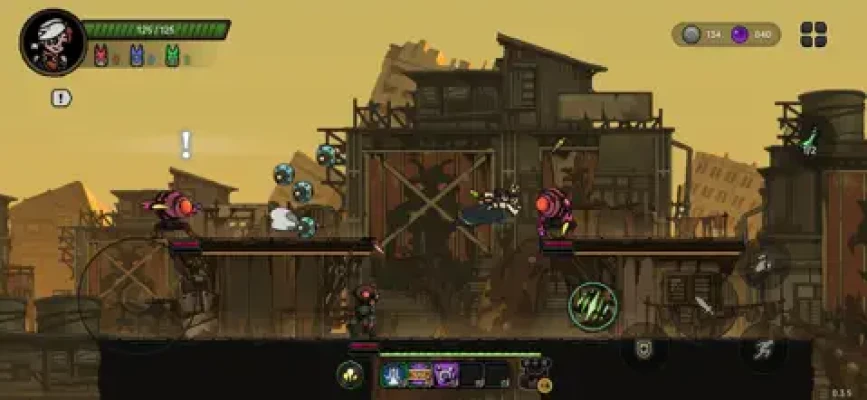
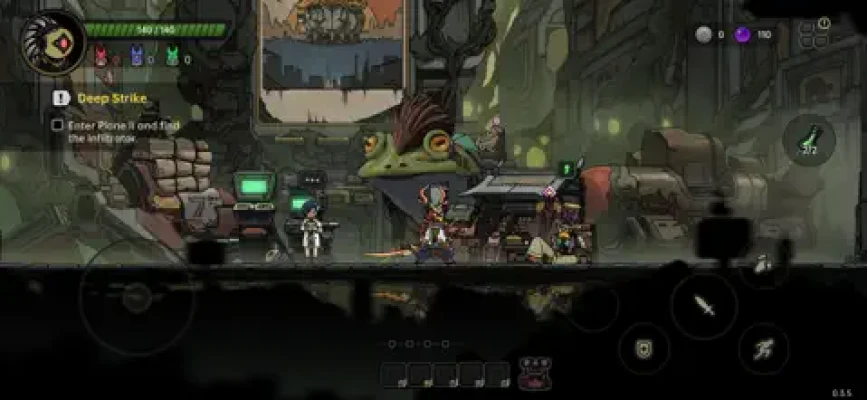
PlatyGuard: Swarm Slayer combines side-scrolling action with a post-apocalyptic biopunk setting. Its world features ruined environments, mutant insects, mysterious hive portals, and a darker science-fiction atmosphere.
The visual style supports fast-paced combat while giving the setting a recognizable identity. The contrast between distinctive playable characters and grotesque enemies helps keep the world visually interesting.
The combat system is the main attraction. Parrying, counterattacking, chaining combos, and experimenting with randomized upgrades offer different ways to approach encounters. Players who enjoy action games that reward timing and mechanical improvement will likely appreciate this combination.
However, the game can become repetitive for players who prefer extensive narrative sequences or large changes in enemy encounters throughout every stage. Its greatest appeal lies in mastering combat and developing increasingly effective builds.
Pros and Cons
Pros
Precise parrying and counterattack mechanics.
More than a dozen playable characters with distinct fighting styles.
Hundreds of skills and items for build customization.
More than 50 enemy types in the advertised content.
Roguelike progression encourages experimentation.
Dark science-fiction atmosphere and varied environments.
Additional stages, characters, and challenge modes introduced through updates.
Controller support added in a later update.
Cons
Mastering defensive timing can take practice.
Randomized upgrades may make some runs less consistent.
Combat can become repetitive for some players.
Building an effective character requires experimentation.
Later encounters may punish poor positioning and mistimed attacks.
Optional purchases are available for players who want additional benefits.
Frequently Asked Questions
What type of game is PlatyGuard: Swarm Slayer?
It is a 2D action roguelike platformer RPG featuring hack-and-slash combat, precision parrying, character customization, and randomized upgrades.
Who developed PlatyGuard: Swarm Slayer?
The game was developed by ChillyRoom.
How many characters are available?
The game advertises more than a dozen playable Platyguards, with additional characters introduced through updates.
What is the best character in PlatyGuard: Swarm Slayer?
There is no universally best character for every situation. Choose a Platyguard whose attack style and abilities suit your preferences, then develop a build that complements those mechanics.
How do you parry attacks successfully?
Watch enemy animations, learn the timing of incoming strikes, and practice against individual opponents. Once you become familiar with an enemy's patterns, it becomes easier to recognize opportunities for successful counters.
What are the best skills to choose?
The strongest skills depend on your character and current build. Prioritize abilities that reinforce your primary damage strategy, complement your existing upgrades, or address a weakness in your setup.
How do you defeat bosses more easily?
Learn their attack patterns, avoid unnecessary damage, and attack during vulnerable moments. If you repeatedly fail, reconsider your equipment, skill combinations, and defensive strategy.
Is PlatyGuard: Swarm Slayer free to play?
Yes. The game is available as a free download with optional in-app purchases.
Can you play PlatyGuard: Swarm Slayer on iPhone and iPad?
Yes. The Apple App Store lists the game for iPhone and iPad, with iOS 12.0 or later and iPadOS 12.0 or later requirements, respectively.
Does PlatyGuard: Swarm Slayer support controllers?
Yes. Controller support was added in a game update, offering another way to control the action.
Is PlatyGuard: Swarm Slayer suitable for casual players?
It can suit casual players who enjoy short action sessions and gradual character progression. However, players who want to master parrying and counterattacks should expect to spend time learning enemy behavior and improving their timing.
Does the game offer replay value?
Yes. Different playable characters, randomized skills and items, build combinations, and additional challenge modes provide reasons to return and experiment with new strategies.
Final Verdict
PlatyGuard: Swarm Slayer is a compelling choice for players who enjoy 2D action RPGs, roguelike progression, precise combat, and character customization. Its combination of parrying, counterattacks, platforming, and randomized builds gives players several ways to approach difficult encounters.
The best way to improve is to master one character at a time, learn enemy attack patterns, and choose upgrades that support a clear combat strategy. As you become more comfortable with the controls, you can experiment with different heroes and discover combinations that suit your preferred playstyle.
If you enjoy fast-paced combat set in a dark, post-apocalyptic world, PlatyGuard: Swarm Slayer offers a challenging adventure built around skill, experimentation, and steady improvement.
Rate the Game
User Reviews














Popular Games



















 Android
 iOS
iOS Windows
 Xbox
Xbox