

Latest Version
October 08, 2026
Phobies Holdings Inc.
Strategy
0
com.smokingguninc.phobies
Report a Problem
More About :game
Rather than relying purely on card strength, Phobies asks you to think about where each creature moves, which enemy it attacks, how abilities interact, and how the battlefield can be used to your advantage.
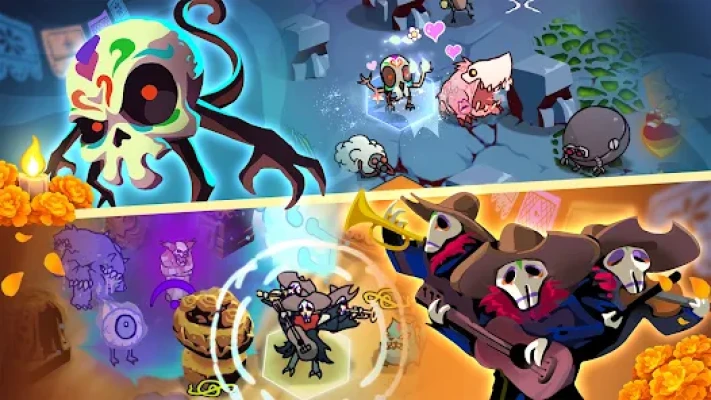
The game currently features more than 200 Phobies, with creatures specializing in different roles such as teleportation, ranged attacks, healing, silence, and terrain manipulation.
What Is Phobies?
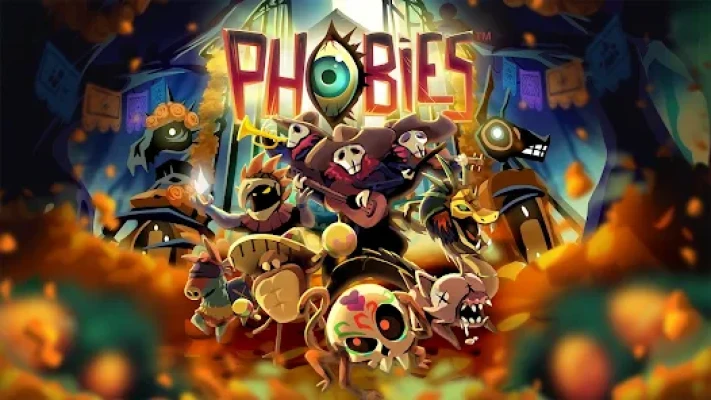
Phobies is a turn-based strategy card game built around tactical battles on hex-based maps.
You collect different Phobies and assemble a roster capable of handling different situations. Each creature has its own characteristics and abilities, so building a strong collection is only the beginning.
Victory depends on combining the right creatures, controlling important parts of the map, using terrain intelligently, and anticipating your opponent's next move.
The game includes several ways to play, including:
Asynchronous PvP
Real-time Arena
Challenge Mode
Friend Duels
Practice Mode
Weekly leagues
Seasonal content
Limited-time events
Cross-platform play
The Google Play listing also describes Phobies as a strategy and tactics game with competitive multiplayer.
Phobies Gameplay Basics
A typical battle revolves around movement, attacks, abilities, positioning, and control of the battlefield.
Because combat is turn-based, you have time to consider your options before committing to an action.
A good turn should accomplish something useful.
That might mean:
Attacking an enemy
Capturing or defending an important control point
Moving into a stronger position
Protecting a valuable Phobie
Setting up a future attack
Blocking an opponent's movement
Preparing a combination of abilities
Avoid moving simply because you have movement available.
Every action should have a purpose.
Understanding Your Phobies
One of the biggest challenges in Phobies is learning what your creatures are capable of.
The game features more than 200 collectible Phobies, and their abilities can vary significantly.
Some specialize in direct attacks, while others provide utility or tactical support.
The official game description specifically mentions roles including:
Teleporters
Lobbers
Healers
Silencers
Terraformers
This variety means that a Phobie with lower direct damage can still be extremely valuable because of its utility.
Building a Strong Phobie Team
Do not build your roster around damage alone.
A strong team should ideally contain different tactical roles.
Consider including combinations of:
Damage dealers: Phobies designed to eliminate enemy units.
Support units: Creatures that heal, protect, or enhance your team.
Control units: Phobies that interfere with enemy movement or abilities.
Ranged attackers: Units that can attack without moving directly next to enemies.
Mobility specialists: Phobies that can reposition quickly or use unusual movement abilities.
The exact combination should depend on the map and objective.
Phobie Synergy
Synergy is one of the most important concepts in Phobies.
Instead of asking which creature is strongest, ask which creatures work best together.
For example, a fragile ranged attacker becomes more useful when another Phobie can protect it or control enemies approaching from the front.
Likewise, a healer becomes more valuable when paired with durable units that can remain on the battlefield long enough to benefit from repeated healing.
Think in terms of combinations rather than isolated cards.
Positioning Strategy
Positioning can decide an entire battle.
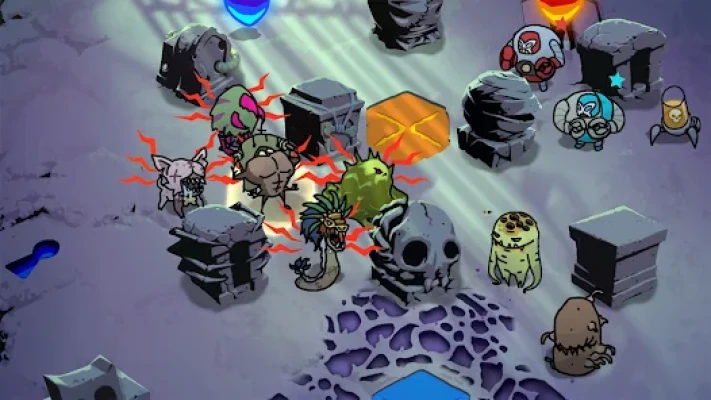
Because Phobies uses hex-based maps, where a creature stands can influence:
Attack opportunities
Movement options
Defensive protection
Access to objectives
Enemy approaches
Ability combinations
Do not move your strongest creature directly into danger simply because an enemy is within range.
Before moving, consider what your opponent can do on the following turn.
Control the Battlefield
Winning a battle is not always about eliminating every enemy.
Map control can be equally important.
The Google Play listing highlights control points as part of the game's tactical battlefield design.
If the objective rewards controlling an important location, forcing your opponent away from that area can be more valuable than chasing a low-health enemy.
Ask yourself:
What does the opponent need to accomplish?
Then make it difficult for them to do it.
Terrain and Hazards
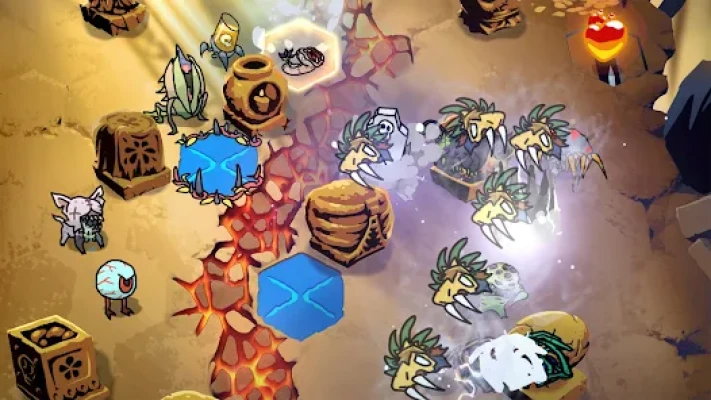
Battlefields contain hazards and unusual terrain, which means the map itself can become part of your strategy.
Before making a move, examine the surrounding environment.
A good position is not necessarily the closest position to the enemy.
Sometimes the safest or most strategically useful location is the one that limits the opponent's options.
Use the battlefield to:
Create distance
Block approaches
Protect vulnerable units
Force enemies into unfavorable positions
Control important areas
Set up attacks
Action Economy
One of the most important advanced concepts in turn-based strategy is making every action count.
If you spend a turn moving a Phobie without gaining a meaningful advantage, your opponent effectively gets more value from their turn.
Try to combine actions.
For example, a move that simultaneously:
Avoids an attack
Protects an ally
Gains control of an area
Creates an attack opportunity
is much more valuable than a move that only changes position.
How to Attack Effectively
Do not attack the first enemy you can reach.
Instead, consider the consequences of the attack.
Before attacking, ask:
Can I eliminate the target?
Will I expose my Phobie afterward?
Can another enemy counterattack?
Does this attack protect an objective?
Does the attack enable another Phobie?
Would attacking a different target create a better advantage?
Sometimes leaving an enemy alive is strategically better than taking a risky attack.
Focus Fire
When several enemies are nearby, concentrating attacks can often be more effective than damaging multiple targets slightly.
If you can eliminate one dangerous enemy this turn, doing so may reduce the opponent's options dramatically.
However, do not blindly focus the lowest-health target.
The most valuable target is often the enemy with the greatest strategic impact.
Protect Your Important Phobies
Your strongest creature is not necessarily the one with the highest attack.
A Phobie that provides healing, silence, mobility, or another important utility effect can be more valuable than a simple damage dealer.
Protect units that your overall strategy depends upon.
If an important support Phobie dies early, your entire composition may become weaker.
Beginner Strategy
New players should avoid trying to master every Phobie immediately.
Start by learning a small number of creatures extremely well.
Step 1 – Learn Your Core Phobies
Understand their movement, attack range, strengths, weaknesses, and special abilities.
Step 2 – Build a Balanced Team
Try to combine damage, support, and utility.
Step 3 – Study the Map
Look at hazards, objectives, control points, and available routes.
Step 4 – Think Before Moving
Remember that your opponent gets a turn after yours.
Step 5 – Protect Valuable Units
Do not sacrifice an important Phobie for insignificant damage.
Step 6 – Learn From Defeats
Identify the exact decision that caused your position to collapse.
Step 7 – Experiment
Try different combinations until you understand which Phobies work best together.
Asynchronous PvP Strategy
One of Phobies' distinctive features is asynchronous PvP.
Instead of requiring both players to be online at the same time, you can take your turn when convenient. The current Google Play listing specifically describes global asynchronous PvP and allows multiple matches to be played at your own pace.
This changes how you should approach the game.
You have more time to think, so use it.
Before committing to a move, examine:
Every available attack
Enemy movement possibilities
Potential counters
Objective control
Your next turn
The opponent's likely response
The slower format is an advantage if you use the extra thinking time effectively.
Real-Time Arena Strategy
Arena Mode provides a more immediate experience.
The fundamentals remain the same, but decision-making becomes faster.
Instead of spending a long time considering every possibility, learn to recognize familiar patterns.
Before entering Arena matches, practice common situations:
Protecting your backline
Controlling a choke point
Removing a dangerous enemy
Retreating a damaged Phobie
Contesting an objective
Practice Mode can be useful for refining these skills before competitive matches.
Challenge Mode
Challenge Mode provides puzzle-style PvE missions designed around specific objectives.
These challenges are useful because they encourage you to think differently from normal PvP matches.
Do not approach every challenge as a simple combat encounter.
Look carefully at the objective and determine what the puzzle is asking you to accomplish.
Sometimes the correct solution may involve positioning, timing, or an unusual ability interaction rather than overwhelming the enemy.
Friend Duels
Friend Duels provide a useful way to practice specific strategies against another player.
Instead of worrying about rankings, use friendly matches to test:
New Phobie combinations
Different formations
Unusual strategies
Counter tactics
Newly upgraded creatures
Experimentation is one of the best ways to understand the deeper mechanics.
Upgrade Strategy
The game allows players to upgrade their favorite Phobies, giving them additional competitive strength.
However, spreading resources across your entire collection can slow down your progress.
A better approach is to develop a core group of Phobies that you use regularly.
Prioritize creatures that:
Fit multiple team compositions
Have useful abilities
Perform consistently
Complement your preferred strategy
Are valuable in several game modes
A flexible core roster is generally more useful than a large collection of underdeveloped creatures.
How to Choose Which Phobies to Upgrade
Before upgrading a Phobie, consider its long-term value.
Ask:
Do I use this Phobie regularly?
Does it work with several other creatures?
Does its ability become significantly more useful with upgrades?
Will I still use it when my roster grows?
If the answer to several of these questions is yes, the creature may be a good upgrade candidate.
How to Win More PvP Matches
Improving your PvP results is less about finding one unbeatable team and more about making fewer strategic mistakes.
Focus on these areas:
Map Awareness
Always understand the objective and terrain.
Positioning
Keep important units out of unnecessary danger.
Target Selection
Attack enemies based on strategic value, not just health.
Timing
Do not reveal your strongest move too early if you can create a better opportunity later.
Adaptation
Change your approach when your opponent reveals their strategy.
Patience
Especially in asynchronous PvP, use the time available to examine the board carefully.
Countering Strong Opponents
When facing a powerful enemy team, do not panic.
Identify its main strength.
Is it:
High damage?
Strong healing?
Excellent mobility?
Area control?
Long-range attacks?
A particular combination of abilities?
Once you identify the main threat, try to disrupt it.
For example, if the opponent relies heavily on one support unit, eliminating or disabling that unit may weaken the entire composition.
Common Beginner Mistakes
Moving Without a Plan
Every movement should have a purpose.
Attacking the Closest Enemy
The closest target is not necessarily the most important target.
Ignoring Objectives
Eliminating enemies means little if the opponent controls the important objective.
Exposing Support Units
Keep valuable utility Phobies protected.
Using Abilities Too Early
A powerful ability may be more valuable if saved for the right moment.
Building Only for Damage
A team without mobility, support, or control can become predictable.
Upgrading Everything
Concentrate your progression around a useful core roster.
Ignoring the Map
Terrain and hazards can dramatically influence the outcome of a battle.
Advanced Phobies Strategy
Once you understand the basics, begin thinking about future turns.
A strong player does not only ask:
What can I do now?
They also ask:
What will my opponent do after I make this move?
And then:
What can I do after their response?
This creates a chain of tactical planning.
Force Bad Choices
Try to position your units so the opponent has difficult decisions.
If every available move carries a cost, you have created a strategic advantage.
Control Movement
Sometimes simply blocking a route can be more powerful than attacking.
Trade Efficiently
If sacrificing one low-value Phobie allows you to eliminate a much more important enemy, the exchange may be worthwhile.
Preserve Flexibility
Avoid committing all of your strongest units to one side of the map unless doing so creates a decisive advantage.
Phobies Strategy Tips
Learn your favorite Phobies thoroughly.
Build teams around complementary abilities.
Study the hex-based battlefield before moving.
Use terrain and hazards strategically.
Protect important support units.
Focus attacks on valuable targets.
Do not waste movement.
Think about your opponent's next turn.
Control important objectives.
Upgrade a useful core roster.
Practice unfamiliar combinations.
Use Challenge Mode to improve tactical thinking.
Take advantage of asynchronous PvP's slower pace.
Adapt your strategy to each map.
Do not assume one team works everywhere.
Events and Progression
Phobies has an ongoing event structure with weekly leagues, seasonal content, limited-time events, daily rewards, quests, and giveaways.
The game also regularly adds new Phobies, giving players additional creatures and tactical possibilities.
The current Google Play listing shows the game was updated on August 26, 2026, with a hotfix addressing an issue that could prevent player inputs during a match.
Phobies Multiplayer and Cross-Platform Play
Phobies supports multiple competitive formats and cross-platform play between mobile and PC.
This makes the game particularly suitable for players who want to continue their strategy battles across different devices.
The asynchronous format is especially convenient because it does not require both players to be available simultaneously.
Is Phobies Worth Playing?
Phobies is a strong choice for players who enjoy turn-based strategy, collectible card games, tactical positioning, and competitive multiplayer.
Its unusual creature designs give it plenty of personality, while the hex-based maps and large collection of abilities provide considerable strategic depth.
The current Google Play listing shows 1M+ downloads and a 4.4-star rating from more than 31,000 reviews, and the game has an Editors' Choice label.
Player feedback also highlights the game's appeal as a turn-based strategy experience that can be played at a relaxed pace. At the same time, some recent reviews criticize progression balance and differences between upgraded collections, so competitive fairness can be a concern for some players.
Pros and Cons
Pros
Deep turn-based strategy
200+ collectible Phobies
Distinctive creature designs
Hex-based tactical maps
Different abilities and roles
Asynchronous PvP
Real-time Arena
Challenge Mode
Friend Duels
Cross-platform play
Weekly and seasonal content
Regular new Phobies
Practice options for learning strategies
Cons
Large roster can be intimidating for new players
Competitive progression may feel demanding
Some players have raised concerns about card-level differences in competitive matches
Learning the abilities of a large collection takes time
Certain strategies can require significant investment to develop
Phobies: Turn-Based Card Battle Quick Facts
Game Name: Phobies: Turn-Based Card Battle
Package: com.smokingguninc.phobies
Developer: Phobies Holdings Inc.
Genre: Strategy / Tactics / Collectible Card Game
Platform: Android and Windows
Multiplayer: Yes
PvP: Yes
Phobies: 200+
Asynchronous PvP: Yes
Real-Time Arena: Yes
Challenge Mode: Yes
Friend Duels: Yes
Cross-Platform: Yes
In-App Purchases: Yes
Age Rating: 10+ on Google Play
Current listed update: August 26, 2026
Google Play Rating: 4.4 stars
Downloads: 1M+
These details are based on the current Google Play listing and the official Phobies website.
Frequently Asked Questions
What is Phobies?
Phobies is a turn-based collectible card and strategy game where players collect strange creatures based on fears and use their unique abilities in tactical battles.
How many Phobies are there?
The current game description lists more than 200 collectible Phobies.
Is Phobies a turn-based game?
Yes. Its core combat is turn-based, with tactical movement, attacks, abilities, positioning, and battlefield control.
Does Phobies have PvP?
Yes. The game offers global asynchronous PvP, real-time Arena matches, and Friend Duels.
Can I play Phobies with friends?
Yes. Friend Duels allow you to challenge other players directly.
Does Phobies have a single-player mode?
Yes. Challenge Mode provides puzzle-style PvE missions, while Practice Mode can be used to refine your strategy.
What makes Phobies different from other card games?
Phobies combines collectible cards with movement on hex-based battlefields, terrain, hazards, control points, and tactical positioning. This makes it closer to a tactical board game than a traditional card battler.
What is the best Phobies strategy?
There is no single strategy that works on every map. The strongest approach is to understand your creatures, combine complementary abilities, control important areas, protect valuable units, and adapt to your opponent.
How can I improve at Phobies?
Learn a small core roster thoroughly, practice positioning, study enemy abilities, use Challenge Mode, and review your decisions after every loss.
Final Verdict
Phobies: Turn-Based Card Battle stands out by combining collectible monster cards with genuine tactical movement and board control.
Its biggest strength is the depth created by its large roster of creatures, unusual abilities, hex-based maps, hazards, objectives, and multiple multiplayer formats.
The best players do more than collect powerful Phobies. They understand positioning, timing, target selection, terrain, synergy, and the consequences of every move.
If you are new to the game, start with a small group of familiar Phobies and learn how they work together. Once those fundamentals become natural, expand your collection and experiment with more advanced combinations.
Rate the Game
User Reviews














Popular Games



















 Android
 iOS
iOS Windows
 Xbox
Xbox