
Latest Version
December 15, 2025
DongZ Game
Puzzle
iOS
0
Report a Problem
More About :game
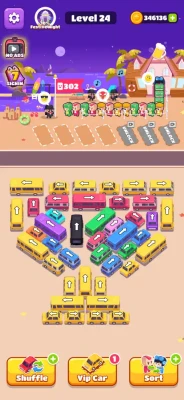
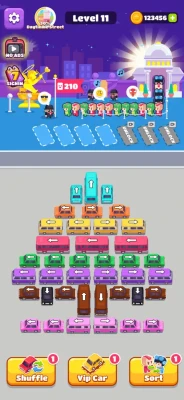
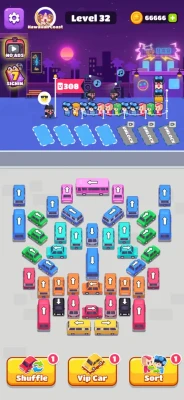
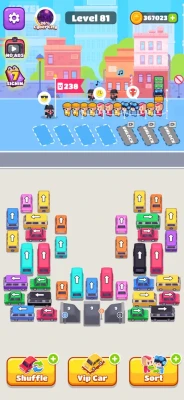
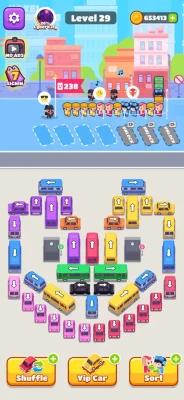
Every vehicle has a specific passenger capacity, while passengers must board according to their colors and the required order. With limited parking spaces and increasingly complicated traffic situations, each level challenges players to think carefully before making a move.
The game offers thousands of puzzles designed to test planning skills, concentration, and logical thinking. Whether you enjoy relaxing casual games or challenging brain teasers, Parking Master - Jam Puzzle provides an engaging experience that rewards patience and smart decisions.
Game Overview and Main Information
Game Title: Parking Master - Jam Puzzle
Subtitle: Relaxing Car Jam Adventure
Developer: DongZ Future Technology Co., Ltd.
Publisher: DongZ Game
Genre: Puzzle, Casual, Logic, Strategy
Platform: iOS
Compatible Devices: iPhone
Minimum iOS Requirement: iOS 12.0 or later
Age Rating: 4+
Price: Free to download
In-App Purchases: Available
Game Size: Approximately 218.7 MB
Languages: English, Catalan, French, German, Japanese, Korean, Simplified Chinese, and Spanish.
Main Gameplay: Car movement, passenger transportation, color matching, and parking lot management.
Game Objective: Clear the parking area by moving vehicles strategically and ensuring that passengers board the correct cars.
Game Style: Single-player casual puzzle experience.
What Is Parking Master - Jam Puzzle?
Parking Master - Jam Puzzle transforms an ordinary parking lot into a challenging logical playground. Instead of simply driving vehicles into empty spaces, players must solve complicated traffic situations involving cars, passengers, colors, and limited parking capacity.
The parking area is filled with vehicles that cannot move freely. Each car follows a forward-moving direction, which means players must carefully consider the available routes before selecting a vehicle. Moving one car can open a path for another, while an incorrect decision can make the remaining traffic much harder to manage.
The passenger-matching system adds another important layer to the gameplay. Every vehicle has a particular color, and it can only transport passengers with the corresponding color. A red car, for example, must collect red passengers, while blue passengers need a blue vehicle.
Vehicle capacity also matters. Some cars can accommodate four passengers, others can carry six, and larger vehicles can transport ten. Players must consider these differences when deciding which vehicles should move first.
The limited number of parking spaces makes the experience even more strategic. Every available space has a purpose, and using it carelessly can prevent other vehicles from moving.
The result is a combination of traffic-jam puzzles, color-sorting challenges, and strategic planning that becomes more demanding as players progress.
Main Features of Parking Master - Jam Puzzle
Challenging Car Parking Puzzles
The central attraction is the collection of parking challenges. Each level presents a crowded area where vehicles must be moved in a carefully planned sequence.
Players need to identify which cars can move immediately and which ones are blocking important routes. The challenge is not simply finding an empty space but understanding how each movement affects the entire parking arrangement.
Color-Matching Passenger System
Color matching is one of the most important gameplay mechanics.
Cars and passengers are assigned different colors, and vehicles must collect passengers that match their own color. This requires players to pay attention to passenger positions and upcoming transportation opportunities.
Sending the wrong vehicle toward a passenger group can waste valuable space and disrupt the planned sequence.
Different Vehicle Capacities
Not every vehicle carries the same number of passengers.
Some cars accommodate four people, while others have room for six or ten. These capacity differences make vehicle selection an important part of every puzzle.
Players must consider passenger quantities before deciding which vehicle should be moved first.
Limited Parking Spaces
Parking spaces are valuable resources throughout the game.
Players cannot move every vehicle wherever they want because available spaces are restricted. Creating room for one vehicle may require moving another vehicle first.
Successful players learn to use empty spaces strategically instead of treating them as unlimited storage.
Thousands of Puzzle Challenges
The game advertises thousands of carefully designed puzzles. This provides plenty of opportunities to develop better strategies and encounter different traffic arrangements.
The challenges encourage players to recognize patterns, understand vehicle movement, and improve their decision-making abilities.
Relaxing Casual Gameplay
Despite its challenging puzzles, the game offers an accessible experience.
The basic objective is easy to understand, making it suitable for short gaming sessions. Players can enjoy a quick puzzle during a break or spend more time working through difficult parking arrangements.
Regular Puzzle Improvements
The developer's published update history includes additional puzzles, bug fixes, and general gameplay improvements.
These updates help maintain the experience and introduce new challenges over time.
Understanding the Gameplay Mechanics
Moving Vehicles Forward
The first important rule is understanding how vehicles move.
Cars can only move forward, so players must identify the available direction and determine whether another vehicle is preventing movement.
Before selecting a car, examine the surrounding vehicles and consider what might happen after it leaves its current position.
A vehicle that appears unimportant at first might be blocking the only route needed by another car.
Matching Cars With Passengers
Every car must collect passengers of the corresponding color.
This means players should constantly observe the passenger groups and identify which vehicles are required for the next transportation task.
Color recognition is essential because choosing the wrong car can create unnecessary complications.
Managing Passenger Capacity
Vehicle capacity determines how many passengers a particular car can transport.
A four-person car cannot replace a ten-person vehicle when a larger passenger group needs transportation.
Always compare passenger quantities with available vehicle capacities before making an important move.
Following the Correct Passenger Order
Passengers must board in the correct sequence. Therefore, players cannot simply send every available vehicle toward the nearest passenger group.
The required boarding order influences the entire solution.
A successful strategy involves identifying the next passenger group, finding its matching vehicle, and creating a clear route for that vehicle.
Managing Limited Space
The parking area becomes a resource-management puzzle.
Every movement should have a purpose. Players need to preserve enough room for vehicles that must move later and avoid filling important spaces with cars that are not immediately needed.
Understanding how to create and maintain free space is essential for completing complicated levels.
Full Strategy Guide for Parking Master - Jam Puzzle
How to Start a Level Successfully
The best approach is to understand the entire parking arrangement before moving the first vehicle.
When a new level begins, resist the temptation to tap the first car that appears movable. Instead, spend a few moments studying the layout.
Identify the available parking spaces, vehicle colors, passenger groups, and different car capacities.
Look for vehicles that are directly blocking other cars. These vehicles may need to move before the main passenger-collection sequence can begin.
Also, pay attention to the required boarding order. A vehicle that can move immediately is not necessarily the best vehicle to select first.
A few seconds of observation can prevent several unnecessary moves.
Study the Passenger Groups Before Moving Cars
Passenger management should be part of your opening strategy.
Look at the passenger colors and determine which vehicles are responsible for collecting them.
Try to identify the next passenger group that needs transportation and locate its matching car.
If several passenger groups are waiting, consider their order rather than focusing only on the nearest group.
This approach helps you avoid sending vehicles into spaces that should remain available for more important transportation tasks.
Prioritize Vehicles That Block Important Routes
Some cars are more important than others because their positions affect the movement of several vehicles.
These blocking vehicles should receive special attention.
For example, imagine that a blue car cannot reach its passengers because a red car is occupying the required path. Moving the red car may create an opportunity for the blue vehicle to proceed.
However, the red car should only be moved if doing so does not interfere with another important part of the puzzle.
Think about the consequences of every movement before committing to it.
Use Empty Parking Spaces Carefully
Empty spaces are among the most valuable resources in Parking Master - Jam Puzzle.
Avoid filling every available space simply because a vehicle can move into it.
Instead, think of empty spaces as temporary tools that allow other vehicles to pass, reposition themselves, or reach their passengers.
Before occupying an empty space, ask yourself whether another vehicle might need it later.
Maintaining flexibility is especially important when several cars are competing for limited room.
Match Vehicle Capacity With Passenger Numbers
Choosing the correct vehicle is essential for efficient passenger transportation.
A small vehicle with a capacity of four may be appropriate for a smaller passenger group, while a larger vehicle with a capacity of ten is better suited to a bigger group.
Do not focus exclusively on color matching. Capacity and boarding order must also be considered.
When several vehicles share the same passenger color, compare their capacities and choose the one that best fits the current requirement.
This helps reduce unnecessary movement and keeps the parking area organized.
Plan Several Moves Ahead
One of the biggest differences between beginners and experienced players is the ability to think beyond the next move.
Instead of asking which car can move immediately, ask which sequence of movements will eventually clear the parking area.
A useful planning method is to imagine the next three actions:
The first action should create the necessary space.
The second action should allow the correct vehicle to reach its passengers.
The third action should prepare the parking area for the following transportation task.
This simple technique makes complicated levels easier to understand.
Avoid Random Vehicle Movements
Random tapping is one of the easiest ways to make a parking puzzle more difficult.
Even when a vehicle appears to have a clear route, moving it without considering its destination can create unnecessary congestion.
Every movement should help achieve at least one of these objectives:
Clear an important traffic obstruction.
Create a useful empty parking space.
Allow a matching vehicle to reach passengers.
Complete a passenger transportation requirement.
Prepare the next stage of the puzzle.
If a movement does not support your overall plan, reconsider it before proceeding.
Handle Difficult Levels With a Step-by-Step Approach
When a level becomes complicated, divide the puzzle into smaller problems.
Start by identifying the main obstruction. Determine which vehicle is preventing progress and what must happen before it can move.
Next, identify the vehicle needed for the current passenger group.
Then, work backward to determine which cars must be moved to create the necessary route.
This backward-planning technique is particularly useful when several vehicles are blocking one another.
Instead of trying to solve the entire parking lot at once, focus on completing one important objective at a time.
Manage Large Passenger Groups
Large passenger groups can make certain puzzles more demanding.
A vehicle with a capacity of ten may be necessary to transport a larger group, but reaching the correct passengers can require several preliminary movements.
Try to identify the larger transportation requirements early.
Avoid occupying the spaces that the larger vehicle may need to reach its destination.
Also, consider whether smaller vehicles must complete their passenger tasks before the larger car can move safely through the parking area.
Improve Your Color-Matching Accuracy
When several colors appear close together, it is easy to select the wrong vehicle.
Develop a habit of checking three things before every passenger pickup:
The passenger color.
The matching vehicle color.
The vehicle's available capacity.
This small routine reduces mistakes and makes the puzzle easier to manage.
It is also helpful to follow the passenger sequence rather than choosing vehicles based only on their positions.
What to Do When You Get Stuck
Getting stuck is a normal part of challenging logic puzzles.
If no obvious movement seems useful, stop and examine the parking arrangement again.
Look for a vehicle that is blocking more than one route. Moving that vehicle may create several new possibilities.
Check whether an empty space has been occupied unnecessarily. Consider whether another vehicle should move first to restore access.
You should also reconsider the passenger sequence. Sometimes the problem is not the physical arrangement of the cars but the order in which you are attempting to transport passengers.
If the game provides a recovery or assistance option, consider using it when necessary rather than repeatedly making random moves.
Advanced Strategies for Experienced Players
Think About the Entire Parking Layout
Experienced players do not look at individual vehicles in isolation.
They consider the parking lot as a connected system in which every vehicle affects the available movement options.
A single car can block multiple routes, while moving another car can open several opportunities.
Learning to recognize these relationships makes advanced puzzles easier.
Identify Critical Vehicles
Critical vehicles are those that must move before several other actions become possible.
These cars should be identified early because they often determine the overall solution.
Prioritize creating a route for critical vehicles, but make sure their movement does not interfere with the passenger sequence.
Preserve Future Movement Options
A good move should make the next stage easier, not simply solve the immediate problem.
Avoid placing vehicles in positions that restrict access to important areas.
Keeping future routes open gives you more flexibility when the puzzle becomes complicated.
Work Backward From the Final Objective
Sometimes the easiest way to understand a difficult puzzle is to imagine the completed parking area.
Think about which vehicles must leave or reach their passengers last.
Then determine what needs to happen immediately before those final movements.
Continue working backward until you identify the first useful action.
This strategy can reveal solutions that are difficult to recognize through forward thinking alone.
Learn From Every Completed Level
Each completed puzzle provides an opportunity to improve.
Think about which movements were essential, which ones created unnecessary problems, and how you could solve a similar arrangement more efficiently.
Over time, you will become better at recognizing common traffic patterns and identifying useful vehicle sequences.
Common Mistakes to Avoid
Moving the first available car: A vehicle that can move immediately is not always the correct first choice. Check the passenger requirements and surrounding traffic.
Ignoring passenger colors: Every vehicle must collect matching passengers. Always verify the color before making a pickup.
Forgetting vehicle capacities: Different cars have different passenger limits. Make sure the selected vehicle can accommodate the required group.
Using parking spaces carelessly: An empty space may be needed for another vehicle later. Avoid occupying it without a clear reason.
Ignoring boarding order: Passenger transportation follows a required sequence. Moving vehicles without considering that sequence can complicate the level.
Making too many unnecessary movements: Random actions can reduce your available options. Focus on movements that directly support your plan.
Failing to plan ahead: Thinking only about the next move makes complicated levels harder. Consider how each action affects the following steps.
Rushing through difficult puzzles: Taking a moment to inspect the layout is often more effective than repeatedly trying different movements.
Tips for Progressing Through More Levels
Examine the parking arrangement before making your first move.
Identify the next passenger group that needs transportation.
Remember the color and capacity of every important vehicle.
Move blocking cars only when their movement creates a useful opportunity.
Keep important parking spaces available for future vehicles.
Follow the required passenger sequence.
Think about several possible movements before choosing one.
Use backward planning when the solution is not immediately obvious.
Avoid unnecessary vehicle movements.
Learn from previous puzzles and improve your planning techniques.
Stay patient when encountering complicated parking arrangements.
Make every movement contribute toward clearing the parking area.
Is Parking Master - Jam Puzzle Difficult?
Parking Master - Jam Puzzle is easy to understand but can become increasingly challenging as players encounter more complicated arrangements.
The basic mechanics are straightforward. Players move vehicles, match colors, transport passengers, and manage parking spaces.
However, combining these mechanics creates interesting logical challenges.
The difficulty comes from having to satisfy several requirements simultaneously. A vehicle may have the correct color but be unable to reach its passengers. Another car may have enough capacity but be blocked by vehicles that need to move first.
The limited parking spaces add another layer of difficulty because players must carefully manage available room.
This makes the game suitable for people who enjoy puzzles that reward observation, patience, and strategic thinking.
What Makes Parking Master - Jam Puzzle Enjoyable?
A Simple but Interesting Concept
The parking-lot setting is familiar, and the basic objective is immediately understandable. However, the passenger-order and color-matching systems give the gameplay additional depth.
Satisfying Problem-Solving
Finding the correct sequence of movements can be rewarding, especially when several vehicles initially appear completely trapped.
A Combination of Different Puzzle Mechanics
The game combines traffic management, color recognition, capacity planning, and space management instead of relying on only one puzzle mechanic.
Suitable for Short Gaming Sessions
Its straightforward controls and level-based structure make it convenient for casual play.
Opportunities to Improve Logical Thinking
Players are encouraged to examine situations, compare options, anticipate consequences, and adjust their plans when necessary.
Who Should Play Parking Master - Jam Puzzle?
Parking Master - Jam Puzzle is a good choice for players who enjoy casual puzzle games and logical challenges.
It may particularly appeal to:
Fans of car parking and traffic-jam puzzles.
Players who enjoy color-matching challenges.
People who like organizing and sorting games.
Casual gamers looking for short puzzle sessions.
Players who enjoy planning several moves ahead.
Fans of brain teasers and problem-solving games.
Anyone who enjoys games involving limited spaces and strategic decisions.
It is also accessible to newcomers because its basic mechanics are easy to understand, while the combination of different rules provides additional challenges as players progress.
Frequently Asked Questions
What Is the Main Objective of Parking Master - Jam Puzzle?
The main objective is to clear crowded parking areas by moving vehicles strategically, collecting passengers of matching colors, and following the correct boarding order.
How Do You Play Parking Master - Jam Puzzle?
Players select vehicles and move them forward through the parking area. Each car must collect passengers matching its color while respecting its passenger capacity and the required transportation sequence.
Can Every Car Carry the Same Number of Passengers?
No. Vehicles have different capacities. Some can carry four passengers, others six, and some can accommodate ten.
Why Is Color Matching Important?
Each vehicle can only collect passengers matching its color. Selecting the correct vehicle is therefore essential to completing the transportation objectives.
Why Are Parking Spaces Important?
Parking spaces are limited, so players must manage them carefully. An occupied space may prevent another vehicle from moving or reaching its passengers.
Does the Game Require Strategic Thinking?
Yes. Players need to understand vehicle positions, passenger colors, transportation order, and available space before deciding which car to move.
Is Parking Master - Jam Puzzle Free?
The game is free to download and offers optional in-app purchases.
Is Parking Master - Jam Puzzle Available on Android?
The referenced listing is for the iOS version. Android availability for this specific game is not established by the referenced listing.
Is Parking Master - Jam Puzzle Suitable for Beginners?
Yes. Its basic mechanics are easy to understand, making it approachable for beginners. More complicated parking arrangements provide additional challenges as players progress.
Does the Game Have Many Levels?
Yes. The game advertises thousands of carefully designed parking puzzles.
Who Developed Parking Master - Jam Puzzle?
The game is published by DongZ Game, with DongZ Future Technology Co., Ltd. identified as the provider.
Final Thoughts
Parking Master - Jam Puzzle offers an entertaining combination of car parking challenges, passenger transportation, and color-matching puzzles. Its familiar parking-lot concept makes it easy to approach, while its limited spaces, different vehicle capacities, and required passenger order create opportunities for more thoughtful problem-solving.
The most effective way to progress is to study each parking arrangement, identify important vehicles, manage empty spaces, and plan movements before taking action. Rather than rushing to move every available car, successful players focus on the sequence that will gradually clear the traffic and complete all passenger transportation requirements.
Whether you enjoy casual car games, traffic-jam challenges, or brain-teasing logic puzzles, Parking Master - Jam Puzzle provides an enjoyable way to test your planning abilities and tackle increasingly complicated parking situations.
Rate the Game
User Reviews










Popular Games



















 Android
 iOS
 Windows
 Xbox