

Latest Version
August 23, 2026
Plug In Digital
Puzzle
iOS
0
Report a Problem
More About :game
Machinika: Atlas is a first-person sci-fi puzzle adventure centered around exploration and mysterious alien technology.
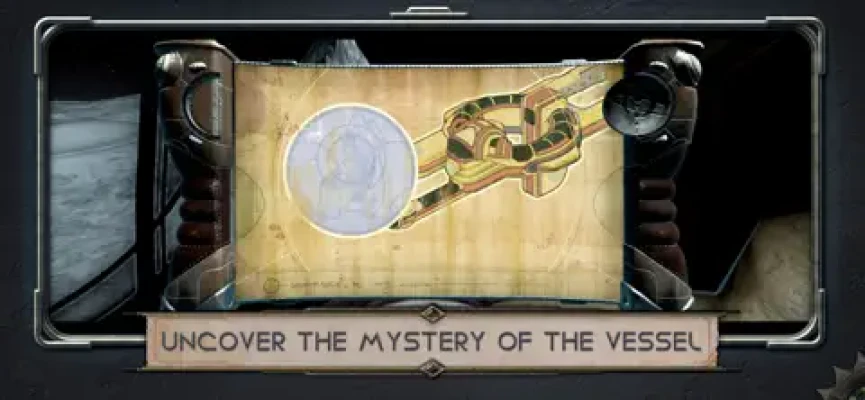
After arriving on Atlas, the protagonist finds themselves inside a crashed alien ship. The vessel is filled with unfamiliar machines, mechanisms, locked areas, and strange devices that appear to contain clues about its history.
Your job is to investigate the ship, understand how its technology works, and gradually uncover the truth hidden inside.
Machinika: Atlas is the direct sequel to Machinika: Museum, although the developers state that playing the first game is not required to enjoy Atlas.
The Story
The adventure begins after an escape pod brings the museum researcher to the heart of an alien vessel on Saturn's moon, Atlas.
The ship has suffered a catastrophic crash, leaving behind a mysterious environment filled with advanced technology and unanswered questions.
As you explore deeper into the vessel, each device provides another piece of the mystery.
The story deliberately reveals information through exploration and puzzle solving rather than explaining everything immediately. This makes every newly discovered mechanism feel like another part of a larger investigation.
Explore a Crashed Alien Vessel
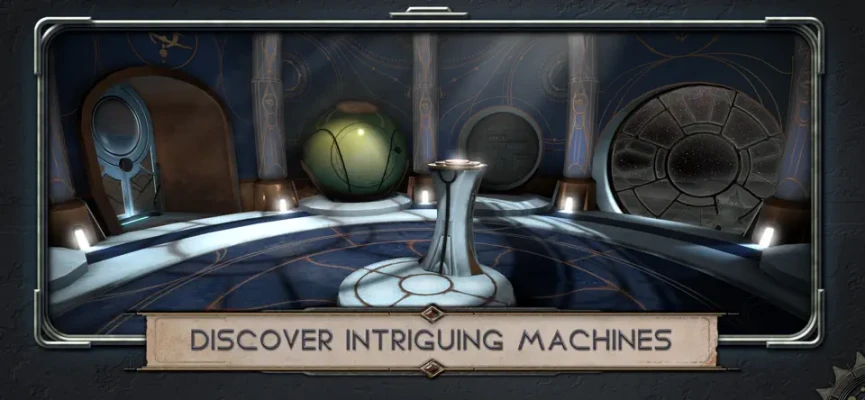
The alien ship is the centerpiece of the experience.
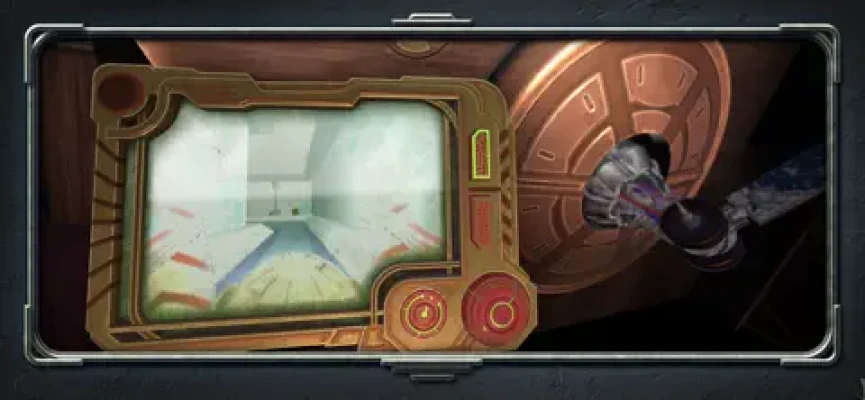
Instead of moving through conventional levels filled with enemies, you investigate rooms, machinery, control systems, and unusual technological structures.
Exploration is closely connected to puzzle solving. Finding a strange object may reveal a new mechanism, while solving one machine can open access to another section of the ship.
The result is a continuous cycle of:
Explore → Observe → Experiment → Solve → Discover → Explore Further
Cryptic Alien Puzzles
Puzzle solving is the heart of Machinika: Atlas.
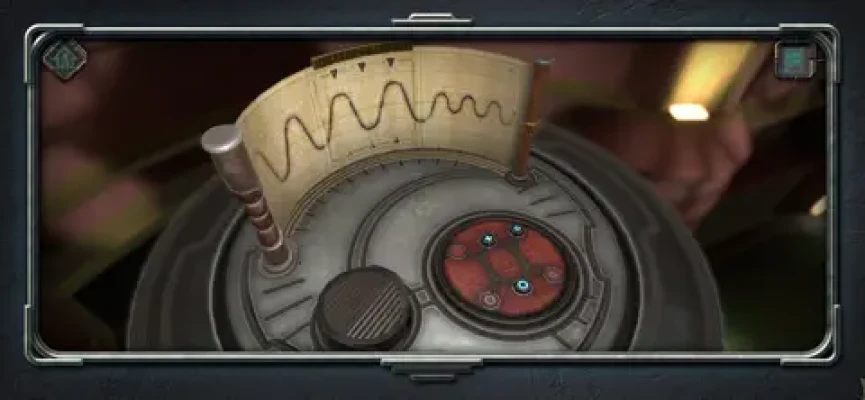
The game challenges you to use observation and logic to understand unfamiliar mechanisms. Many puzzles require you to examine an object closely, identify its purpose, and determine how its components interact.
The official description emphasizes logic skills and observation as key tools for overcoming the game's puzzles.
Rather than relying on fast reflexes, success comes from paying attention to details.
Alien Machines and Devices
The ship is filled with mysterious machinery.
You may encounter:
- Mechanical devices.
- Control panels.
- Locked mechanisms.
- Rotating components.
- Strange alien technology.
- Hidden compartments.
- Interactive objects.
- Complex mechanisms.
Each device is designed to make you think about how it works.
The joy comes from understanding something that initially appears completely incomprehensible.
Investigation and Observation
Machinika: Atlas rewards careful observation.
Before interacting with a mechanism, examine it from different angles. Look for symbols, moving parts, patterns, connections, and objects that appear out of place.
A seemingly insignificant detail may provide the key to solving a much larger puzzle.
This makes the game particularly appealing to players who enjoy logic puzzles, escape-room games, point-and-click adventures, and mystery exploration.
Gameplay Overview
The core gameplay revolves around exploration and puzzle solving.
During your journey, you will:
- Explore the alien ship.
- Examine mysterious devices.
- Search for clues.
- Manipulate machinery.
- Solve logic puzzles.
- Unlock new areas.
- Investigate the ship's history.
- Piece together the story.
- Discover increasingly complex mechanisms.
There is no need to memorize complicated combat systems. The challenge lies almost entirely in understanding the environment.
Controls and Interface
Machinika: Atlas is designed around intuitive interaction.
On compatible Apple devices, players can use touch controls, while controller support is also available. The developers specifically emphasize that the controls are intended to remain accessible so that the complexity comes from solving the puzzles rather than operating the game.
The interface generally revolves around:
- Looking around the environment.
- Selecting objects.
- Zooming in on mechanisms.
- Manipulating components.
- Examining clues.
- Moving through the ship.
Beginner's Guide
1. Examine Everything
Don't rush past unusual objects. A small mechanism may contain an important clue.
2. Rotate and Inspect Devices
Many alien machines become easier to understand when viewed from different angles.
3. Look for Patterns
Symbols, shapes, colors, and mechanical movements can provide clues to puzzle solutions.
4. Experiment Carefully
If a mechanism allows interaction, try to understand what each movement changes before making another move.
5. Think About Context
A clue found in one room may make sense only after discovering another machine elsewhere.
6. Don't Expect Every Puzzle to Be Obvious
Machinika: Atlas is designed to make you investigate and experiment. If something doesn't immediately make sense, examine the surrounding environment for additional information.
Advanced Puzzle-Solving Tips
Experienced players can improve their progress by approaching every mechanism systematically.
- Examine an entire machine before interacting with it.
- Identify movable components.
- Look for repeated symbols or patterns.
- Note how one component affects another.
- Search nearby areas for contextual clues.
- Avoid randomly activating mechanisms without understanding their purpose.
- Revisit earlier observations when you discover new information.
- Use the environment as part of the puzzle rather than treating each object separately.
The most effective mindset is to treat the alien ship as one interconnected puzzle rather than a collection of unrelated challenges.
Game Progression
Machinika: Atlas uses exploration-based progression.
There is no traditional character-leveling system. Instead, your progress is measured by how much of the ship you understand and how many areas you manage to unlock.
Solving a mechanism can provide access to a new section, which introduces additional puzzles and story information.
This creates a natural sense of progression:
Solve a puzzle → unlock a new area → discover new technology → uncover more of the story.
Difficulty
The game's difficulty comes from its puzzles rather than combat.
Some mechanisms can be understood quickly, while others require more careful observation and experimentation.
The difficulty is particularly suited to players who enjoy games that allow them to stop, examine an object, and work through a solution without relying on fast reflexes.
Atmosphere and Sci-Fi Setting
Machinika: Atlas creates a mysterious science-fiction atmosphere through its alien technology, isolated setting, and unexplained machinery.
The crashed vessel feels unfamiliar and slightly unsettling, while the setting on Saturn's moon adds a sense of isolation.
The result is an experience focused on mystery, discovery, alien technology, and exploration rather than conventional action.
Visual Presentation
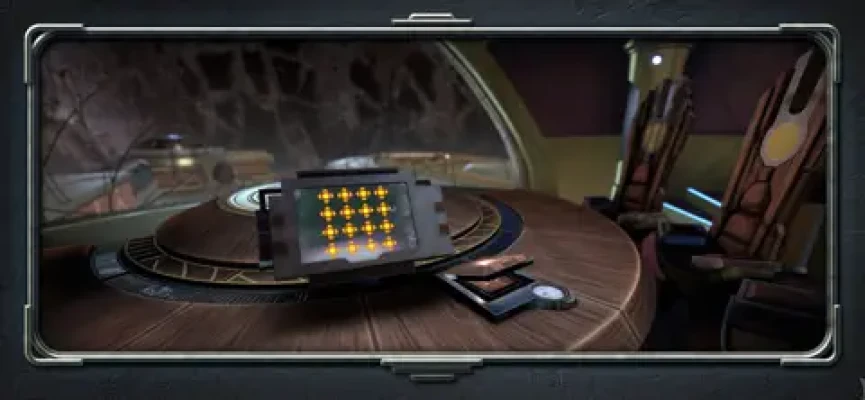
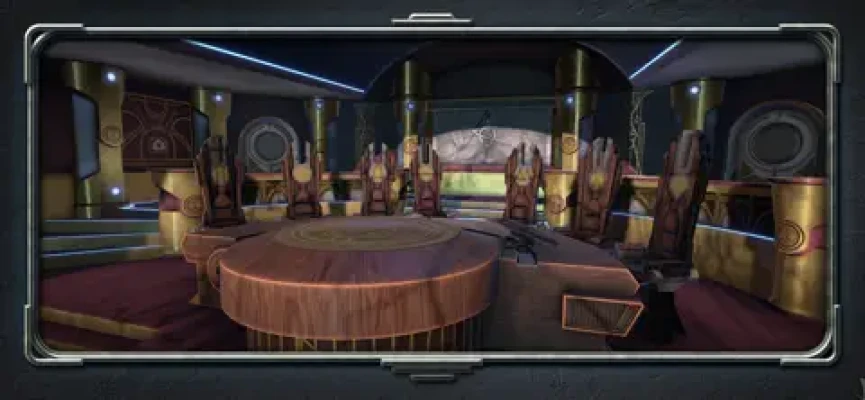
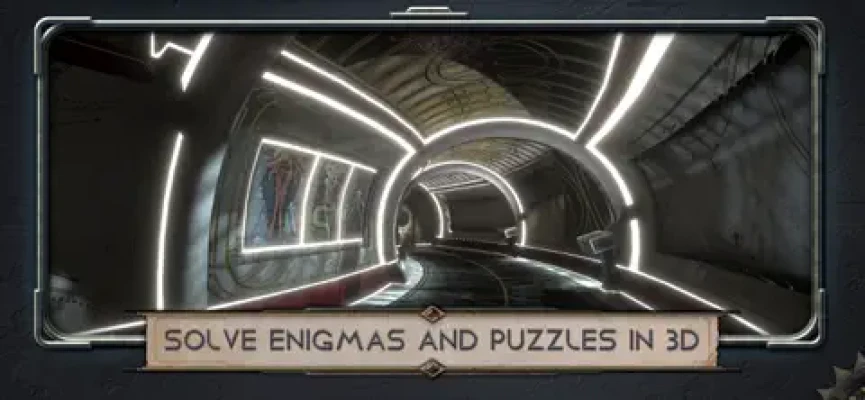
The game uses detailed 3D environments to create a believable alien interior.
The machinery is designed to feel physical and interactive, which helps make puzzle solving more immersive.
On the App Store, the game is listed at approximately 861 MB, reflecting its relatively detailed 3D presentation.
Storytelling Through Exploration
Machinika: Atlas does not simply tell you what happened.
Instead, the environment itself becomes part of the storytelling.
Machines, rooms, objects, and discoveries gradually provide information about the alien vessel and the events surrounding its crash.
This approach works particularly well for players who enjoy mysteries where the story must be pieced together rather than delivered through long exposition.
Game Features
Sci-Fi Puzzle Adventure
Explore a mysterious alien ship on Saturn's moon.
Cryptic Machinery
Interact with strange devices and uncover how their mechanisms work.
Logic-Based Puzzles
Use observation and reasoning rather than reflexes to solve challenges.
First-Person Exploration
Investigate the ship from an immersive first-person perspective.
Mysterious Narrative
Discover clues that gradually reveal the story behind the vessel.
Touch and Controller Support
Play using touch controls or a compatible controller.
Direct Sequel
Continue the story introduced in Machinika: Museum, while still being accessible to newcomers.
Atmospheric Sci-Fi World
Explore an isolated alien environment filled with unexplained technology.
Machinika: Atlas and Machinika: Museum
Machinika: Atlas is a direct sequel to Machinika: Museum.
The two games share the same protagonist and broader mystery, but Atlas moves the adventure from the museum setting to a crashed alien ship on Saturn's moon.
You do not have to play Machinika: Museum first. The developers specifically state that Atlas can be enjoyed independently.
However, players who enjoy Atlas may want to experience the first game afterward to learn more about the protagonist and the wider Machinika mystery.
Game Modes
Machinika: Atlas is primarily a single-player puzzle adventure.
There is no competitive multiplayer mode. The experience is designed around individual exploration, investigation, and puzzle solving. The Steam version also lists single-player support and achievements.
Accessibility
The current Apple listing indicates support for captions, allowing relevant dialogue and sounds to be represented as text.
The game also supports touch interaction, while controller support gives players another way to navigate the experience.
Updates and Improvements
The Apple version has received multiple updates addressing performance, crashes, touch controls, loading, save issues, hints, and puzzle-related problems.
Version 1.0.12, for example, included numerous fixes for progression-blocking issues and improved touch input, zoom interactions, small puzzles, lighting, loading performance, and compatibility with older iPhones and tablets.
This is worth mentioning because some early player reviews reported graphical glitches, long loading times, and puzzle interaction problems. Later updates addressed several of those issues.
Player Reception
The current U.S. App Store listing shows 3.8 out of 5 stars from 93 ratings.
Player reactions are mixed. Some reviewers praise the game's atmosphere, visual design, mystery, and challenging puzzles, while others have criticized puzzle clarity, graphical glitches, and loading times.
The PC version has a stronger overall reception, with Steam currently listing Mostly Positive reviews and approximately 76% positive reviews among more than 500 reviews.
Pros and Cons
Pros
- Atmospheric sci-fi setting.
- Interesting alien technology.
- First-person exploration.
- Challenging logic puzzles.
- Strong sense of mystery.
- Detailed 3D environments.
- Intuitive controls.
- Touch and controller support.
- No combat required.
- Direct continuation of Machinika: Museum.
- Can be played without the first game.
Cons
- Some puzzles may feel unclear or difficult to interpret.
- Early versions experienced graphical and loading issues.
- Some players have reported touch interaction problems.
- The slow investigation-focused pace may not appeal to action-oriented players.
- Reception on the App Store is more mixed than the PC version.
Who Should Play Machinika: Atlas?
Machinika: Atlas is particularly suited to players who enjoy:
- Sci-fi puzzle games.
- Alien mystery games.
- First-person puzzle adventures.
- Escape-room games.
- Logic games.
- Point-and-click adventures.
- Exploration games.
- Atmospheric mystery games.
- Mechanical puzzle games.
- Games like The Room.
If you enjoy examining strange machines and slowly discovering how they work, Machinika: Atlas offers a compelling experience.
Machinika: Atlas vs. The Room
The comparison to The Room is natural because both games focus heavily on mysterious mechanical devices and tactile puzzle solving.
However, Machinika: Atlas places greater emphasis on exploring a larger sci-fi environment and uncovering an alien mystery.
Machinika: Atlas vs. Machinika: Museum
Machinika: Museum focuses on mysterious alien artifacts and museum-based investigation, while Atlas expands the setting into a crashed alien spacecraft.
Atlas therefore provides a larger-scale environment while continuing the same universe and protagonist.
Technical Details
Game: Machinika: Atlas
Genre: Puzzle, Adventure, Sci-Fi, Mystery
Developer: Littlefield Studio
Apple Seller: Plug In Digital
Category: Puzzle
Platforms: iPhone, iPad
Game Type: Single-player
Age Rating: 4+
App Size: 861 MB
iPhone Requirement: iOS 16.0 or later
iPad Requirement: iPadOS 16.0 or later
Languages: English plus 14 additional languages
Controller Support: Yes
Touch Controls: Yes
Captions: Supported
In-App Purchases: Yes
Price and Full Game Access
The current U.S. App Store listing shows Machinika: Atlas as free to download, with an in-app purchase required to unlock the complete experience.
This gives players an opportunity to try the beginning of the adventure before unlocking the full game.
Expert Rating
Puzzle Design: 8.5/10
Atmosphere: 9/10
Visuals: 8.5/10
Story: 8/10
Exploration: 8.5/10
Controls: 8/10
Originality: 8.5/10
Overall: 8.5/10
Final Verdict
Machinika: Atlas is a visually atmospheric sci-fi puzzle adventure that turns an abandoned alien ship into one giant mystery.
Its strongest quality is the combination of exploration and mechanical puzzle solving. Rather than simply presenting disconnected brain teasers, the game makes the machinery part of the world and uses discoveries to gradually reveal the story.
The experience is particularly appealing to fans of The Room, sci-fi mysteries, first-person puzzle games, and escape-room adventures.
While some players have criticized puzzle clarity and technical issues, subsequent updates have addressed numerous crashes, loading problems, touch controls, and progression bugs.
If you're looking for a sci-fi puzzle game for iPhone or iPad that emphasizes alien technology, exploration, logic, and mystery, Machinika: Atlas is worth checking out.
Frequently Asked Questions
What is Machinika: Atlas?
Machinika: Atlas is a sci-fi puzzle adventure where you explore a crashed alien ship on Saturn's moon and solve mysterious mechanical puzzles.
Is Machinika: Atlas a sequel?
Yes. It is the direct sequel to Machinika: Museum.
Do I need to play Machinika: Museum first?
No. The developers state that previous experience with Machinika: Museum is not required to enjoy Atlas.
Is Machinika: Atlas available on iPhone?
Yes. The current Apple listing supports iPhone and iPad, with iOS 16.0 or later and iPadOS 16.0 or later required.
Is Machinika: Atlas free?
The game is free to download, but an in-app purchase is required to unlock the full experience.
Does Machinika: Atlas have combat?
Combat is not the focus. The game is built around exploration, observation, investigation, and puzzle solving.
Is Machinika: Atlas similar to The Room?
Yes. Both games feature detailed mechanical puzzles and mysterious objects, although Machinika: Atlas focuses more heavily on sci-fi exploration and the story of an alien vessel.
Can I play with a controller?
Yes. The App Store description specifically lists controller support in addition to touch controls.
How difficult is Machinika: Atlas?
The main challenge comes from its logic and observation puzzles. Some puzzles can be difficult because you need to understand unfamiliar mechanisms rather than simply identify an obvious solution.
Does Machinika: Atlas have achievements?
The Steam version includes 19 achievements.
Rate the Game
User Reviews















Popular Games



















 Android
 iOS
iOS Windows
 Xbox
Xbox