


Latest Version
August 25, 2026
Oakever Games
Puzzle
iOS
0
Report a Problem
More About :game
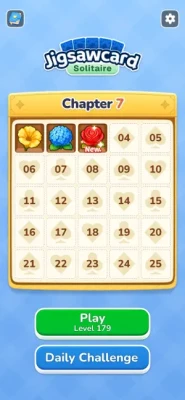
Jigsawcard Solitaire Puzzle takes a creative approach to the puzzle genre by turning jigsaw pieces into interactive cards.
Instead of simply placing traditional puzzle pieces into a fixed board, players slide cards around the screen, reveal face-down pieces, identify useful connections, and gradually assemble the completed image.
The result is a combination of jigsaw puzzle gameplay, solitaire mechanics, card matching, sliding puzzles, and memory challenges.
The game is developed by Oakever Games and is available for iPhone and iPad. The current U.S. App Store listing shows a 4.7-star rating from more than 193,000 ratings.
How Jigsawcard Works
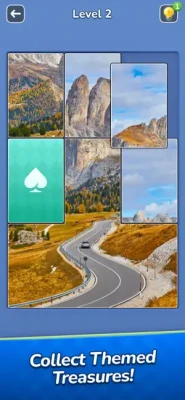
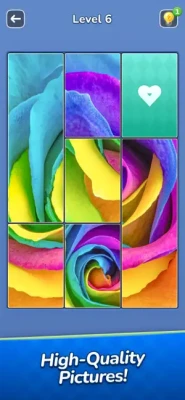
Each puzzle presents a collection of cards representing parts of a larger image. Some cards are visible while others remain face down.
Your job is to move the cards into useful positions, reveal hidden pieces, and create matches between neighboring sections.
When pieces connect correctly, they can snap together and trigger satisfying chain reactions. Careful planning is important because moving one card can affect the position of others.
How to Play Jigsawcard Solitaire Puzzle
- Examine the cards currently visible on the board.
- Look for pieces that appear to connect.
- Slide cards into suitable positions.
- Flip face-down cards to reveal hidden sections.
- Use the newly revealed images as clues.
- Match neighboring pieces and build larger groups.
- Plan your moves to avoid breaking useful combinations.
- Continue connecting pieces until the complete image is revealed.
The controls are based around simple touch swipes, making the basic gameplay easy to understand while leaving the strategy to the player.
Main Features
- Jigsaw and solitaire gameplay combined
- HD puzzle images
- Nature, art, animals, and other scenery
- Slide-and-match card mechanics
- Face-down mystery cards
- Memory-based challenges
- Satisfying snap effects
- Chain reactions when pieces connect
- No timers
- Relaxed puzzle sessions
- Different scenery to unlock
- Easy swipe controls
- Suitable for short or longer sessions
- Brain-training elements
- Available on iPhone and iPad
Jigsaw Puzzle Gameplay
At its core, Jigsawcard retains the familiar satisfaction of watching a fragmented image slowly come together.
The difference is that the pieces behave like cards. Rather than simply dragging a piece into a permanent location, you need to consider movement, positioning, hidden cards, and the connections between pieces.
This gives traditional jigsaw fans a fresh way to approach familiar puzzle mechanics.
Solitaire Card Mechanics
The solitaire influence comes from the way cards are moved and managed on the board.
Players need to consider which card should be moved first and how that decision affects the pieces around it. This adds a strategic element that is not normally present in a conventional jigsaw puzzle.
For players who enjoy both solitaire games and jigsaw puzzles, this hybrid approach is one of the game's biggest attractions.
Face-Down Mystery Cards
One of the more distinctive mechanics is the use of face-down cards.
These cards conceal parts of the image until you flip them. Revealing one can provide an important visual clue, but it can also change how you approach the remaining puzzle.
Because you cannot always see the complete picture immediately, memory and observation become important parts of the experience.
Matching and Chain Reactions
When compatible pieces are brought together, they can snap into place.
Connecting multiple pieces can produce satisfying chain reactions, giving successful moves a stronger sense of reward.
This system encourages players to look beyond individual pieces and search for combinations that can create larger connected groups.
No-Timer Puzzle Experience
Jigsawcard is designed without traditional countdown pressure. The App Store specifically promotes its no-timer format, allowing players to concentrate on solving the puzzle rather than racing against a clock.
That makes it particularly suitable for players who prefer relaxing puzzle games, quiet sessions, and thoughtful gameplay.
HD Puzzle Images
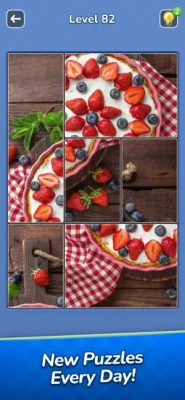
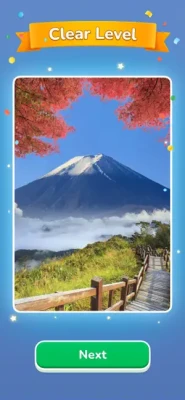
The game features high-definition puzzle imagery covering themes such as nature, art, and animals.
These images give players something satisfying to work toward as the puzzle gradually comes together.
Instead of simply completing an abstract grid, every completed puzzle reveals a finished visual scene.
Scenery and Progression
Jigsawcard includes different scenery that players can unlock as they continue their puzzle journey. This gives the game a sense of progression beyond completing individual boards.
The changing visual themes also help keep the experience from feeling repetitive.
Game Atmosphere
Jigsawcard Solitaire Puzzle is built around a calm and visually focused atmosphere.
The absence of timers allows players to concentrate on the image and puzzle layout at their own pace. The combination of HD artwork, card movement, and satisfying piece connections creates a relaxing experience while still requiring observation and planning.
It works particularly well as a casual game for short breaks or quiet evening sessions.
Beginner's Guide
New players should begin by looking at the visible pieces rather than immediately moving cards.
Try to identify obvious connections first. Once you understand which pieces can join, consider how moving one card might expose another.
When a face-down card becomes available, treat it as a clue rather than automatically moving it. The revealed image may help you understand where other pieces belong.
Most importantly, take advantage of the game's no-timer design. There is little reason to rush.
Strategy and Tips
Study the Board
Before making a move, look at the overall arrangement of cards. A few seconds of observation can prevent unnecessary movements.
Reveal Hidden Cards Carefully
Face-down cards can provide valuable information. Think about when and where to reveal them so you can use the information effectively.
Build Connected Groups
When possible, create larger groups rather than focusing on isolated matches. Connected sections can make future moves easier.
Avoid Breaking Useful Sets
Once several pieces are connected, be careful about moves that could separate them.
Think Several Moves Ahead
A move that looks useful immediately may not be the best long-term choice. Consider what it will expose and how it will affect the remaining cards.
Use the Image as a Guide
As more pieces are revealed, the completed image becomes an increasingly useful source of information. Pay attention to colors, shapes, textures, and recognizable objects.
Advanced Strategy
Experienced players can focus on maintaining flexibility.
Instead of immediately locking every possible connection, consider whether a card could be more useful in another position. This becomes especially important when several pieces appear to have possible connections.
Memory is also important. Try to remember the information revealed by face-down cards and use it when deciding which pieces to move next.
The strongest players combine visual recognition, memory, spatial reasoning, and card-management strategy.
Difficulty
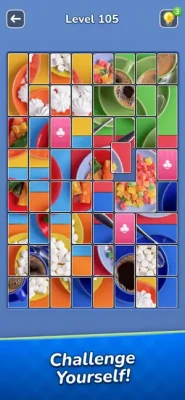
Jigsawcard is accessible at the basic control level, but the combination of hidden cards, sliding pieces, and limited positioning can create increasingly demanding situations.
The game supports both quick casual puzzles and more complex challenges for dedicated players.
Its difficulty is therefore less about reflexes and more about recognizing patterns and planning efficient moves.
Controls and Interface
The game uses intuitive swipe-based controls.
Players slide cards into position and tap to reveal face-down pieces. The controls are designed to keep the interaction simple so that most of the challenge comes from solving the puzzle itself.
Who Should Play Jigsawcard?
Jigsawcard Solitaire Puzzle is a strong choice for players who enjoy:
- Jigsaw puzzle games
- Solitaire games
- Card matching games
- Sliding puzzles
- Memory games
- Visual puzzles
- Relaxing casual games
- Brain-training challenges
- HD image puzzles
- No-timer puzzle games
- Strategy-based casual games
The App Store currently categorizes it as a Casual game.
Player Experience
Jigsawcard has attracted a substantial player base. The U.S. App Store currently displays a 4.7-star rating from more than 193,000 ratings.
Players frequently praise the core puzzle concept, attractive images, and competitive elements. Some reviews specifically mention enjoying competitions where players race to complete puzzles and compare their performance.
However, advertising is a recurring criticism in recent reviews. Several players report that ads have become more frequent or lengthy between puzzles.
This is worth considering if you prefer uninterrupted puzzle sessions.
Competitive and Leaderboard Elements
Although the core game is relaxing, player reviews indicate that competitive elements and leaderboard-style progression can add another dimension for players who enjoy comparing their results.
This gives Jigsawcard two different appeal points: a calm puzzle experience for casual players and a more competitive goal for players who want to improve their ranking.
Pros and Cons
Pros
- Creative jigsaw and solitaire combination
- Beautiful HD images
- Nature, art, and animal themes
- Face-down mystery cards
- Memory and observation challenges
- Satisfying snap and chain reactions
- No traditional timer
- Simple swipe controls
- Multiple scenery options
- Strong App Store rating
- Suitable for casual sessions
Cons
- Advertising can be intrusive according to recent reviews
- Some players report long ads between rounds
- Certain mechanics may take time to master
- The App Store listing currently carries an 18+ age rating
- In-game competition may not appeal to players who want a completely solitary experience
Technical Details
Game: Jigsawcard Solitaire Puzzle
Subtitle: Slide & Match Puzzle Quest
Developer: Oakever Games
Category: Casual
Platforms: iPhone, iPad
Size: 354.5 MB
Required iOS: iOS 15.0 or later
Required iPadOS: iPadOS 15.0 or later
Languages: English plus 30 additional languages
Age Rating: 18+
Contains: Advertising, simulated gambling, contests
Latest Updates
The current App Store version is 1.5.19, with the latest update listed as bug fixes and performance improvements. The version history shows frequent releases throughout 2026, with many updates focused on stability and performance.
Privacy
Apple's listing includes developer-provided privacy information for Jigsawcard. As with other App Store privacy disclosures, Apple notes that the information is provided by the developer and has not been verified by Apple.
Jigsawcard vs Traditional Jigsaw Games
Traditional jigsaw games generally require players to place pieces into a fixed image layout.
Jigsawcard adds card movement and hidden information to that formula. Pieces can be slid around, face-down cards can be revealed, and connected sections can trigger satisfying snaps and chain reactions.
For players who want more interaction than a conventional digital jigsaw, this creates a distinctive alternative.
Jigsawcard vs Solitaire Games
Traditional solitaire is primarily about arranging cards according to established rules.
Jigsawcard borrows the movement and strategic feeling of solitaire but replaces traditional card objectives with image-based puzzle solving.
The result is a hybrid experience where card strategy meets visual puzzle solving.
Is Jigsawcard Solitaire Puzzle Worth Playing?
If you enjoy jigsaw puzzles but want something more interactive, Jigsawcard is an interesting choice.
Its combination of sliding cards, hidden pieces, image matching, chain reactions, and solitaire-style strategy gives it a distinctive identity. The no-timer format also makes it suitable for relaxed play.
The biggest potential drawback is advertising. Recent App Store reviews repeatedly criticize the frequency and length of ads, even while praising the underlying game.
Expert Rating
Gameplay: 8.8/10
Puzzle Design: 8.7/10
Visual Quality: 9/10
Controls: 8.8/10
Relaxation: 9/10
Strategy: 8.5/10
Replay Value: 8.7/10
Overall: 8.7/10
Final Verdict
Jigsawcard Solitaire Puzzle is an inventive blend of two familiar puzzle formats. By turning jigsaw pieces into movable cards and adding hidden information, matching, memory challenges, and chain reactions, it creates a gameplay loop that feels different from both traditional jigsaw games and standard solitaire.
Its HD scenery and no-timer approach make it especially appealing to players looking for a relaxing visual puzzle, while strategic card movement gives experienced players additional depth.
If you enjoy jigsaw puzzles, solitaire, card matching, sliding puzzles, and relaxing brain games, Jigsawcard Solitaire Puzzle is well worth exploring.
Frequently Asked Questions
What is Jigsawcard Solitaire Puzzle?
Jigsawcard Solitaire Puzzle is a casual puzzle game that combines jigsaw images with solitaire-style card movement, matching, and hidden cards.
Is Jigsawcard free?
Yes. The App Store lists Jigsawcard Solitaire Puzzle as free to download.
Is Jigsawcard available on iPhone?
Yes. Jigsawcard is available for both iPhone and iPad.
Does Jigsawcard have a timer?
The game is designed without traditional timer pressure, allowing players to solve puzzles at their own pace.
What makes Jigsawcard different from normal jigsaw games?
Instead of simply placing static pieces, players slide cards, reveal face-down cards, make matches, and build connected groups using solitaire-style mechanics.
Does Jigsawcard have hidden cards?
Yes. Face-down cards conceal image sections and must be flipped to reveal useful clues.
What types of images are available?
The game features HD images covering themes such as nature, art, animals, and other scenery.
Does Jigsawcard have competitions?
Player reviews indicate that the game includes competitive elements and leaderboard-style experiences where players can compare their puzzle performance.
What iOS version is required?
The current listing requires iOS 15.0 or later on iPhone and iPadOS 15.0 or later on iPad.
Who developed Jigsawcard Solitaire Puzzle?
The game was developed by Oakever Games.
Rate the Game
User Reviews





Popular Games


















 Android
 iOS
iOS Windows
 Xbox
Xbox