




Latest Version
August 28, 2026
Runyou Game
Puzzle
iOS
0
Report a Problem
More About :game
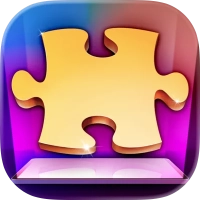
Jigsaw Drop: Solitaire Puzzle puts a fresh spin on classic picture puzzles.
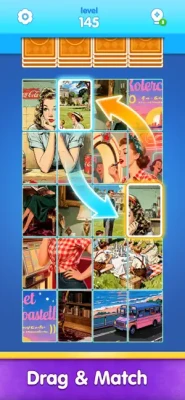
Instead of receiving a traditional jigsaw where every piece is available at once, pieces gradually fall into the puzzle area. Your job is to recognize matching fragments, connect them correctly and complete sections of the image.
Once a picture section is completed, it can be cleared to create additional space for new pieces. This creates a simple but engaging cycle: match, complete, clear and prepare for what comes next.
The result is a puzzle experience that combines jigsaw puzzles, falling tiles, picture matching and light strategy in one easy-to-learn game.
How to Play Jigsaw Drop
The basic gameplay is simple, but successful puzzle solving requires attention.
1. Watch the Pieces
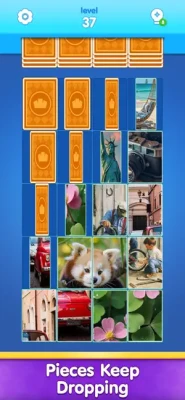
New puzzle pieces fall into the board as you play. Pay attention to their colors, shapes and image fragments.
2. Find Matching Fragments
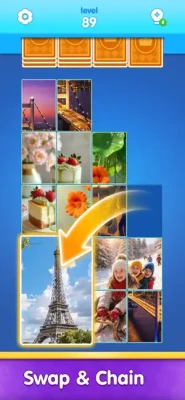
Look for pieces that belong together and move them into the appropriate position.
3. Complete Picture Sections
Connecting the correct fragments gradually reveals sections of the picture.
4. Clear Completed Sections
Once a section is finished, clearing it gives you more room on the board.
5. Plan Your Space
Think ahead before filling available spaces. Keeping the board organized can help you avoid situations where useful pieces have nowhere to go.
A Fresh Take on Jigsaw Puzzles
The falling-piece system is what separates Jigsaw Drop from a conventional jigsaw puzzle.
Traditional jigsaw games generally give you a complete collection of pieces and let you assemble the picture at your own pace. Jigsaw Drop introduces movement and progression by having fresh pieces fall into place.
That means you're not only matching images—you are also managing the available puzzle space.
Falling Puzzle Pieces
The falling mechanic creates a gentle rhythm throughout each level.
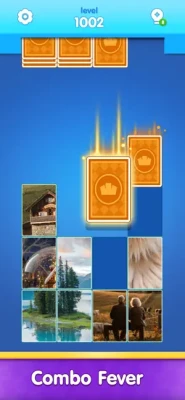
As completed sections disappear, new space becomes available. Fresh tiles can then enter the board, giving you additional pieces to work with.
This makes every move part of a larger puzzle-management process. A good decision can open up the board, while poor placement can make the next stage more difficult.
Beautiful Picture Collections
Jigsaw Drop features a variety of pictures covering different visual themes.
The App Store describes collections that include nature, everyday objects and artistic compositions, giving players plenty of different scenes to discover.
Player reviews also highlight landscapes, wildlife, vintage imagery and other art styles as some of the game's visual strengths.
This picture-focused design makes completing an image feel like a reward in itself.
Relaxing Puzzle Gameplay
One of the game's biggest selling points is its relaxed approach.
There are no timers and no pressure, according to the App Store description. Players can work through puzzles at their own pace rather than racing against a countdown.
This makes Jigsaw Drop suitable for short breaks as well as longer, quiet gaming sessions.
No Timer, No Move Limit
The absence of a timer is particularly useful for players who enjoy taking their time.
You can study the board, identify possible matches and decide where to place pieces without worrying about a rapidly decreasing clock.
An App Store reviewer also specifically praised the game for having no timer and no limit on the number of moves.
Daily Challenges and Coastal Puzzles
The current App Store listing features a special Coastal Puzzles event with daily quests and challenges.
These activities introduce new scenes and surprises, giving players an additional reason to return to the game regularly.
The event structure can add variety to the core picture-matching experience while encouraging consistent play.
Game Progression
Progression revolves around completing picture puzzles and advancing through different layouts.
Each level can introduce a new arrangement of pieces, requiring you to adapt your approach. As the board changes and new pieces fall, you'll need to recognize patterns and manage space effectively.
The game is therefore less about memorizing a single solution and more about making sensible decisions as the puzzle develops.
Puzzle Difficulty
Jigsaw Drop is easy to understand but can still require careful thinking.
Beginner
New players can quickly learn the basic process of matching fragments and completing pictures.
Intermediate
As the board becomes more complicated, managing available space becomes increasingly important.
Advanced
More challenging layouts require players to think ahead and avoid blocking useful spaces.
The game is designed to provide gentle strategic thinking rather than intense competitive difficulty.
Strategy and Tips
Look for obvious matches first
Start with pieces that clearly belong together. Completing simple sections can open space for more pieces.
Keep the board organized
Avoid filling every available space without considering what might arrive next.
Think about future pieces
Because new tiles fall into the board, your current placement can affect your future options.
Complete sections efficiently
Clearing completed picture sections creates room for additional pieces and helps keep the board manageable.
Don't rush
There is no timer, so use the relaxed pace to examine the board carefully.
Beginner's Guide
If you're new to Jigsaw Drop, focus on understanding the flow rather than trying to solve everything immediately.
First, identify matching image fragments. Once you recognize a connection, place the pieces together and work toward completing a picture section.
When the section is complete, clear it and use the newly available space for incoming pieces.
The most important early lesson is space management. Completing pictures is only half of the challenge; keeping enough room for future pieces is equally important.
Advanced Strategy
Experienced players can improve their results by thinking several moves ahead.
Instead of automatically connecting every available match, consider how the placement will affect the rest of the board.
A useful strategy is to prioritize combinations that:
- Complete a picture section
- Free valuable board space
- Prevent important areas from becoming blocked
- Create opportunities for incoming pieces
- Keep multiple matching options available
Because the game has no timer, careful planning is generally more useful than speed.
Controls and Interface
Jigsaw Drop is designed around straightforward touch controls.
Players interact directly with puzzle pieces and move them into appropriate positions. The clean interface keeps the focus on the pictures and the puzzle board rather than complicated menus or control schemes.
The App Store emphasizes smooth interactions and responsive controls as part of the game's design.
Graphics and Visual Design
The visual identity of Jigsaw Drop is centered on its picture collections.
Rather than relying on elaborate action effects, the game puts the completed artwork at the center of the experience. Nature scenes, everyday objects, artistic compositions, wildlife and vintage-style images provide visual variety.
This approach works particularly well for players who enjoy picture puzzles and collecting completed images.
Player Experience
The game currently has a strong reception on the U.S. App Store, with approximately 36,000 ratings and a 4.7/5 score at the time of checking.
Players frequently mention the relaxed pace, variety of images and absence of a timer as positives. Some reviews also mention advertising, occasional situations where no matching pieces are available, and requests for greater control over difficulty.
This gives the game a fairly clear identity: it is aimed at players looking for a calm and accessible puzzle experience rather than a highly competitive logic challenge.
Advertising
The App Store lists advertising as part of the game.
Player feedback is mixed. Some reviewers consider the ads manageable, while others find forced advertisements frustrating.
This is worth mentioning for players who prefer completely uninterrupted puzzle sessions.
Game Modes and Events
Jigsaw Drop primarily focuses on its picture-puzzle levels, with additional events providing extra content.
The current listing highlights Coastal Puzzles and daily quests, adding a recurring challenge structure alongside the main puzzle experience.
Main Features
- Relaxing jigsaw-style puzzle gameplay
- Falling puzzle pieces
- Picture matching mechanics
- Beautiful image collections
- Nature and landscape scenes
- Wildlife and everyday images
- Artistic picture collections
- No timer
- No move limit
- Space-management strategy
- Daily quests
- Coastal puzzle event
- Smooth touch controls
- Single-player casual experience
- Regular performance improvements and bug fixes
Updates and Version History
The current App Store listing shows a rapid series of updates focused primarily on performance optimization and bug fixes.
Version 1.0.13 was released recently, followed by versions 1.0.12, 1.0.11, 1.0.10 and earlier releases. The listed updates consistently mention performance improvements and bug fixes.
This suggests the developer has been actively maintaining the application since its initial release.
Technical Information
| Detail | Information |
|---|---|
| Game | Jigsaw Drop: Solitaire Puzzle |
| Developer | Runyou Game |
| Seller | Chengdu Runyou Technology Co., Ltd. |
| Genre | Puzzle |
| Price | Free |
| Age Rating | 16+ |
| App Size | 314.7 MB |
| Languages | English + 7 more |
| iPhone | Supported |
| iPad | Supported |
| Mac | Apple Silicon support listed |
| Apple Vision | Supported |
| Current iOS Requirement | iOS 15.0 or later |
| iPad Requirement | iPadOS 15.0 or later |
| Advertising | Yes |
The current U.S. App Store page lists iPhone and iPad compatibility, while the compatibility information also includes Apple-silicon Mac and Apple Vision requirements.
Accessibility
Apple's listing currently indicates that the developer has not provided specific accessibility features for the app.
Players who rely on particular accessibility options should therefore check the latest App Store information before installing.
Pros and Cons
Pros
- Relaxing gameplay
- No timer
- No move limit
- Easy-to-understand mechanics
- Attractive picture collections
- Creative falling-piece system
- Daily challenges
- Good variety of images
- Suitable for short sessions
- Strong App Store rating
Cons
- Advertising is included
- Some players may encounter periods without useful matching pieces
- Limited control over difficulty has been mentioned in reviews
- The game may feel too relaxed for players seeking demanding logic puzzles
- Accessibility features are not currently specified by the developer
Who Should Play Jigsaw Drop?
Jigsaw Drop is especially suitable for players who enjoy:
- Jigsaw puzzle games
- Picture matching games
- Relaxing mobile puzzles
- Solitaire-style puzzle experiences
- Falling tile games
- Casual brain games
- Art and picture puzzles
- No-timer puzzle games
- Offline-style relaxing gameplay
- Daily puzzle challenges
If you enjoy completing pictures but prefer a more dynamic format than a traditional jigsaw board, the falling-piece mechanic makes Jigsaw Drop an interesting alternative.
Jigsaw Drop vs Traditional Jigsaw Games
A traditional jigsaw puzzle normally gives you a fixed collection of pieces and asks you to assemble them into one image.
Jigsaw Drop changes that structure.
Pieces arrive progressively, completed sections are cleared, and new pieces fall into the available space. This means the player must solve the picture while also managing the board.
That combination makes the game feel closer to a jigsaw puzzle mixed with a falling-tile puzzle than a conventional digital jigsaw.
Is Jigsaw Drop a Good Relaxing Game?
Yes, particularly if you prefer calm puzzle games.
The lack of a timer and move limit removes much of the pressure found in competitive puzzle games. Players can examine the board, experiment with placements and enjoy the artwork at their own pace.
The game is therefore better suited to relaxation and casual concentration than high-speed puzzle solving.
Frequently Asked Questions
What is Jigsaw Drop: Solitaire Puzzle?
Jigsaw Drop: Solitaire Puzzle is a picture-matching game that combines jigsaw-style puzzles with falling pieces and board-space management.
How do you play Jigsaw Drop?
Move and connect matching picture fragments, complete image sections, clear them from the board and use the available space for new falling pieces.
Does Jigsaw Drop have a timer?
No. The App Store description specifically promotes the game as having no timers and no pressure.
Is there a move limit?
The game does not impose a traditional move limit, according to the App Store description and player feedback.
Is Jigsaw Drop free?
Yes. The iOS App Store lists Jigsaw Drop: Solitaire Puzzle as free.
Is Jigsaw Drop available on iPhone?
Yes. The current listing supports iPhone and requires iOS 15.0 or later.
Is Jigsaw Drop available on iPad?
Yes. It is designed for iPad and requires iPadOS 15.0 or later according to the current listing.
Does Jigsaw Drop have daily challenges?
Yes. The current listing promotes a Coastal Puzzles event featuring daily quests and challenges.
What types of pictures are included?
The game features a variety of scenes, including nature, everyday objects and artistic compositions. Player reviews also mention landscapes, wildlife and vintage imagery.
Is Jigsaw Drop difficult?
The basic mechanics are easy to learn, but later layouts can require more careful board management and planning.
Does Jigsaw Drop contain ads?
Yes. Advertising is listed on the App Store, and player reviews discuss the frequency and placement of advertisements.
Who developed Jigsaw Drop?
The game is developed by Runyou Game, with Chengdu Runyou Technology Co., Ltd. listed as the seller.
Jigsaw Drop: Solitaire Puzzle takes the familiar appeal of picture puzzles and adds a clever falling-piece system that keeps the board constantly evolving.
Its strongest feature is the combination of jigsaw-style picture matching and space management. The absence of a timer or move limit also makes the game much more approachable for players who want to relax rather than compete against the clock.
The variety of artwork, daily challenges and constantly changing layouts provide additional reasons to return. On the other hand, advertising and occasional gameplay limitations mentioned by players may affect the experience for some users.
Overall, Jigsaw Drop is a strong choice for fans of relaxing jigsaw games, picture puzzles, falling tile games and casual brain puzzles.
Overall Rating: 8.6/10
Rate the Game
User Reviews





Popular Games

















 Android
 iOS
iOS Windows
 Xbox
Xbox