





Latest Version
October 18, 2025
COTTONGAME Network Technology Co., Ltd.
Adventure
iOS
0
Report a Problem
More About :game
Players must explore different locations, collect useful objects, solve challenging puzzles, interact with mysterious characters, and connect clues to progress through the story. Featuring beautiful hand-drawn artwork, atmospheric music, imaginative environments, and an intriguing narrative, ISOLAND: The Amusement Park delivers a memorable adventure for fans of exploration and brain-teasing puzzles.
ISOLAND: The Amusement Park – Complete Game Overview
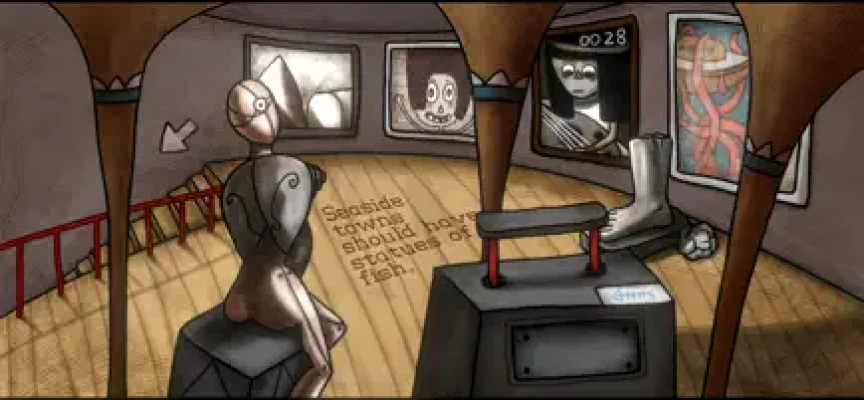
ISOLAND: The Amusement Park is a story-driven point-and-click adventure that combines mystery, exploration, artistic storytelling, and challenging logic puzzles. Developed by COTTONGAME Network Technology Co., Ltd., the game takes players to a mysterious seaside town where almost everything seems familiar and unfamiliar at the same time.
The story begins with an unusual situation. A mysterious feeling of confusion surrounds a small coastal town, and the main character struggles to remember the past. The only recognizable memory involves an amusement park that supposedly opened recently near the sea. However, as the investigation develops, even that simple memory becomes uncertain.
The town contains several unusual locations, strange characters, mysterious buildings, and objects that appear to have connections to events that happened long ago.
Players must explore the environment, investigate different locations, collect useful items, and solve interconnected puzzles to understand what is happening.
Unlike action-oriented adventure games, ISOLAND: The Amusement Park focuses on observation and logical thinking. There are no complicated combat systems or fast-paced battles. Instead, the challenge comes from understanding the relationships between objects, recognizing patterns, remembering clues, and discovering how different areas connect.
The amusement park is central to the experience, but the surrounding seaside town is equally important. Locations such as the theatre, observation tower, lighthouse, and other mysterious places contain information that gradually reveals the larger story.
One of the most interesting aspects of the game is its mysterious atmosphere. Conversations sometimes appear strange or incomplete, and certain objects seem to have symbolic meanings. Players are encouraged to interpret what they discover rather than expecting every event to receive an immediate explanation.
The adventure also offers additional discoveries during a second playthrough, giving players another opportunity to investigate the town and uncover details they may have missed.
Main Features of ISOLAND: The Amusement Park
Beautiful Hand-Drawn Artwork
The game features distinctive illustrated environments with unusual architecture, interesting characters, and imaginative scenery. Every location has its own artistic identity, creating a memorable visual experience.
Mysterious Seaside Setting
The adventure takes place in a strange coastal town where forgotten memories, unusual events, and unexplained mysteries surround the amusement park.
Point-and-Click Puzzle Gameplay
Players interact with objects, investigate locations, collect items, and activate mechanisms by tapping different parts of the environment.
Challenging Brain Teasers
The game includes puzzles involving numbers, symbols, object arrangements, hidden clues, and logical connections between different locations.
Interesting Characters
The town is populated by unusual characters who provide information, introduce additional mysteries, and contribute to the overall narrative.
Hidden Objects and Collectibles
Exploration is rewarded through the discovery of useful objects, coins, special items, and other important clues.
Theatre and Observation Tower
Important locations such as the theatre and observation tower contain puzzles and discoveries that contribute to the adventure.
Lighthouse Mystery
The lighthouse and its surrounding illustrations provide important visual information that becomes relevant during puzzle-solving.
Bird-Feeding Activities
The adventure includes interactions involving four birds, bird food, and collectible coins. These activities are connected to progression and require careful resource management.
Second Playthrough
Playing through the adventure again provides opportunities to discover additional puzzles and story details.
Atmospheric Music and Sound
The soundtrack and environmental audio complement the mysterious seaside setting.
Optional Hint System
Players can use the available hint system when they become stuck on difficult challenges. In-app purchases are available for additional game content and hint-related resources.
Understanding the Gameplay Mechanics
Point-and-Click Exploration
Exploration is the foundation of ISOLAND: The Amusement Park.
Players investigate different locations by tapping objects and examining the surrounding environment.
Some interactive elements are immediately noticeable, while others are hidden among background illustrations.
It is important to examine every room carefully before moving to another location.
A seemingly ordinary object may contain the information needed to solve a puzzle much later in the adventure.
Object Collection
Collecting objects is essential for completing the game.
Some items can be used immediately, while others are required in locations that become accessible later.
For example, a pocket knife discovered near the beginning of the adventure is important for cutting out tickets during a later interaction.
This demonstrates why players should remember the objects they collect and avoid overlooking apparently insignificant discoveries.
Inventory Management
The inventory helps players keep track of useful objects.
Whenever you discover a new item, consider its possible purpose.
An object that cannot be used in the current location may become essential somewhere else.
If you become stuck, review your available items and revisit areas containing incomplete interactions.
Puzzle Solving
The puzzles combine different types of logical challenges.
Some involve recognizing numerical sequences, while others require understanding visual patterns or connecting clues discovered in separate locations.
The best approach is to examine all available information before attempting a solution.
Avoid entering random combinations because the correct answers usually have a logical connection to something found elsewhere.
Character Interactions
Talking to characters is another important part of the experience.
Conversations can provide clues, introduce unusual events, and explain parts of the mysterious town.
Pay attention to what characters say, even when their dialogue appears unrelated to your current objective.
Some information becomes meaningful only after additional exploration.
Coins and Collectibles
Coins play an important role in certain activities.
The bird-feeding sequence is a particularly useful example because feeding birds can provide coins that help players obtain additional bird food.
Managing these resources carefully is important for completing the related objectives.
Second Playthrough
The adventure includes additional discoveries that become relevant when players revisit the game.
A second playthrough provides opportunities to investigate familiar locations from a different perspective and solve puzzles that may have been overlooked.
Complete Strategy Guide for ISOLAND: The Amusement Park
Starting the Adventure
The opening introduces the mysterious seaside town and establishes the main character's unusual relationship with the amusement park.
Begin by examining the available environment.
Look for letters, objects, unusual markings, and anything that appears interactive.
Do not rush through the opening scene because some collected objects become important later.
The pocket knife is particularly important. Make sure you keep track of it because it is needed for a later ticket-related interaction.
During the opening section, develop the habit of checking every visible object before leaving a location.
Important beginner tips:
Examine every object carefully.
Collect useful items whenever possible.
Remember where important objects were discovered.
Pay attention to numbers and symbols.
Read all available conversations.
Revisit locations after obtaining new items.
Avoid discarding or overlooking important inventory objects.
Investigating the Seaside Town
The seaside town is the main setting of the adventure.
It contains several locations that appear independent at first but gradually become connected through the puzzles.
Explore the accessible areas systematically.
Pay particular attention to unusual buildings, signs, illustrations, and objects that appear different from their surroundings.
The town's mysterious atmosphere is part of the storytelling. Not every discovery immediately explains what happened, so keep track of interesting details.
When you discover a locked mechanism, investigate other available locations before attempting random combinations.
Exploring the Amusement Park
The amusement park is one of the most important locations in the game.
Its unusual attractions and mysterious atmosphere provide several opportunities for exploration and puzzle-solving.
Examine the different structures and identify objects that can be interacted with.
Some amusement park activities are connected to the larger mystery rather than functioning as ordinary entertainment.
Look for clues that might explain how the attractions operate and why the park seems connected to the town's forgotten past.
If a particular attraction cannot be accessed, continue exploring the surrounding locations for missing objects or information.
Investigating the Theatre
The theatre is an important location in the adventure.
Its mysterious atmosphere and unusual details contribute to the game's central narrative.
One of the interesting clues involves drawings associated with the lighthouse, which become relevant to a later observation tower puzzle.
Examine the theatre carefully and pay attention to its walls and surrounding illustrations.
Do not focus exclusively on the main entrance or obvious interactive objects.
The visual details of the building may provide information that becomes useful elsewhere.
The theatre also reinforces one of the game's central mysteries: something unusual appears to be happening in the town, and the characters do not seem to understand the full situation.
Exploring the Observation Tower
The observation tower contains an important coin-operated viewer puzzle.
This challenge requires players to identify a numerical sequence using information discovered elsewhere.
One of the relevant clues is connected to the lighthouse drawings on the side of the theatre.
The best strategy is to inspect those drawings carefully and consider how their visual arrangement might translate into the sequence required by the viewer.
Avoid entering random numbers.
If the viewer does not respond, revisit the theatre and examine the lighthouse illustrations again.
This is a good example of how ISOLAND connects information from different locations.
Understanding the Lighthouse Clues
The lighthouse plays an important role in the game's visual puzzle system.
Its drawings and surrounding details provide clues that can help solve other challenges.
When examining the lighthouse, pay attention to repeated shapes, numbers, and unusual arrangements.
Do not assume that every illustration is decorative.
Compare the information with what you have already discovered at the theatre and observation tower.
The most effective strategy is to record the important details and look for a logical relationship between them.
Collecting and Using the Pocket Knife
The pocket knife is one of the most important early discoveries.
It is obtained during the initial part of the adventure and is required for a later ticket-cutting interaction.
Players should make sure the item remains available in their inventory.
If you reach the ticket-related objective and cannot find the knife, check your inventory carefully and verify that the item was collected correctly.
This is particularly important because losing access to a required object can interrupt progression.
Keeping track of essential items is one of the best ways to avoid unnecessary frustration.
Completing the Ticket-Related Objective
Tickets are connected to the amusement park experience and require the use of an appropriate cutting tool.
When you reach this objective, remember the pocket knife discovered earlier.
If the interaction does not work, verify that you have selected the correct object and are using it in the appropriate location.
This section demonstrates why early inventory discoveries should never be ignored.
Feeding the Four Birds
The bird-feeding activity is another important part of the adventure.
Players encounter four birds that require food.
The challenge involves obtaining bird food and managing the coins needed to purchase additional supplies.
Begin by examining the locations where the birds appear.
Look for available bird food and identify how the feeding interactions work.
After feeding a bird, pay attention to whether it returns a coin.
These coins can be used to obtain more food, allowing you to continue the activity.
A successful strategy requires keeping track of the available coins and ensuring that each feeding interaction is completed correctly.
Bird-Feeding Tips
Locate all four birds.
Examine the available food sources.
Collect the initial bird food.
Feed the birds carefully.
Check whether a coin is returned after feeding.
Use returned coins to obtain additional food.
Avoid wasting coins before understanding the complete sequence.
Update the game if you encounter an issue with missing coins.
An earlier version of the game had a reported issue involving coins disappearing during bird-feeding interactions. The developer subsequently released a fix, so keeping the game updated is advisable.
Solving the Number and Combination Puzzles
Several challenges require players to understand numerical relationships.
These puzzles may involve sequences, combinations, and information hidden in illustrations.
Whenever you encounter a numerical challenge, write down all the numbers you have discovered.
Then compare them with the surrounding visual clues.
The observation tower is a particularly good example because its viewer puzzle depends on information found at another location.
Avoid trying every possible combination.
A careful examination of the available clues is usually more productive.
Discovering Hidden Objects
Some of the most useful discoveries are not immediately obvious.
Examine shelves, walls, signs, unusual structures, and smaller background objects.
If something appears slightly different from the surrounding artwork, investigate it.
Players who explore carefully are more likely to discover the items needed for difficult puzzles.
It is also helpful to revisit locations after completing major objectives because new interactions may become available.
Understanding the Town's Mystery
The narrative is intentionally fragmented.
Players are not given a complete explanation of the seaside town immediately.
Instead, the story develops through conversations, discoveries, and environmental clues.
The amusement park is central to the mystery, but the theatre, lighthouse, observation tower, and other locations contribute important details.
Try to connect the information rather than treating every discovery as an isolated event.
Think about why the town appears so gloomy despite the pleasant weather and why the main character cannot clearly remember the past.
These questions are part of what makes the story interesting.
Completing the First Playthrough
Before finishing the first adventure, review the locations you have already explored.
Check your inventory and make sure you have completed the major interactions.
Pay particular attention to:
The pocket knife and ticket-related objective.
The theatre and its visual clues.
The observation tower viewer.
The lighthouse drawings.
The four bird-feeding interactions.
The coins and bird food.
Any remaining locked mechanisms.
Unexplored sections of the amusement park.
Completing these objectives provides a more satisfying first experience and prepares you for additional discoveries.
Second Playthrough Strategy Guide
The second playthrough offers another opportunity to investigate the seaside town.
Players who enjoyed the first adventure can return to familiar locations and discover additional information.
Some puzzles and interactions may require a different approach, so do not assume that everything will work exactly as it did during the first journey.
Revisit the Observation Tower
The coin-operated viewer is particularly memorable during the second playthrough.
Pay attention to the numerical sequence and review the lighthouse drawings if necessary.
Compare Familiar Locations
Return to the theatre, amusement park, and other important areas.
Look for differences in the available interactions and examine objects that may have seemed unimportant during the first adventure.
Review Your Previous Clues
Remember the numbers, illustrations, and object combinations discovered earlier.
Some information may become more useful when considered in a different context.
Use Hints When Necessary
If a puzzle becomes frustrating, consider using the available hint system rather than repeatedly attempting random solutions.
Explore the Story Again
The second journey can provide additional context for the mysterious events surrounding the town and amusement park.
Advanced Puzzle-Solving Tips
Connect Clues Between Locations
Do not assume that the solution to a puzzle is located in the same room.
The theatre drawings, for example, provide information that becomes useful in the observation tower.
Always consider whether a clue discovered elsewhere might be relevant.
Record Important Numbers
Write down every unusual numerical sequence.
This is particularly helpful when dealing with coin-operated machines, combination puzzles, and visual arrangements.
Keep Essential Objects
Never overlook items collected during the opening scenes.
The pocket knife demonstrates how an object discovered early can become necessary much later.
Manage Coins Carefully
Coins are useful for activities involving bird food.
Keep track of how many coins you have and whether an interaction returns additional currency.
Examine Illustrations
The game's artwork frequently contains more than decorative information.
Drawings, symbols, and unusual arrangements can provide essential clues.
Revisit Completed Areas
An earlier location may contain a new interaction after you collect an important object.
Use Hints Strategically
Save hints for puzzles where the available information is genuinely unclear.
Before using one, review the objects and clues you have already collected.
Keep the Game Updated
Updates can fix progression issues and other technical problems.
This is particularly useful if an essential object disappears or an interaction fails to behave as expected.
Common Mistakes to Avoid
Ignoring the Pocket Knife
The knife is required for a later ticket-related interaction. Remember to collect it during the opening section.
Forgetting the Lighthouse Drawings
These illustrations provide important information for the observation tower puzzle.
Feeding Birds Without Managing Coins
Bird food and returned coins are connected. Pay attention to the resource cycle.
Ignoring Small Details
Some clues are hidden in illustrations and background objects.
Trying Random Numbers
Numerical puzzles should be approached through observation and logical reasoning.
Skipping Character Dialogue
Conversations contribute to the narrative and may contain useful information.
Failing to Revisit Locations
Some puzzles require objects or clues discovered in previously explored areas.
Ignoring Updates
Older versions may contain technical issues that affect progression.
Rushing Through the Second Playthrough
The additional journey is an opportunity to discover more information, so investigate familiar locations carefully.
Graphics, Music, and Overall Atmosphere
The artistic presentation is one of the strongest elements of ISOLAND: The Amusement Park.
The game uses hand-drawn environments to create a distinctive seaside world filled with unusual buildings, mysterious characters, and imaginative objects.
Its visual style is particularly effective because the town looks pleasant on the surface while maintaining an underlying sense of uncertainty.
The theatre, observation tower, lighthouse, and amusement park all contribute to the game's recognizable identity.
Music and sound effects also play an important role.
Rather than relying on intense action sequences, the game uses atmospheric audio to support exploration and make the locations feel more mysterious.
The combination of artwork, music, and environmental storytelling creates an experience that is both relaxing and thought-provoking.
Is ISOLAND: The Amusement Park Difficult?
ISOLAND: The Amusement Park is accessible to players who understand basic point-and-click gameplay, but some puzzles can be surprisingly challenging.
The main difficulty comes from the way clues are distributed across different locations.
A player might discover an illustration in the theatre and only understand its importance after reaching the observation tower.
This design encourages memory, observation, and logical thinking.
The second playthrough adds another challenge for players who want to discover more of the game's content.
The optional hint system is useful for players who become stuck, but solving puzzles independently can make the experience more rewarding.
ISOLAND: The Amusement Park – Game Information
Game Title: ISOLAND: The Amusement Park
Developer: COTTONGAME Network Technology Co., Ltd.
Publisher: CottonGame
Category: Puzzle
Genre: Point-and-Click Adventure, Mystery, Logic Puzzle
Gameplay Style: Exploration and environmental puzzle-solving
Setting: Mysterious seaside town and amusement park
Main Activities: Exploring locations, collecting objects, solving puzzles, interacting with characters, and discovering hidden clues.
Visual Style: Hand-drawn illustrated artwork
Storytelling: Mysterious narrative with fragmented memories and environmental clues
Additional Content: Second playthrough and additional discoveries
Supported Devices: iPhone, iPad, Mac, and Apple Vision where supported.
Minimum iOS Requirement: iOS 16.0
Minimum iPadOS Requirement: iPadOS 16.0
Minimum macOS Requirement: macOS 13.5
Age Rating: 4+
Available Languages: English, French, German, Japanese, Korean, Portuguese, Russian, Simplified Chinese, Spanish, and Traditional Chinese.
Business Model: Free download with in-app purchases.
Developer's Other Games: ISOLAND, ISOLAND 2: Ashes of Time, ISOLAND 3: Dust of the Universe, ISOLAND4: The Anchor of Memory, and Dad's Monster House.
Is ISOLAND: The Amusement Park Worth Playing?
ISOLAND: The Amusement Park is a great choice for players who enjoy mysterious puzzle adventures with artistic environments and unconventional storytelling.
Its biggest strength is the way it connects different locations through carefully designed clues.
The amusement park, theatre, observation tower, and lighthouse create an interconnected world where exploration is just as important as solving individual puzzles.
The bird-feeding activity and ticket-related challenges add variety, while the second playthrough provides additional reasons to return.
Players who enjoy games such as Dad's Monster House, Rusty Lake, and other point-and-click mystery adventures may particularly appreciate its design.
However, those who prefer straightforward puzzles with immediate solutions may find some challenges difficult.
The game is best enjoyed by players who appreciate taking their time, examining every detail, and discovering the story gradually.
Final Verdict
ISOLAND: The Amusement Park delivers a distinctive puzzle adventure built around mysterious locations, beautiful illustrations, interconnected challenges, and unusual storytelling.
Its seaside setting creates an intriguing atmosphere, while the amusement park, theatre, lighthouse, and observation tower provide memorable locations filled with secrets.
The combination of object collection, numerical puzzles, bird-feeding activities, hidden clues, and additional second-playthrough content gives players plenty of reasons to explore carefully.
Whether you are a longtime fan of the ISOLAND series or a newcomer looking for an atmospheric point-and-click adventure, this game offers an enjoyable experience that rewards curiosity and logical thinking.
The best way to succeed is to examine every location, remember important objects, connect clues from different areas, manage your coins carefully, and never overlook an unusual illustration. The more carefully you investigate the seaside town, the closer you get to understanding the mystery behind its amusement park.
Rate the Game
User Reviews













Popular Games



















 Android
 iOS
 Windows
 Xbox