





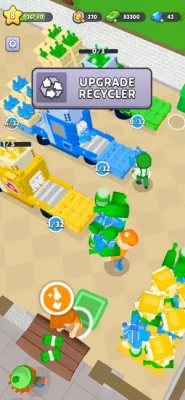
Latest Version
December 10, 2025
CRAZY LABS BY TABTALE, G.P.
Simulation
iOS
0
Report a Problem
More About :game
Running a shelter is anything but simple.
In Flop House, you begin with a modest, worn-down shelter that has only the essentials. Your job is to turn that small operation into a well-organized and increasingly successful facility.
You'll need to think about what your visitors need, keep essential rooms functioning, make sure supplies are available and invest your earnings into useful upgrades.
As the shelter improves, more people arrive, creating new demands and giving you more opportunities to expand.
The game combines the familiar progression of an idle tycoon game with the management challenges of a shelter simulator.
Gameplay Overview
The central gameplay loop is straightforward but satisfying:
Collect → Manage → Upgrade → Expand → Automate → Grow
You'll move around the shelter, interact with facilities, provide services, collect resources and invest your earnings into improvements.
Over time, you can delegate more of the daily work to staff, allowing the shelter to operate more efficiently while you concentrate on expansion and upgrades.
Build Your Shelter
Your journey begins with a small and poorly equipped shelter.
Instead of having everything available from the beginning, you gradually build up the facility.
Potential improvements include:
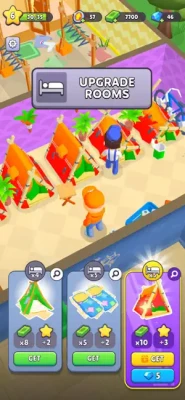
- Beds
- Bathrooms
- Kitchens
- Showers
- Food facilities
- Recreation areas
- Staff facilities
- Additional shelter spaces
- Service upgrades
Each improvement makes your shelter more capable and helps prepare it for additional visitors.
Upgrade and Expand
Expansion is at the heart of Flop House.
As you generate more resources, you can invest them back into your shelter.
Upgrades can improve the efficiency and capacity of your facilities, allowing you to handle a larger number of people without becoming overwhelmed.
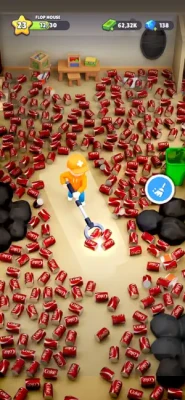
The satisfying part is seeing a once-empty, run-down building gradually become a busy and functioning shelter.
Resource Management
Managing resources is one of the main strategic elements.
Food, supplies, money and other resources need to be handled carefully.
Spending everything immediately isn't always the best decision. A smart manager needs to consider which upgrade will have the greatest impact on future income and efficiency.
This gives Flop House more depth than a simple tap-to-earn idle game.
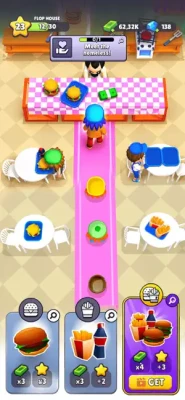
Serving Meals
Food is an essential part of running the shelter.
You'll need to make sure meals are prepared and available for the people staying at your facility.
Keeping food operations running smoothly becomes increasingly important as the shelter grows.
This creates a management cycle where increased capacity also creates increased responsibility.
Kitchens and Essential Facilities
A successful shelter needs more than beds.
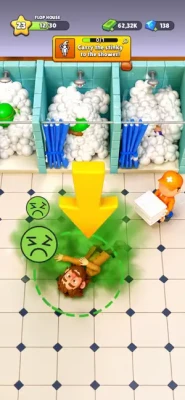
Flop House allows you to improve the facility with practical spaces such as kitchens, bathrooms and showers.
These additions make the shelter more functional and contribute to its overall development.
The App Store description specifically highlights kitchens, showers and other essential facilities as part of the shelter-building experience.
Hire Staff
You can't manage everything alone.
As your shelter expands, you can build a team to help with everyday responsibilities.
Staff can assist with activities such as:
- Cooking
- Cleaning
- Restocking
- General shelter operations
- Maintaining facilities
Hiring workers introduces an automation element that is common in idle management games.
Instead of personally handling every task forever, your role gradually shifts toward management and optimization.
Automation
Automation is one of the most important reasons to upgrade your staff.
A well-managed team can take care of repetitive work while you focus on bigger decisions.
The idea is simple:
Do the work yourself → Hire staff → Improve staff → Automate operations → Expand
This progression gives players a sense of becoming a genuine shelter manager.
Idle Progression
Flop House uses idle-style progression, allowing the shelter to continue developing without requiring constant manual interaction.
The idle format makes it easy to play in short sessions.
You can check your shelter, collect resources, make upgrades and leave before returning later to continue building.
This makes the game particularly suitable for players who enjoy casual management games that don't demand continuous attention.
From Shelter to Tycoon
The long-term goal is bigger than simply keeping the shelter operational.
You are encouraged to transform a struggling facility into a successful management operation.
The game's progression is essentially:
Small Shelter → Better Facilities → More Visitors → More Resources → More Staff → Bigger Shelter → Tycoon Status
The App Store specifically presents this progression as going from a basic shelter toward tycoon-style management.
Shelter Management
The game gives you responsibility for multiple aspects of the facility.
You need to consider:
- How many beds are available
- Whether facilities are upgraded
- Whether supplies are stocked
- How quickly staff work
- Where to spend resources
- Which upgrades provide the best return
- How to prepare for additional visitors
This makes the shelter feel like a living system rather than a static building.
Managing Visitors
As the shelter improves, more people arrive.
This creates an interesting relationship between expansion and demand.
A bigger shelter can attract more visitors, but more visitors also mean greater resource consumption and more work for your staff.
Good management therefore requires thinking ahead.
Staff Roles
Different tasks require different types of workers.
Depending on the current shelter setup, you may have workers focused on activities such as:
Cleaners
Keep rooms and facilities in good condition.
Stockers
Move supplies where they're needed.
Kitchen Workers
Help keep food operations running.
General Helpers
Assist with the day-to-day running of the shelter.
The staff system allows the player to gradually move away from manual work and toward higher-level management.
Facility Efficiency
Not every upgrade is equally valuable.
A smart player should prioritize facilities that directly improve the shelter's ability to serve more visitors or generate resources.
For example, improving a bottleneck can sometimes be more useful than upgrading a facility that is already operating efficiently.
This creates a simple but meaningful optimization layer.
Beginner's Guide
1. Upgrade the Basics First
Focus on essential facilities before spending heavily on cosmetic or less important improvements.
2. Keep Supplies Moving
A shelter can't operate efficiently if essential resources constantly run out.
3. Invest in Staff
Hiring and improving workers can reduce the amount of manual work you need to perform.
4. Watch Your Resources
Don't spend everything immediately. Keep enough resources available for important upgrades.
5. Expand Gradually
A larger shelter means more visitors and more responsibilities, so make sure your operations can handle the growth.
6. Look for Bottlenecks
If one task is slowing down the entire shelter, upgrade the system responsible for that task.
Advanced Tips and Strategies
Prioritize Bottlenecks
If your shelter is running smoothly except for one specific task, upgrading that bottleneck can produce a bigger improvement than upgrading everything equally.
Improve Staff Efficiency
Workers are particularly important as the shelter grows. Investing in their performance can reduce repetitive manual tasks.
Balance Capacity and Operations
Don't expand simply because you can. Make sure your food, cleaning, bathrooms and other services can support additional visitors.
Think Long-Term
An upgrade that produces a small immediate benefit may become much more valuable as the shelter expands.
Keep Resources Available
Avoid spending your entire balance on a single upgrade if doing so prevents you from handling essential tasks.
Automate Repetitive Tasks
The more work your staff can handle, the more time you can spend on strategic expansion.
Don't Ignore Facility Layout
Efficient movement can matter in management games. Poorly arranged spaces can make workers take longer routes and reduce overall efficiency.
Key Features
- Homeless shelter management
- Idle tycoon gameplay
- Shelter building and expansion
- Resource management
- Staff hiring
- Staff upgrades
- Cooking and meal management
- Cleaning systems
- Supply management
- Beds and accommodation
- Bathrooms and showers
- Kitchen upgrades
- Facility improvements
- Idle progression
- Multiple shelter environments
- Casual simulation gameplay
- Management challenges
- Tycoon-style progression
These core mechanics are directly reflected in the current App Store description.
Controls and Interface
Flop House uses straightforward touchscreen controls.
Players move around the shelter, interact with facilities, collect resources and trigger upgrades.
The simplicity of the interface allows the management mechanics to remain the focus.
Rather than learning complicated controls, players spend most of their time deciding what to upgrade, where to invest and how to improve efficiency.
Game Progression
The progression system follows the classic idle-management formula.
Stage 1 – Start Small
Begin with a basic shelter and limited facilities.
Stage 2 – Improve Essentials
Add and upgrade bathrooms, kitchens, showers and sleeping areas.
Stage 3 – Increase Capacity
Prepare the shelter to handle more visitors.
Stage 4 – Hire Staff
Delegate repetitive responsibilities.
Stage 5 – Optimize
Improve worker performance and facility efficiency.
Stage 6 – Expand
Unlock additional shelter environments and management challenges.
Stage 7 – Build Your Empire
Continue upgrading until your shelter operates like a fully developed idle-management business.
New Shelter Environments
The game's recent development has expanded the shelter world with additional locations.
One notable update introduced a new shelter inside an abandoned park, giving players a different layout and fresh management challenges.
This helps prevent the progression from feeling like a single building repeated indefinitely.
Updates and Recent Changes
Flop House continues to receive frequent updates.
The current App Store listing shows version 5.1.0, released just days ago, with the latest update described as bringing gameplay improvements and fixes. Previous updates have also introduced new shelter content, including the abandoned-park shelter, while repeatedly addressing bugs, controls and performance.
This active update schedule is useful for a management game because new locations, improvements and fixes can extend the experience over time.
Player Experience
The current U.S. App Store listing shows a strong 4.7/5 rating from approximately 31,000 ratings, indicating generally positive reception.
Players frequently praise the game's concept, colorful presentation and satisfying shelter-building progression.
However, reviews also reveal some recurring criticisms. Some players report that ads can feel excessive, while others mention slow staff movement, progression limitations and technical issues in later shelters.
This makes Flop House a game with a strong core concept but one where the free-to-play systems can influence the experience.
What Makes Flop House Different?
Many idle games ask you to run:
- Restaurants
- Hotels
- Farms
- Factories
- Theme parks
Flop House takes a less common approach by placing the player in charge of a homeless shelter.
Instead of simply maximizing profits, the gameplay revolves around providing beds, food, facilities and services while building a larger operation.
That unusual setting gives the game a distinctive identity within the idle-management genre.
Flop House vs Traditional Idle Tycoon Games
Traditional idle tycoon:
Invest → Earn → Upgrade → Expand
Flop House:
Provide → Manage → Upgrade → Automate → Expand
The shelter setting adds a service-management component to the familiar idle progression formula.
Difficulty
Easy
The opening stages introduce basic shelter management and simple upgrades.
Medium
As more visitors arrive, resource management and staff efficiency become increasingly important.
Advanced
Later shelters require greater attention to worker performance, facility upgrades and resource flow.
The difficulty is less about reflexes and more about making efficient management decisions.
Visual Style
Flop House uses bright, stylized 3D visuals.
Characters and facilities are presented in a playful manner, helping keep the management experience approachable.
The colorful environment also makes it easy to distinguish different areas of the shelter and follow workers as they move around.
Sound and Atmosphere
The game's presentation is intentionally lighthearted.
Although the subject matter involves homelessness and shelter management, the visual style and idle-game mechanics create a casual atmosphere rather than a serious simulation.
The result is closer to a colorful management sandbox than a realistic social-services simulator.
Ads and In-App Purchases
Flop House is free to download but includes advertising and optional purchases.
The current U.S. App Store lists purchases including:
- No Ads Pack
- Gem packs
- Premium Packs
- Special Offers
- Endless Offer
- Instant Cleaning
The listing currently shows a $4.99 No Ads Pack alongside several gem and premium packages.
Some player reviews specifically criticize the frequency of advertisements, while others describe optional advertising as part of the free-to-play progression.
Pros and Cons
Pros
- Unusual shelter-management concept
- Easy-to-understand gameplay
- Strong idle progression
- Building and upgrading mechanics
- Staff automation
- Resource management
- Multiple facilities
- Colorful 3D presentation
- Frequent updates
- Multiple shelter environments
- Large player community
Cons
- Advertising can be frequent
- Some progression can feel slow
- Staff efficiency has been criticized by players
- Later content may feel repetitive
- Some players have reported technical or progression issues
Who Should Play Flop House?
Flop House is particularly suitable for players who enjoy:
- Idle games
- Tycoon games
- Management simulations
- Shelter simulator games
- Building games
- Resource management games
- Casual simulation games
- Incremental games
- Upgrade-focused games
- Staff-management games
It's less suitable for players who want action-heavy gameplay, realistic social simulations or competitive multiplayer.
Expert Rating
Gameplay: 8.4/10
Management Mechanics: 8.5/10
Progression: 8.2/10
Visuals: 8.3/10
Controls: 8.4/10
Variety: 8.0/10
Replay Value: 8.1/10
Overall: 8.3/10
Technical Details
Game: Flop House
Subtitle: Homeless Shelter Idle Manager
Developer: Crazy Labs
Seller: Crazy Labs by TabTale, G.P.
Genre: Simulation
Platform: iPhone, iPad
Price: Free with in-app purchases
Current Version: 5.1.0
App Size: Approximately 391 MB
Minimum iOS: iOS 15.0 or later
iPad: Supported
Language: English
Age Rating: 13+
Advertising: Yes
In-App Purchases: Yes
App Store ID: 6504540166
Age Rating
The current U.S. App Store gives Flop House a 13+ rating and lists advertising, infrequent cartoon or fantasy violence, profanity or crude humor, and horror/fear themes among its content descriptors.
Privacy and Data
Apple's current listing indicates that the developer may use data including identifiers, usage data, purchases, coarse location and other information for purposes such as analytics, advertising, marketing, personalization and app functionality. Apple notes that these privacy practices are developer-provided and have not been verified by Apple.
Final Verdict
Flop House takes the familiar idle-management formula and places it in an unusual setting: a homeless shelter.
Starting with almost nothing, you gradually build a more capable facility by adding essential rooms, improving services, hiring staff and managing resources. The progression from a small shelter to a much larger operation gives the game a clear sense of growth.
Its biggest strengths are the shelter-building concept, idle progression, staff automation and facility upgrades. The main drawbacks come from the free-to-play model, with players reporting frequent advertisements and some frustrations around staff efficiency and later progression.
If you enjoy idle tycoon games, management simulators, building games and resource-management experiences, Flop House offers a distinctive alternative to the usual restaurant, hotel or factory setting.
Frequently Asked Questions
What is Flop House?
Flop House is an idle management and simulation game from Crazy Labs where you build and manage a homeless shelter, provide essential services, hire staff and expand the facility.
Is Flop House free?
Yes. Flop House is free to download and includes optional in-app purchases and advertising.
Who developed Flop House?
Flop House was developed by Crazy Labs by TabTale.
What type of game is Flop House?
It is primarily a simulation and idle-management game with tycoon, resource-management and shelter-building mechanics.
Can I build and upgrade the shelter?
Yes. Building and upgrading the shelter is one of the central gameplay mechanics. Players can add kitchens, bathrooms, showers and other essential facilities.
Can I hire staff?
Yes. Staff members help with tasks such as cooking, cleaning and caring for the shelter's visitors.
Does Flop House have idle gameplay?
Yes. The game combines shelter management with idle-manager mechanics, allowing progression through resource generation, upgrades and automation.
Can I play Flop House offline?
The game is designed around idle progression, but the availability of every feature without an internet connection can depend on the specific function and current version. It is safest not to promise full offline functionality on your page.
Does Flop House have ads?
Yes. The current App Store listing indicates advertising, and it also offers a No Ads Pack as an optional purchase.
Does Flop House have in-app purchases?
Yes. The App Store currently lists gem packs, premium packs, special offers, an Instant Cleaning purchase and a No Ads Pack.
What is the latest version of Flop House?
The current U.S. App Store listing shows version 5.1.0, with the latest update focused on gameplay improvements and fixes.
Is Flop House available on iPad?
Yes. Flop House supports both iPhone and iPad and requires iOS/iPadOS 15 or later.
Is Flop House a hotel management game?
Not exactly. It uses some familiar hotel/idle-management ideas, but its central setting is a homeless shelter where players provide beds, meals and essential facilities.
Rate the Game
User Reviews















Popular Games



















 Android
 iOS
iOS Windows
 Xbox
Xbox