
Latest Version
November 28, 2026
Go Dreams
Puzzle
Android
0
com.zibox.drawonepuzzle_braincheck
Report a Problem
More About :game
Game Overview
Draw One Puzzle: Brain Check is a creative puzzle game developed by Go Dreams. It combines drawing mechanics, visual observation, logical thinking, and entertaining brain teasers to create a casual gaming experience that is easy to understand but increasingly challenging.
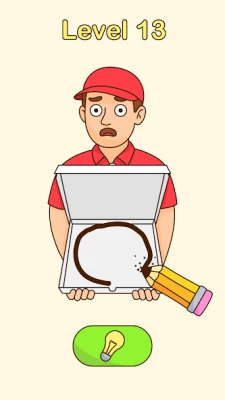
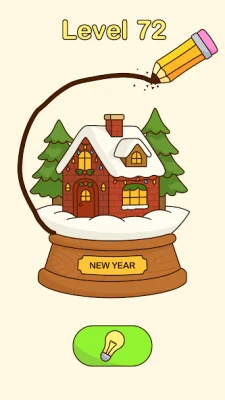
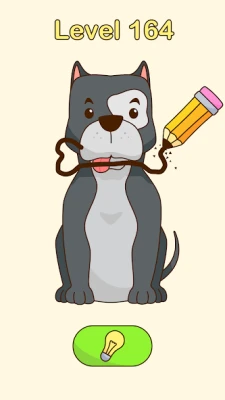
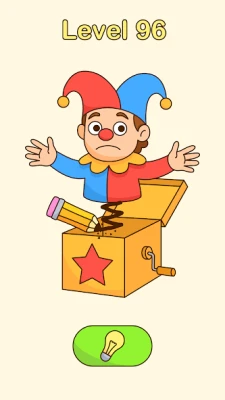
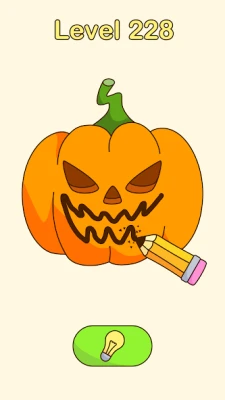
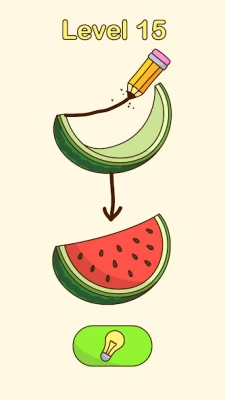
The main idea is simple: examine an incomplete picture and figure out which detail is missing. Once you identify the problem, use your finger to draw the missing object or erase an unnecessary part of the illustration. The game then automatically completes the remaining image, revealing the correct solution.
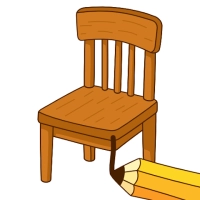
Every level presents a different situation that encourages players to look carefully at the artwork. You might need to add a crown to a king, draw a shell for a snail, or repair a broken fishbowl. These seemingly simple tasks can require creative thinking because the correct answer is not always immediately obvious.
Unlike traditional puzzle games that rely heavily on complicated rules, Draw One Puzzle focuses on natural visual reasoning. Players are encouraged to observe the scene, understand its context, and experiment with possible solutions.
The game features hundreds of entertaining levels with colorful cartoon illustrations. Its intuitive controls make drawing straightforward, while the absence of timers and lives allows everyone to enjoy the challenges at a comfortable pace.
Whether you want a quick mental challenge, a relaxing activity during a break, or an entertaining drawing puzzle for everyday play, Draw One Puzzle: Brain Check offers plenty of opportunities to test your imagination.
Main Features of Draw One Puzzle: Brain Check
Hundreds of Creative Puzzle Levels
Discover a large collection of illustrated brain teasers. Every stage introduces a different picture and a new missing detail to identify.
Simple Drawing Controls
Use your finger to draw directly on the screen. The intuitive controls make it easy to add missing objects, complete illustrations, and interact with different puzzle elements.
Pencil and Eraser Mechanics
Some challenges require drawing something new, while others ask you to erase an incorrect or unnecessary detail. Understanding which action is appropriate is part of the puzzle.
Automatic Picture Completion
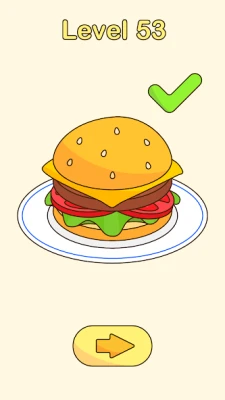
Once you successfully identify and add the missing element, the game automatically completes the illustration, making every solved challenge satisfying.
Creative Brain Teasers
The puzzles encourage observation, logical reasoning, imagination, and lateral thinking rather than relying on complicated instructions.
Relaxing Gameplay
There are no countdown timers or lives to worry about. You can take your time, examine each picture, and experiment with different ideas.
Helpful Hint System
If a particular puzzle becomes difficult, the available hint system can help you discover the missing detail and continue progressing.
Colorful Cartoon Graphics
Enjoy bright illustrations, charming characters, funny situations, and animated puzzle solutions.
Offline Gameplay
Play available puzzles without requiring a continuous Wi-Fi or mobile internet connection.
Suitable for Different Ages
The simple controls make the game accessible to younger players, while the increasing difficulty provides interesting challenges for adults.
Understanding the Gameplay
The gameplay revolves around identifying and correcting incomplete illustrations.
Each level begins with a picture containing something missing or incorrect. Instead of receiving a complicated explanation, you must examine the scene and determine what needs to change.
For example, a character might be missing an important accessory, an animal might lack a recognizable body part, or an everyday object might have been damaged.
Your job is to understand the situation and interact with the image.
The game recognizes successful solutions and automatically completes the remaining artwork. This creates a simple gameplay loop that combines observation, drawing, and instant feedback.
Some stages are straightforward and can be solved within seconds. Others require more careful examination because the missing detail may be small or connected to something happening elsewhere in the picture.
The increasing variety of situations helps maintain interest as players advance through the available levels.
Types of Puzzles and Challenges
Missing Object Puzzles
These challenges ask players to identify an absent object in an illustration.
You might encounter a character who needs an accessory, an animal missing an important feature, or an object that requires an additional component.
The best approach is to examine the entire picture before drawing anything.
Character Completion Puzzles
Character-based challenges focus on completing people, animals, and other illustrated figures.
For example, a king may need a crown, while an animal may be missing a recognizable feature.
Think about the character's identity and what would make the illustration look complete.
Object Restoration Puzzles
Some levels present damaged or incomplete everyday objects.
A broken fishbowl is one example of a situation that requires players to recognize what is wrong and determine how to restore the picture.
These puzzles reward attention to detail and an understanding of how different objects should look.
Drawing Challenges
Drawing-based stages require you to use your finger to add a missing element.
The goal is not to create a complicated artistic masterpiece. Instead, you need to identify the correct shape or detail and draw it in the appropriate location.
Simple, accurate movements are generally more effective than complicated sketches.
Erasing Challenges
Not every puzzle requires adding something.
Certain situations can be solved by removing an unwanted part of the picture. These challenges encourage players to reconsider what they see rather than automatically assuming that something needs to be drawn.
Visual Logic Challenges
Some illustrations require players to think beyond the obvious.
Look at the relationship between characters, objects, and their surroundings. A missing element may only become clear after considering the entire scene.
Complete Strategy Guide for Draw One Puzzle: Brain Check
Learn to Observe Before Drawing
The most important skill in Draw One Puzzle is careful observation.
When a new level begins, avoid immediately drawing on the screen. Take a few moments to inspect the illustration and understand what is happening.
Look for incomplete objects, unusual shapes, missing accessories, and details that do not make sense.
Ask yourself what would make the picture look natural and complete.
This simple habit can help you solve many puzzles without needing hints.
Understand the Story Behind Each Picture
Many challenges are easier when you interpret the illustration as a small visual story.
Instead of looking at individual objects separately, consider how everything in the scene is connected.
For example, if a character appears to be a king, think about the objects commonly associated with royalty. If you see a snail, consider which body part makes it recognizable.
Understanding the context often reveals the correct answer faster than randomly drawing different shapes.
Identify the Missing Element
Once you understand the scene, narrow your attention to the incomplete area.
Check whether an object is missing an essential part, whether a character needs an accessory, or whether something appears damaged.
Avoid focusing exclusively on the largest empty space. Sometimes the missing detail is relatively small but important to the overall illustration.
Compare the incomplete picture with what you would expect to see in a complete version.
Use Short and Accurate Drawing Movements
When a level requires drawing, accuracy is more important than artistic complexity.
Use simple movements to reproduce the missing shape.
Avoid making unnecessarily large drawings because they can cover other parts of the illustration and make it harder to identify the intended solution.
If the first attempt does not work, reconsider the shape and position rather than repeating the same movement.
Know When to Use the Eraser
Some puzzles are designed around removing something rather than adding a new object.
If the illustration already contains too many details or an incorrect element, think about what should disappear.
The eraser is particularly useful when the solution involves revealing something hidden or correcting an existing drawing.
Before making a change, consider whether the picture needs an additional detail or whether something is preventing it from being correct.
Think Creatively Instead of Literally
Not every puzzle has an obvious answer.
Some stages encourage unconventional thinking, so avoid limiting yourself to the most predictable interpretation.
Look at the illustration from different perspectives and consider alternative explanations.
A small visual clue may suggest an entirely different solution from what you initially expected.
Creative thinking is especially important in levels where several objects appear to be incomplete.
Pay Attention to Small Details
Tiny details can provide important clues.
Look carefully at character expressions, object shapes, unusual gaps, and the positioning of different elements.
Sometimes a seemingly unimportant part of the picture is the exact location where you need to draw.
Zooming in mentally by examining the illustration carefully can prevent unnecessary attempts.
Use Hints Strategically
The hint system is useful when you have examined the picture but cannot identify the missing element.
However, try to solve the puzzle independently before requesting assistance.
A good method is to inspect the image, consider the context, identify possible missing objects, and only then use a hint if necessary.
This approach allows you to enjoy the challenge while avoiding unnecessary frustration.
Learn From Completed Puzzles
Every solved level provides an opportunity to improve your visual reasoning.
Pay attention to how the missing element connects to the rest of the illustration.
Some puzzles follow familiar patterns, such as completing animals, restoring objects, or adding accessories to characters.
Recognizing these patterns can make similar challenges easier later.
Maintain a Comfortable Playing Pace
Because the game does not rely on countdown timers or limited lives, there is no need to rush.
Take breaks when necessary and return to difficult puzzles with a fresh perspective.
Sometimes stepping away from an illustration makes its missing detail much easier to recognize when you return.
Develop Your Own Problem-Solving Method
As you progress, build a consistent approach to each level.
Start by examining the whole picture, identify anything unusual, determine whether drawing or erasing is required, and make a simple attempt.
If the solution is unsuccessful, reconsider the context and inspect smaller details.
Developing this routine makes puzzle solving more organized and enjoyable.
Best Tips for Beginners
Examine the complete illustration before touching the screen.
Identify the main character or object in every scene.
Look for missing accessories and incomplete body parts.
Consider the context instead of guessing randomly.
Use simple strokes when drawing missing elements.
Avoid covering important parts of the illustration.
Remember that some puzzles require erasing rather than drawing.
Pay attention to small visual clues.
Use hints when you have genuinely become stuck.
Learn from the solutions of previously completed levels.
Think creatively when the obvious answer does not work.
Enjoy the game at your own pace without rushing.
How to Progress Through Hundreds of Levels
Progressing through Draw One Puzzle requires patience, observation, and a willingness to experiment.
Start by becoming familiar with the basic drawing and erasing mechanics. Early challenges help you understand how the game recognizes missing elements and completes illustrations.
As you encounter more complicated pictures, focus on identifying relationships between different objects.
Do not assume that every level follows exactly the same pattern. Some require adding a missing feature, while others involve repairing or changing an existing illustration.
Try to solve each puzzle independently before requesting a hint. This makes the progression more rewarding and gives you more opportunities to practice different approaches.
If you encounter a particularly difficult stage, take a short break and return with a fresh perspective.
Consistency is more important than speed because the game is designed around relaxed problem-solving rather than time-based competition.
How to Make the Most of Offline Gameplay
One of the useful advantages of Draw One Puzzle: Brain Check is its offline support.
You can enjoy available puzzle levels without depending on a continuous internet connection.
This makes the game convenient during travel, while waiting for appointments, or when you want an entertaining activity without using mobile data.
For the best experience, make sure the game has been installed and opened properly before playing without an internet connection.
Some services or advertising-related features may still require connectivity, but the core offline puzzle experience is designed to remain accessible.
Graphics, Sound, and Controls
Draw One Puzzle uses colorful cartoon-style illustrations that make its challenges easy to understand visually.
The characters, animals, and everyday objects are presented in a friendly artistic style that supports the game's casual atmosphere.
The drawing controls are straightforward. Players use touch gestures to add or remove details directly from the illustration.
The automatic completion system provides immediate visual feedback after a successful solution.
Calming music and simple presentation help create a relaxed environment, making the game suitable for short sessions or longer puzzle-solving periods.
Why Draw One Puzzle: Brain Check Is Enjoyable
The strongest aspect of Draw One Puzzle is its simple but entertaining concept.
Instead of requiring complicated controls or extensive tutorials, it presents a visual problem and lets players discover the answer through observation and creativity.
The combination of drawing and logical thinking creates a different experience from traditional matching or word-based puzzle games.
Its variety of illustrated situations also helps keep the gameplay interesting. Completing a missing crown, repairing an object, or identifying an animal's missing feature provides a small sense of achievement with every solved stage.
Another appealing feature is the relaxed approach to progression. Without timers or lives, players can concentrate on solving puzzles instead of worrying about losing progress because they took too long.
The offline option makes it even more convenient for everyday entertainment.
Is Draw One Puzzle: Brain Check Worth Playing?
Draw One Puzzle: Brain Check is a good option for anyone who enjoys drawing puzzles, visual brain teasers, and casual logic games.
Its accessible mechanics make it easy for beginners to understand, while the variety of levels provides plenty of opportunities to practice observation and creative problem-solving.
The combination of drawing, erasing, automatic picture completion, and helpful hints gives every challenge a straightforward structure without making the experience feel repetitive.
Whether you are looking for a relaxing mobile game, an entertaining activity for spare moments, or a creative puzzle experience that encourages you to think differently, Draw One Puzzle offers an enjoyable way to spend your time.
Frequently Asked Questions
What is Draw One Puzzle: Brain Check?
Draw One Puzzle: Brain Check is a casual drawing and logic puzzle game developed by Go Dreams. Players complete incomplete illustrations by drawing missing details or erasing unnecessary parts.
How do you play Draw One Puzzle?
Examine the picture, identify what is missing, and use your finger to draw or erase the necessary detail. The game automatically completes the illustration when you solve the puzzle.
Is Draw One Puzzle: Brain Check free?
The game is available as a free download on Google Play. It contains advertisements and offers in-app purchases.
Can you play Draw One Puzzle offline?
Yes. The game supports offline gameplay, allowing you to enjoy available puzzles without a continuous internet connection.
How many levels does the game have?
The game offers hundreds of drawing puzzles featuring different characters, animals, objects, and imaginative situations.
Does the game have a hint system?
Yes. Players can use hints when they cannot identify the missing element or figure out how to complete a particular illustration.
Do you need drawing skills to play?
No. The game uses simple touch controls, and you only need to draw basic shapes or details to complete the puzzles.
Is Draw One Puzzle suitable for children?
The game has an Everyone content rating on Google Play. Its simple controls and colorful illustrations make it accessible to a broad audience.
Does every level require drawing?
No. Some puzzles require adding missing details, while others involve erasing unnecessary parts or correcting an incomplete illustration.
Does the game have a time limit?
The advertised gameplay does not use countdown timers or lives, allowing players to solve challenges at their own pace.
What makes Draw One Puzzle different from ordinary puzzle games?
Its main difference is the combination of visual reasoning and interactive drawing. Rather than simply selecting answers, players actively complete or correct illustrations to discover the solution.
Final Overview
Draw One Puzzle: Brain Check delivers a colorful and relaxing puzzle experience built around creativity, observation, and logical thinking. Its hundreds of illustrated challenges encourage players to identify missing details, restore incomplete objects, and discover unexpected solutions using simple drawing and erasing mechanics.
With intuitive controls, automatic picture completion, helpful hints, offline support, and no pressure from timers or limited lives, it is an enjoyable choice for fans of casual brain games.
The best way to succeed is to observe every illustration carefully, understand the situation, experiment with simple solutions, and use creative thinking whenever a puzzle becomes difficult.
Rate the Game
User Reviews





Popular Games











 Android
 iOS
 Windows
 Xbox