

Latest Version
November 27, 2026
Oakever Games
Puzzle
iOS
0
Report a Problem
More About :game
What Is Rolling Rings?
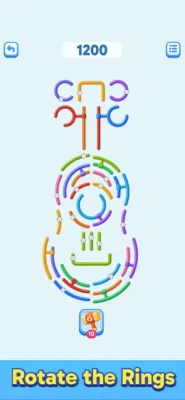
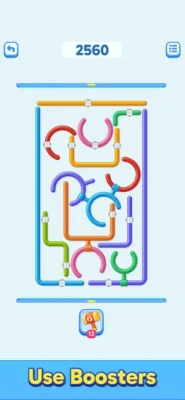
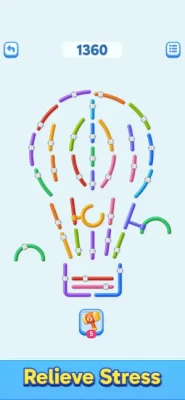
Rolling Rings is a casual logic and brain-training puzzle game developed by Oakever Games. It challenges players to untangle colorful rings and rods by carefully rotating pieces, aligning openings, and discovering the correct sequence of movements.
At first glance, the puzzles may look simple. However, the different pieces often overlap or block one another, making every movement an important decision.
Your objective is to clear the entire puzzle board by removing all the rings and rods. To accomplish this, you must understand how the pieces interact, identify which objects can move freely, and create enough space to release the remaining components.
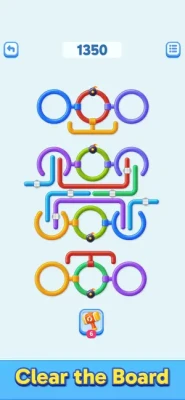
The game introduces several interesting mechanics that make its puzzles more challenging. Some rings rotate together, frozen pieces require additional actions to unlock, and special bombs can trigger explosions when they touch other objects.
Rolling Rings focuses on logical thinking rather than speed. You can examine the board, consider different possibilities, and experiment with movements until you discover the correct solution.
Its colorful graphics, relaxing background music, and satisfying sound effects create a comfortable puzzle-solving experience. The game also supports offline play, making it suitable for enjoying short puzzle sessions without an internet connection.
Main Features of Rolling Rings
Colorful Ring Puzzles
Explore puzzle boards filled with interconnected rings and rods. Every arrangement introduces a different challenge that requires observation, patience, and logical thinking.
Ring Rotation Mechanics
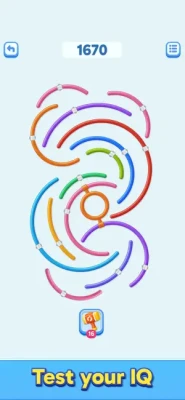
Rotate individual rings by touching and dragging them. Align their openings with the available paths to create opportunities for removing trapped pieces.
Sliding Rods
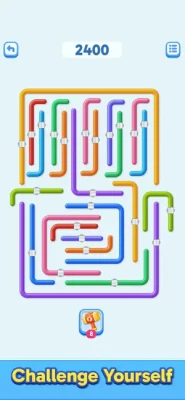
Rods move along specific paths and can block other components. Understanding their movement is essential for clearing complicated arrangements.
Linked Ring Rotations
Some rings share the same color and rotate together. Moving one ring can affect another, so you must consider the entire group before making a decision.
Frozen Obstacles
Certain rings and rods are covered in ice. Remove or interact with other pieces to break the ice layers and make frozen components movable again.
Contact Bombs
Special bombs introduce explosive interactions. Bring a bomb into contact with another piece to trigger an explosion and unlock the affected components.
Progressive Puzzle Challenges
Some levels reveal additional groups of pieces after you clear enough space. These unexpected sections keep the gameplay interesting and require you to adjust your strategy.
Offline Gameplay
Enjoy puzzle-solving without needing a Wi-Fi connection. Rolling Rings is designed for convenient entertainment at home or while traveling.
Relaxing Music and ASMR-Style Sounds
Enjoy calming background music and satisfying sound effects as rings and rods are successfully unlocked.
Simple Touch Controls
The controls are easy to understand. Touch and drag rings to rotate them, then slide rods along their available paths.
Specific Game Information
Game Title: Rolling Rings
Developer: Oakever Games
Publisher: OAKEVER GAMES PTE. LTD.
Game Category: Puzzle
Gameplay Type: Logic Puzzle, Brain Teaser, Ring Puzzle
Game Mode: Single Player
Main Objective: Untangle and remove every ring and rod from the puzzle board.
Main Mechanics: Ring Rotation, Rod Sliding, Linked Rotations, Ice Obstacles, and Bomb Interactions.
Controls: Touch and Drag
Graphics: Colorful 2D Puzzle Presentation
Sound: Relaxing Music and ASMR-Style Effects
Offline Support: Yes
Price: Free to Download
Monetization: Contains Advertisements
Age Rating: 4+
Supported Devices: iPhone and iPad
Minimum System Requirements: iOS 15.0 or later
Available Languages: English, German, and Portuguese
Understanding the Gameplay
The main gameplay in Rolling Rings revolves around finding a way to separate pieces that are connected or blocking one another.
Every puzzle contains a combination of rings and rods arranged in a particular configuration. Some pieces are easy to remove, while others remain trapped behind surrounding objects.
The first step is to examine the board and identify pieces with accessible openings.
When you find a movable ring, touch and hold it, then drag it to rotate its position. The objective is to align its opening with a suitable path so that it can be released.
Rods require a slightly different approach. They slide along their designated paths, and moving them can create space for nearby rings.
The order of these actions is extremely important. Removing one piece may reveal an opportunity to release another, creating a chain of successful movements.
As you advance, the game introduces additional mechanics, including linked rings, frozen components, and contact bombs.
The best way to approach each puzzle is to think about how one movement affects the entire board rather than focusing only on the piece directly in front of you.
How to Play Rolling Rings
Examine the Puzzle Board
Start by observing the complete arrangement of rings and rods. Look for visible openings, overlapping pieces, and components that appear to be trapped.
Find a Movable Piece
Identify a ring or rod that has enough available space to move. Starting with an accessible component can make the remaining puzzle easier.
Rotate the Rings
Touch and hold a ring, then drag it to adjust its position. Your goal is to align its opening with the appropriate exit path.
Slide the Rods
Move rods along their available tracks. Removing a blocking rod can open new paths for nearby rings.
Choose the Correct Order
Some pieces cannot be released until surrounding components have been removed. Plan your movements to avoid blocking important exits.
Handle Special Obstacles
Pay attention to linked rotations, frozen objects, and bombs. Each special mechanic requires a different approach.
Clear the Entire Board
Continue removing the available pieces until every ring and rod has been cleared. Completing the board finishes the puzzle.
Full Strategy Guide for Rolling Rings
Study the Entire Board Before Moving
One of the biggest mistakes beginners make is moving the first piece they notice without checking the rest of the arrangement.
Before making your first move, examine the position of every visible ring and rod.
Look for openings that are blocked by other objects. Identify which components appear to be connected and determine whether their movement could affect nearby pieces.
Understanding the overall structure gives you a better idea of where to begin.
Prioritize Pieces With Clear Openings
When several rings are available, focus on the ones that already have accessible openings.
These pieces are often easier to remove and can create additional space for the remaining components.
Clearing accessible rings early can simplify the board and reveal new movement opportunities.
However, do not automatically remove every available piece. Sometimes a ring or rod needs to remain in position temporarily because it influences the movement of another component.
Plan Your Rotations Carefully
Ring rotation is the central mechanic of Rolling Rings.
A successful movement requires more than simply turning a ring. You must align its opening with a path that allows the piece to escape.
Before dragging a ring, examine the direction of its opening and the position of surrounding objects.
Avoid making unnecessary rotations because they can complicate your understanding of the board.
A useful strategy is to identify the required final position first and then determine the shortest movement needed to reach it.
Understand How Rods Affect the Puzzle
Rods can become important obstacles when they occupy the paths needed by other pieces.
Before attempting to release a trapped ring, check whether a nearby rod is preventing it from moving.
Sliding the rod into another available position may create the space needed to continue.
Do not overlook rods simply because rings appear to be the main focus. In many arrangements, moving the correct rod is the key to unlocking several components.
Master Linked Rotations
Linked rotations introduce an additional layer of strategy.
When two or more rings rotate together, changing the position of one component also affects the others.
This means you cannot treat each ring as an independent object.
Before moving a linked ring, examine the position of every connected member. Consider whether the movement will create an opening for one ring while blocking another.
The best approach is to think about the complete group and find a rotation that improves the overall arrangement.
Avoid unnecessary movements when linked rings are involved because a seemingly useful adjustment can make another part of the puzzle more difficult.
Break Through Frozen Obstacles
Frozen rings and rods require additional attention.
These pieces may initially appear impossible to move because ice layers prevent normal interaction.
The solution is to identify which surrounding components must be cleared to break the ice.
Focus on the movable pieces connected to or positioned around the frozen obstacle.
As you remove the necessary components, the ice layers gradually disappear, allowing the frozen objects to become available.
Patience is important here. Trying to solve a frozen section before removing its supporting obstacles can waste valuable moves.
Use Contact Bombs Effectively
Bombs introduce a different type of interaction.
Instead of simply rotating or sliding pieces, you must position the bomb so that it comes into contact with another component.
When the required contact occurs, an explosion triggers and unlocks the affected pieces.
Before activating a bomb, examine the surrounding arrangement and consider which objects will be affected.
Use the explosion as an opportunity to simplify a complicated section of the board.
Understanding where the bomb needs to move is more important than rushing to activate it.
Prepare for New Puzzle Sections
Some boards reveal additional groups of pieces after you clear certain components.
This means that completing the visible section does not always represent the end of the challenge.
When new pieces appear, pause and examine their arrangement before continuing.
The newly revealed components may introduce different obstacles or require you to change your original plan.
Treat each newly opened section as a separate puzzle while keeping its relationship with the existing board in mind.
Avoid Random Movements
Experimentation can help you understand how the mechanics work, but random movements are rarely the most efficient solution.
Every action should have a purpose.
Before rotating or sliding a component, ask yourself whether the movement creates an opening, removes an obstacle, or helps release another piece.
If a movement does not contribute to any of these objectives, consider leaving the component where it is.
Work From the Outside Toward the Center
When a board contains several overlapping pieces, examine the outer components first.
The rings and rods near the edges may have more accessible movement paths.
Removing them can gradually reveal the pieces underneath and make the central arrangement easier to understand.
This approach is not necessarily correct for every puzzle, but it provides a useful starting strategy for complicated boards.
Reconsider Your Strategy When Progress Stops
If you reach a point where no obvious movement is available, do not continue repeating the same actions.
Instead, examine the board again.
Look for a rod that can slide, a linked ring that affects another component, or a frozen piece whose surrounding obstacles can be removed.
Sometimes the solution requires moving a component that initially seems unrelated to your main objective.
A fresh examination often reveals possibilities that were overlooked during the first attempt.
Advanced Tips and Tricks
Think Several Moves Ahead
Do not focus exclusively on the next available action. Consider how your current movement will influence the following steps.
Identify Critical Openings
An opening can be more valuable than an immediately removable ring. Protect important exit paths whenever possible.
Pay Attention to Matching Colors
Same-colored rings may be linked. Check their relationship before making rotations.
Remove Blocking Rods Early
A strategically positioned rod can prevent several rings from moving. Find opportunities to reposition these obstacles.
Treat Ice as a Priority
Determine which pieces need to be removed to break frozen layers. Work toward unlocking the obstacle instead of repeatedly attempting to move it.
Use Bombs to Simplify Difficult Sections
Look for the correct contact opportunity and consider the surrounding pieces before triggering an explosion.
Recheck the Board After Every Major Move
Removing one component can change the available paths. Reassess the puzzle after important movements.
Be Patient With Difficult Levels
Rolling Rings rewards careful thinking. Taking a moment to understand the arrangement is often more effective than making several unnecessary movements.
Common Mistakes to Avoid
Rotating Rings Without Checking Their Openings
A ring must be positioned correctly to use an available exit. Random rotation can make the puzzle harder to understand.
Ignoring Linked Components
Moving one linked ring can affect other rings of the same group. Always consider the entire connection.
Forgetting About the Rods
Rods can block important paths. Ignoring them may prevent you from finding the correct solution.
Trying to Move Frozen Pieces Too Early
Frozen components require the removal of ice layers. Focus on the surrounding obstacles first.
Activating Bombs Without a Plan
Bomb interactions should be considered carefully. Make sure the contact occurs where it can help clear the puzzle.
Moving Too Many Pieces at Once
Unnecessary actions can make it difficult to track the original arrangement. Focus on one useful objective at a time.
Ignoring Newly Revealed Sections
Some puzzles introduce additional groups after earlier pieces are removed. Always inspect the board again when new components appear.
Is Rolling Rings Worth Playing?
Rolling Rings is an enjoyable option for players who appreciate logic puzzles, mechanical challenges, and relaxing brain games.
Its main attraction is the combination of simple controls and increasingly interesting puzzle mechanics. Rotating rings and sliding rods are easy to understand, but finding the correct sequence of movements requires observation and planning.
The linked rotations add an interesting challenge because a single action can affect multiple components. Frozen obstacles and contact bombs provide additional variety, preventing the gameplay from feeling repetitive.
Another appealing aspect is the relaxing presentation. Colorful puzzle pieces, calming music, and satisfying sound effects create an enjoyable atmosphere without placing pressure on players to complete levels quickly.
The offline support is also convenient for anyone who wants to enjoy puzzle games while traveling or during short breaks.
Overall, Rolling Rings is worth trying if you enjoy untangling puzzles, experimenting with different movements, and solving challenges through logical thinking rather than fast reactions.
Frequently Asked Questions
What is Rolling Rings?
Rolling Rings is a casual logic puzzle game where players rotate colorful rings, slide rods, and remove interconnected pieces to clear each puzzle board.
Who developed Rolling Rings?
The game was developed by Oakever Games.
How do you solve puzzles in Rolling Rings?
Examine the board, identify movable pieces, rotate rings to align their openings, and slide rods to create available paths. Remove the components in the correct order to clear the level.
Can you play Rolling Rings offline?
Yes. The game supports offline gameplay, allowing you to enjoy its puzzles without requiring a Wi-Fi connection.
What are linked rings?
Linked rings are special components that rotate together. Moving one ring can change the position of other rings in the same group.
How do frozen rings work?
Frozen rings are covered in ice layers. You must remove or interact with the surrounding pieces to break the ice and make them movable.
What do bombs do in Rolling Rings?
Bombs trigger explosions when they come into contact with other pieces. These interactions help unlock the affected components.
Does Rolling Rings require fast reactions?
No. The game focuses primarily on logic, observation, and strategic planning rather than speed or reflexes.
Is Rolling Rings free to download?
Yes. Rolling Rings is available as a free download on the Apple App Store and contains advertisements.
Which devices support Rolling Rings?
The game supports iPhone and iPad devices running iOS 15.0 or later, with compatible versions of their respective operating systems.
Is Rolling Rings suitable for children?
The Apple App Store lists the game with an age rating of 4+, making it suitable for a broad audience.
Final Thoughts
Rolling Rings offers a refreshing puzzle experience built around rotation, movement, and logical problem-solving. Its colorful rings, sliding rods, linked components, frozen obstacles, and explosive interactions create a variety of challenges that keep players thinking throughout their progression.
The most effective strategy is to examine each board carefully, prioritize accessible pieces, plan rotations in advance, and understand how every component affects the others.
Whether you enjoy casual brain teasers or more demanding mechanical puzzles, Rolling Rings provides a relaxing way to challenge your thinking and enjoy the satisfaction of turning a tangled board into a completely solved puzzle.
Rate the Game
User Reviews





Popular Games















 Android
 iOS
 Windows
 Xbox