



Latest Version
November 17, 2026
Moveera Pty Ltd
Family
iOS
0
Report a Problem
More About :game
Unlike traditional mobile games, SCRAM combines physical movement, teamwork, timing, and clever decisions. Players can compete in Classic mode or try Infection mode, where tagged runners become hunters and the chase grows more intense as the round continues.
What Is SCRAM: Hide and Seek?
Developed by Moveera Pty Ltd, SCRAM: Hide and Seek brings the familiar childhood game of hide-and-seek into the real world with smartphone technology. Instead of relying on a virtual map or computer-controlled characters, the game uses players' actual locations to create an interactive outdoor experience.
Each match begins with players joining a private game. The host chooses the rules, selects the game mode, establishes the playing area, and starts the round. Runners receive a head start to find hiding places, while hunters wait for the chase to begin.
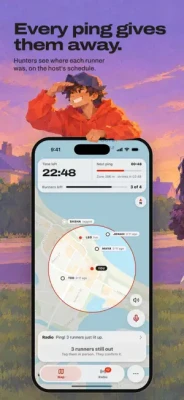
During the match, hunters receive periodic location pings that reveal where runners were recently spotted. These updates provide useful clues without constantly showing every runner's live position. Runners must use the available time wisely, stay inside the permitted zone, and avoid being tagged.
The experience works particularly well for groups of friends, families, school activities, camps, and outdoor gatherings where everyone wants to participate in something more active than a conventional mobile game.
Main Game Information
Category | Details |
|---|---|
Game title | SCRAM: Hide and Seek |
Developer | Moveera Pty Ltd |
Category | Adventure |
Platform | iPhone |
Price | Free to download |
Game modes | Classic and Infection |
Multiplayer | Real-world group gameplay |
Age rating | 13+ |
Compatibility | iOS 16.4 or later |
Languages | 17 languages |
In-app purchases | One-time hosting purchase |
Gameplay and Core Mechanics
Hunters and Runners
Every match revolves around two teams with different responsibilities.
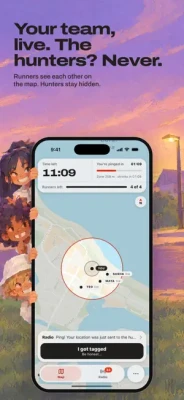
Runners must escape the hunters, find safe routes, and survive until the timer reaches zero. Their success depends on choosing good hiding places, managing movement, and reacting quickly when the play zone becomes smaller.
Hunters work together to locate and tag the runners. They receive periodic location updates and must use those clues to predict where opponents might be heading.
The two roles require different strategies, making it enjoyable to switch teams between rounds.
Location-Based Tracking
SCRAM uses location information to support the real-world gameplay. Hunters receive periodic pings showing where runners were located, together with an indication of how long ago that location was recorded.
This creates an interesting balance between information and uncertainty. Hunters receive clues, but they still need to search, communicate, and make decisions. Runners can take advantage of the gaps between updates to change direction and find better hiding positions.
The Shrinking Play Zone
The game can use a designated play zone that becomes smaller as the round progresses. This prevents runners from remaining in distant hiding places for the entire match.
Players who stay outside the zone for more than 30 seconds become visible to hunters in real time. Remaining outside for two minutes results in elimination.
Understanding the boundaries is therefore essential. A hiding place might seem perfect at the beginning but become dangerous when the zone starts shrinking.
Real-World Tagging
When a hunter physically tags a runner, the tagged player confirms the elimination through the app by selecting the appropriate option.
This connects the digital tracking system with actual movement and interaction. Players should agree on fair tagging rules before starting to avoid disagreements during competitive rounds.
Main Features of SCRAM: Hide and Seek
Classic Mode
Classic mode follows the traditional hide-and-seek format. Hunters attempt to tag every runner before the time limit expires. Tagged runners are eliminated and can watch the remaining action.
Runners who avoid capture until the timer ends win the round.
Infection Mode
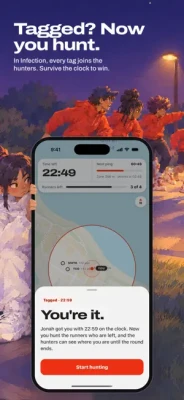
Infection mode changes the balance of the game. When a hunter tags a runner, that player joins the hunters instead of simply leaving the match.
The hunter team gradually grows, making survival increasingly difficult. Runners must cooperate, avoid predictable routes, and manage their remaining time carefully.
Custom Game Rules
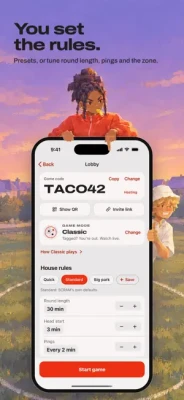
The host can customize important match settings, including:
Total round duration.
Runner head-start time.
Frequency of location pings.
Play-zone size and position.
How often the zone shrinks.
Whether the play zone is enabled.
Classic or Infection mode.
Players can also begin with preset configurations such as Quick, Standard, and Big Park, or save their own preferred settings.
Easy Multiplayer Invitations
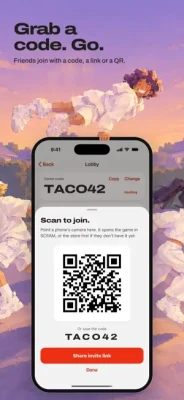
Friends can join a match using a six-character game code, an invitation link, or a QR code displayed in the lobby.
This makes organizing a group easier, particularly when several players are gathering in the same outdoor location.
Team Radio
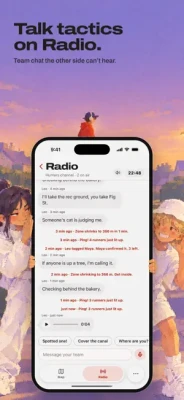
Hunters can communicate using the in-game radio feature. They can hold to talk and send voice clips to other hunters without giving runners access to their conversations.
Good communication can make a major difference when the team is searching a large area.
Practice Rounds
New players can try a practice round against bots before joining a real multiplayer match. This is a useful way to understand the interface, map, alerts, and general rules.
Post-Game Statistics
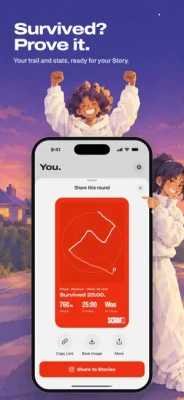
After a round, players can review their movement trail, distance traveled, and survival time. They can also share a round card with friends.
Leaderboards provide another competitive element by recording points and showing rankings at country and worldwide levels.
Complete Strategy Guide
Winning in SCRAM is not simply about running faster or finding the most hidden location. Successful players understand the map, pay attention to timing, communicate effectively, and adapt when the situation changes.
The following strategies can help both hunters and runners improve their performance.
Best Strategies for Runners
Choose Your Hiding Place Carefully
The first major decision for runners is where to hide after receiving the head start.
A good hiding place should offer enough space to remain unnoticed while allowing an easy escape if hunters approach. Avoid choosing locations that leave you trapped against fences, walls, or other obstacles.
Look for legal, publicly accessible areas with several possible exit routes. A hiding place near multiple paths gives you more flexibility when the situation changes.
Use the Head Start Wisely
Do not waste the entire head-start period searching randomly for the perfect location.
Before the match begins, look at the play zone and identify several possible hiding areas. Once the timer starts, move toward your preferred location efficiently.
If you spend too long deciding where to go, hunters may begin the search before you have reached a useful position.
Pay Attention to Location Pings
Even though runners do not receive the same hunting information as the opposing team, they should understand how the ping system affects the match.
Hunters only receive periodic updates, which means their information is not always current. This creates opportunities to change positions between pings.
Avoid staying in one obvious location if you suspect hunters have recently received information about your position.
Avoid Predictable Movement
Running along the most obvious route can make it easier for hunters to anticipate your next move.
Instead, consider alternative paths that remain within the permitted area. Change direction when appropriate, but avoid unnecessary movement that wastes energy.
A good runner knows when to stay hidden and when to relocate.
Monitor the Play Zone
The shrinking play zone is one of the most important mechanics to understand.
Check the boundaries regularly and move toward a safe area before the available space becomes too small. Do not wait until the final moments to discover that your hiding place is outside the permitted zone.
Remember that staying outside the zone for more than 30 seconds exposes your location, while remaining outside for two minutes eliminates you.
Save Your Energy
Running continuously may feel like the best way to escape, but it can become a disadvantage during longer matches.
Use a combination of walking, short movements, and carefully timed changes of position. Preserve enough energy to react quickly when hunters approach.
Think About the Final Minutes
The end of a round is often the most challenging period for runners because the play zone becomes smaller and hunters have fewer areas to search.
Before the final stage begins, identify a safe route toward the center of the remaining play area. Avoid getting trapped at the edge, where your movement options may become limited.
Best Strategies for Hunters
Divide the Search Area
Hunters should avoid searching the same locations without a plan.
When the match begins, divide the available area into smaller sections and assign different players to investigate them. This reduces unnecessary overlap and helps the team cover more ground.
A coordinated search is usually more effective than several hunters moving independently.
Use Location Pings as Clues
Location pings are valuable, but hunters should remember that they represent previous positions rather than guaranteed current locations.
Use the timestamp information to estimate how far a runner might have moved. Then consider nearby paths, possible hiding places, and the direction in which the runner could have traveled.
Do not assume that a player is still standing at the location shown on the map.
Communicate Through Radio
The hunter radio is especially useful when several players are searching different parts of the zone.
Share useful observations, report areas that have already been checked, and coordinate changes in direction. Short, clear messages are generally more effective than lengthy conversations.
Avoid sending unnecessary updates that distract teammates from the search.
Watch the Zone Boundaries
The shrinking play zone can work in favor of hunters.
As the available area becomes smaller, runners have fewer safe places to hide. Hunters should pay attention to the changing boundaries and position themselves where they can cover likely escape routes.
Rather than chasing every clue immediately, consider where runners will eventually need to move.
Work Together During Tagging Attempts
When a runner is spotted, hunters should coordinate their approach while maintaining safe movement.
One player can follow the likely escape route while another approaches from a different direction. However, avoid creating unnecessary risks by running into unsafe areas or ignoring real-world obstacles.
Adapt to the Number of Remaining Runners
The best hunting strategy changes as the match progresses.
When many runners remain, hunters should focus on covering the area and collecting information. When only a few remain, they can concentrate on likely hiding places and routes toward the shrinking zone.
How to Win Infection Mode
Infection mode requires a different mindset because every successful tag increases the size of the hunter team.
Runner Strategy
At the beginning, runners should prioritize distance and safe positioning. Avoid gathering in one obvious location, since a single successful encounter can turn into a larger threat as tagged players join the hunters.
As the number of hunters increases, runners should focus on survival rather than unnecessary exploration. Stay aware of the play zone and avoid routes that could lead into groups of hunters.
Hunter Strategy
The initial hunters should cooperate to secure early tags. Every runner who changes sides strengthens the hunting team.
Once the team grows, hunters should coordinate their movements and cover different directions. The goal is to reduce the runners' escape options without wasting time chasing the same target.
Recommended Game Settings for Different Groups
The host's settings can significantly influence the quality of a match.
Quick games: Choose a shorter round duration and a manageable play zone. This setup works well when players have limited time or want several short matches.
Standard games: Use balanced settings for a normal group of friends. A moderate head start and regular location pings provide both teams with opportunities to make meaningful decisions.
Large park games: Use a larger permitted area when playing with a bigger group. Make sure the boundaries are clearly understood and that the selected location is suitable for everyone.
Custom games: Experienced groups can experiment with different ping intervals, head starts, and zone settings. Change one or two rules at a time so you can understand how each adjustment affects the experience.
Beginner Tips and Common Mistakes
New players can improve quickly by avoiding a few common problems.
Ignoring the boundaries: Always understand the permitted play zone before the match starts.
Choosing inaccessible hiding places: Use safe, public areas and never enter private property.
Moving without a plan: Every movement should have a purpose, especially during the final minutes.
Ignoring location timestamps: Hunters should remember that pings show previous positions.
Poor team communication: Hunters should share useful information and avoid repeating the same searches.
Waiting too long to relocate: Runners should move before the shrinking zone forces them into dangerous positions.
Forgetting phone alerts: Keep notifications and vibration settings appropriate for the game.
Playing without clear rules: Agree on boundaries, tagging procedures, and safety expectations before starting.
Safety and Privacy Considerations
Because SCRAM is a location-based outdoor game, responsible play is essential.
Choose a suitable public area away from busy roads, dangerous terrain, restricted properties, and other hazards. Players should never run blindly while looking at their phones.
The app indicates that location sharing takes place during an active round and is limited to players in that game. Games are private and require a code to join, and the developer states that game data is deleted after seven days.
Players should still review the app's privacy information and location permissions before playing. Anyone under 18 should follow the developer's age and parental-permission guidance.
Is SCRAM: Hide and Seek Free to Play?
SCRAM is free to download, and joining games hosted by other players is free. Hosting your own games requires a one-time in-app purchase. The developer states that hosting does not require a subscription and that the game does not include advertisements.
This arrangement makes it easy for a group to participate without requiring every player to purchase hosting access.
Is SCRAM: Hide and Seek Worth Playing?
SCRAM: Hide and Seek offers a refreshing alternative to traditional mobile games. Its biggest strength is the way it transforms familiar outdoor locations into multiplayer playing areas.
The combination of real-world movement, location-based clues, customizable rules, and two different game modes creates plenty of opportunities for group competition. Classic mode is ideal for players who enjoy traditional hide-and-seek, while Infection mode introduces a more unpredictable experience.
Its main limitation is that the quality of each match depends heavily on the location, group size, and willingness of players to move around outdoors. It is not designed to replace a conventional single-player mobile game.
For friends, families, and groups looking for an active outdoor activity, SCRAM provides an interesting way to turn an ordinary gathering into a competitive game.
Final Verdict
SCRAM: Hide and Seek takes a simple childhood activity and gives it a modern multiplayer twist. Its hunter-and-runner system, location pings, shrinking play zone, team radio, and customizable match rules make every round feel different.
The addition of Infection mode gives groups another reason to replay, while practice rounds help newcomers learn the mechanics before joining friends.
If you enjoy outdoor challenges, team competition, and games that encourage real-world interaction, SCRAM: Hide and Seek is worth exploring. Just remember to choose a safe playing area, respect the boundaries, and keep your attention on your surroundings rather than your screen.
Rate the Game
User Reviews















Popular Games



















 Android
 iOS
 Windows
 Xbox